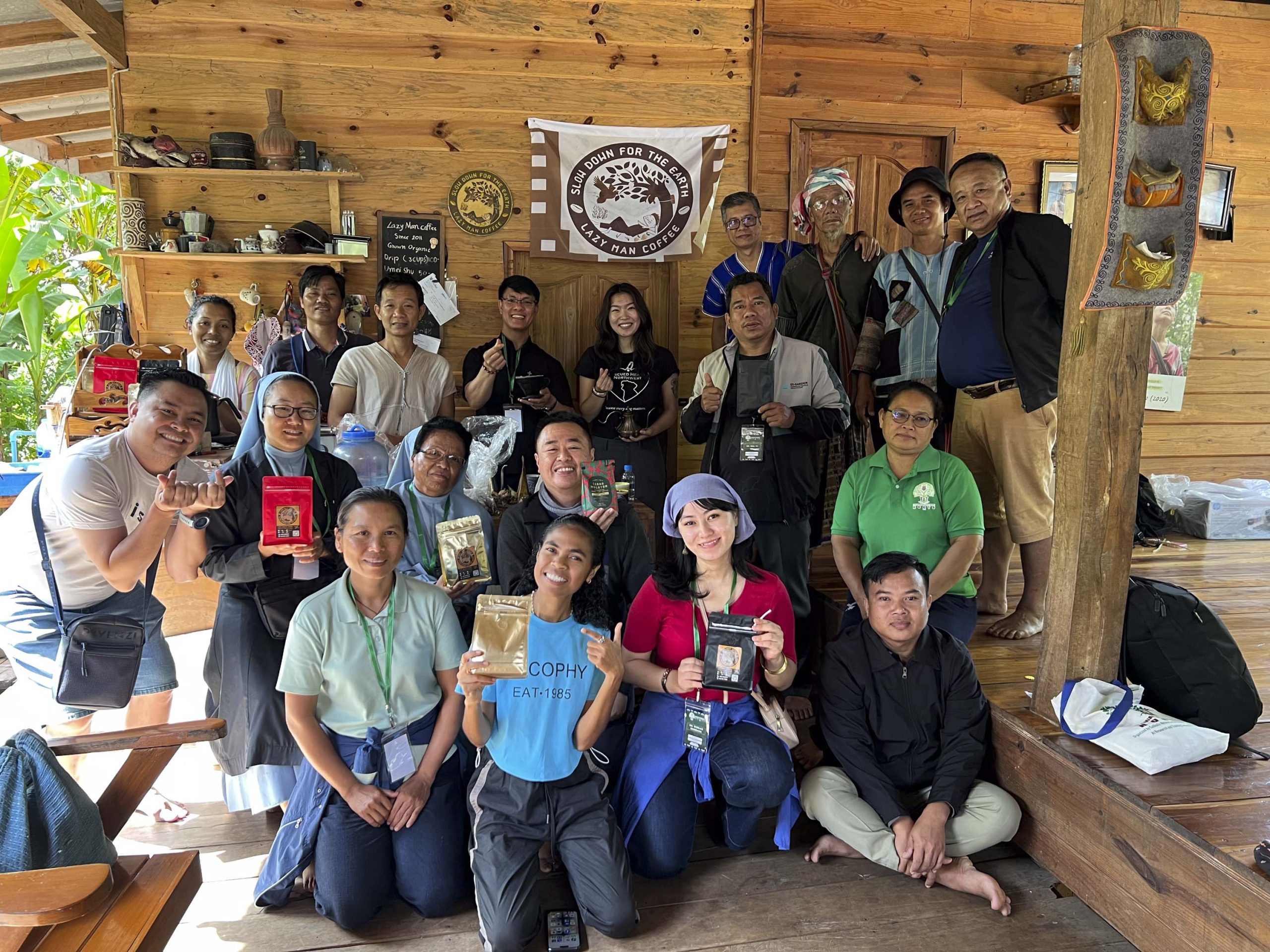
Indigenous leaders from eight Asian countries have urged the Catholic Church to confront and dismantle colonial mindsets that continue to marginalize Indigenous peoples within its structures, theology, and pastoral life.
The call was articulated in a collective statement issued at the conclusion of the Training of Trainers on Ancestral Wisdom and Organic Intellectual Leadership, organized by ROOTS Asia, the Catholic Network of Indigenous Peoples of Asia.
The gathering brought together Indigenous leaders engaged in Catholic communities from Bangladesh, Cambodia, India, Laos, Malaysia, Thailand, Timor-Leste, and Vietnam.
Meeting first in Chiang Mai, Thailand and then subsequently online, the participants emphasized that decolonization remains an urgent and ongoing task within the Church, alongside wider political and social processes.
They underscored that inherited colonial frameworks have historically weakened Indigenous knowledge systems and spiritual traditions, resulting in the exclusion of Indigenous voices from leadership formation, theological reflection, and decision-making within Church life.
The statement affirmed that Indigenous ways of knowing are dynamic and grounded in lived experience, community memory, and ecological relationships.
The leaders stressed that these knowledge systems provide ethical foundations for justice, peace, environmental stewardship, and cultural resilience, and should be recognized as authoritative sources that can shape the Church’s mission in Asia.
Participants warned that meaningful inculturation requires more than symbolic recognition of Indigenous cultures.
They called for structural transformation that acknowledges Indigenous peoples as equal partners in shaping theology, pastoral approaches, and ecclesial practices.
According to the statement, Indigenous spirituality and cultural identity are inseparable, and faith expressions rooted in ancestral traditions contribute to a more authentic and vibrant Church.
The leaders highlighted the role of Indigenous “organic intellectuals,” described as leaders who emerge from within their own communities and whose authority is rooted in lived experience, moral responsibility, and collective wisdom.
They identified these leaders as central to strengthening Indigenous communities and advancing the Church’s journey toward synodality, shared discernment, and participation.
The statement linked decolonization with self-determination, intergenerational learning, and the empowerment of youth and women.
It emphasized that reclaiming Indigenous epistemologies involves an intentional process of unlearning imposed paradigms and addressing structures that perpetuate exclusion and domination.
In calling for a renewed relationship between the Church and Indigenous peoples, the participants urged an approach grounded in humility, intercultural dialogue, and recognition that spiritual truth is present within all cultures.
They affirmed that Indigenous traditions carry wisdom capable of enriching the Church and contributing to the healing of societies facing ecological crisis, social fragmentation, and cultural erasure.
The Indigenous leaders concluded by encouraging the continuation of platforms that support Indigenous leadership formation, storytelling, and community-based action.
They presented the Training of Trainers initiative as a concrete step toward a more inclusive and synodal Catholic Church in Asia, one that listens to Indigenous voices and walks alongside Indigenous communities in shaping paths of faith, justice, and social transformation.