
The Federation of Asian Bishops’ Conferences (FABC) acknowledged clericalism as a persistent barrier to participation and shared responsibility in the Church, calling for deeper listening, shared discernment, and servant leadership.
In its final message following its 12th plenary assembly, the FABC said clericalism “can hinder communion, participation, and co-responsibility among all the baptized.”
“This calls us to ongoing pastoral and synodal conversion, fostering a culture of listening, shared discernment, and servant leadership,” the bishops wrote.
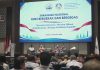
The assembly, held in Jakarta from July 20 to 26, gathered Asian bishops with delegates, partners, and friends from different parts of the world under the theme, “You will see greater things,” from the Gospel of John.
The bishops said synodality was not merely a method of working together but “a path of conversion that is directed towards mission.”
“Before it transforms our structures, it transforms our hearts. Before it renews our institutions, it renews our relationships,” the message read.
The assembly reached a broad consensus that the Church in Asia must become “a bridge and a bridge-builder” through continuing synodal conversion while embracing the diversity of the continent’s cultures and peoples.
The bishops identified polarization, the collapse of global institutions, a culture of power, rapid technological change, migration, ecological degradation, shrinking democratic spaces, and widening social and economic inequalities among the challenges facing Asia.
They said these conditions should not be viewed merely as obstacles but as opportunities for the Church to strengthen its witness through education, interreligious dialogue, hospitality, care for the environment, and a deeper commitment to human dignity and solidarity.
The bishops called on local churches to build “bridges of trust and dialogue where others erect walls of suspicion” and “bridges of peace where violence and conflict divide communities.”
They also urged the Church to provide “bridges of compassion where the poor, the vulnerable, and the excluded long for dignity” and “bridges of hope” for young people searching for meaning amid technological change, global fragmentation, and the ecological crisis.
The bishops cited the Tunnel of Friendship, which links Jakarta’s Cathedral of Our Lady of the Assumption and the Istiqlal Mosque, as a symbol of the Church’s mission in religiously diverse Asia.
“Our faith calls us to build bridges, not barriers,” they wrote.
The FABC renewed its commitment to work with other Christian communities, religions, and cultures in pursuing truth, justice, peace, and care for the environment.
It also pledged to “walk with the poor and vulnerable as companions” and embrace “the urgent call to ecological conversion so that future generations may inherit a world that reflects the Creator’s goodness.”
Cardinal Filipe Neri Ferrão, archbishop of Goa and Daman and FABC president, signed the final message on behalf of the assembly’s members on July 26.