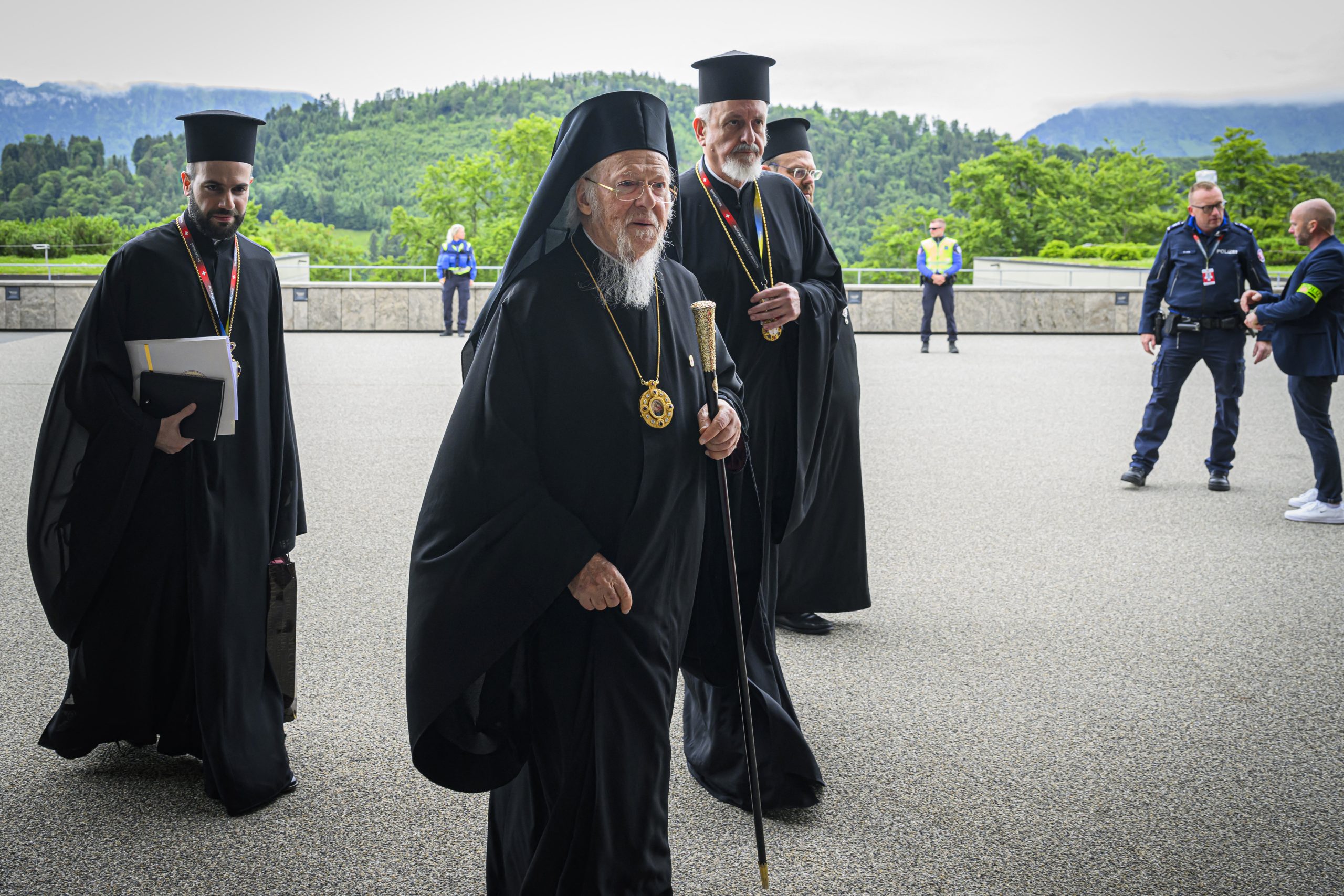
Ecumenical Patriarch Bartholomew I has condemned an Israeli military strike on the Catholic parish of the Holy Family in Gaza, calling it an assault on a sacred refuge.
Speaking to Catholic and Orthodox pilgrims in Istanbul on July 20, the Orthodox leader said the attack targeted a sanctuary where hundreds found shelter, “regardless of their religion,” during the war.
Bartholomew described the church as “a sacred space cherished deeply by the late Pope Francis,” noting the pontiff had stayed in contact with the parish priest even while ill.
He called the assault “a terrible act” that struck not only a place of worship but also “a sanctuary” during a time of “trial and tribulation,” according to a report by the Vatican’s Fides News Agency.
The patriarch addressed a delegation of U.S.-based pilgrims en route to Nicaea (modern-day Iznik), led by Orthodox Archbishop Elpidophoros of America and Cardinal Joseph Tobin of Newark.
He said he had asked Cardinal Tobin to bring a message of solidarity to Pope Leo XIV.
“We raise our voice with him for an immediate ceasefire and the end of this war,” Bartholomew said, calling for prayers for the victims, the wounded, and their families.
The ecumenical pilgrimage marks the 1700th anniversary of the First Council of Nicaea, which affirmed Christ’s divinity and the Church’s unity around the true faith.
The pilgrims began their journey in Rome, where they were received by Pope Leo on July 17. Their stops included sites linked to Apostles Peter, Paul, and Andrew.
In his welcome, Bartholomew said the group’s presence in Constantinople—“New Rome”—was a visible sign of “reconciliation, understanding, and unity.”
He emphasized that Christian unity should not mean uniformity but must be grounded in shared baptism and the truth of the Gospel.
Bartholomew echoed Pope Leo’s desire for unity, one based on “mutual love” and “our shared baptism into the death and resurrection of our Lord Jesus Christ.”
He pointed to this year’s shared Easter celebration by Eastern and Western Churches as a sign of progress. It allowed Christians, he said, to “bear witness with one voice to the redeeming hope” of the Resurrection.
The patriarch stressed that ecumenism is not merely theological work but a spiritual calling. He urged a return to the upper room in Jerusalem, “where fear was transformed into the courage of proclamation.”
“May each of you be strengthened by the fire of Pentecost,” he said, encouraging pilgrims to bring Christ to “a world wounded by war, injustice, and despair.”
Bartholomew closed with a message of hope and anticipation. He said he looks forward to meeting Pope Leo during the feast of Saint Andrew, patron of the Church of Constantinople.
“We continue to implore the Holy Spirit to guide us to the day when we will gather again around the same altar,” he said, “sharing the one Body and chalice of our Lord.”