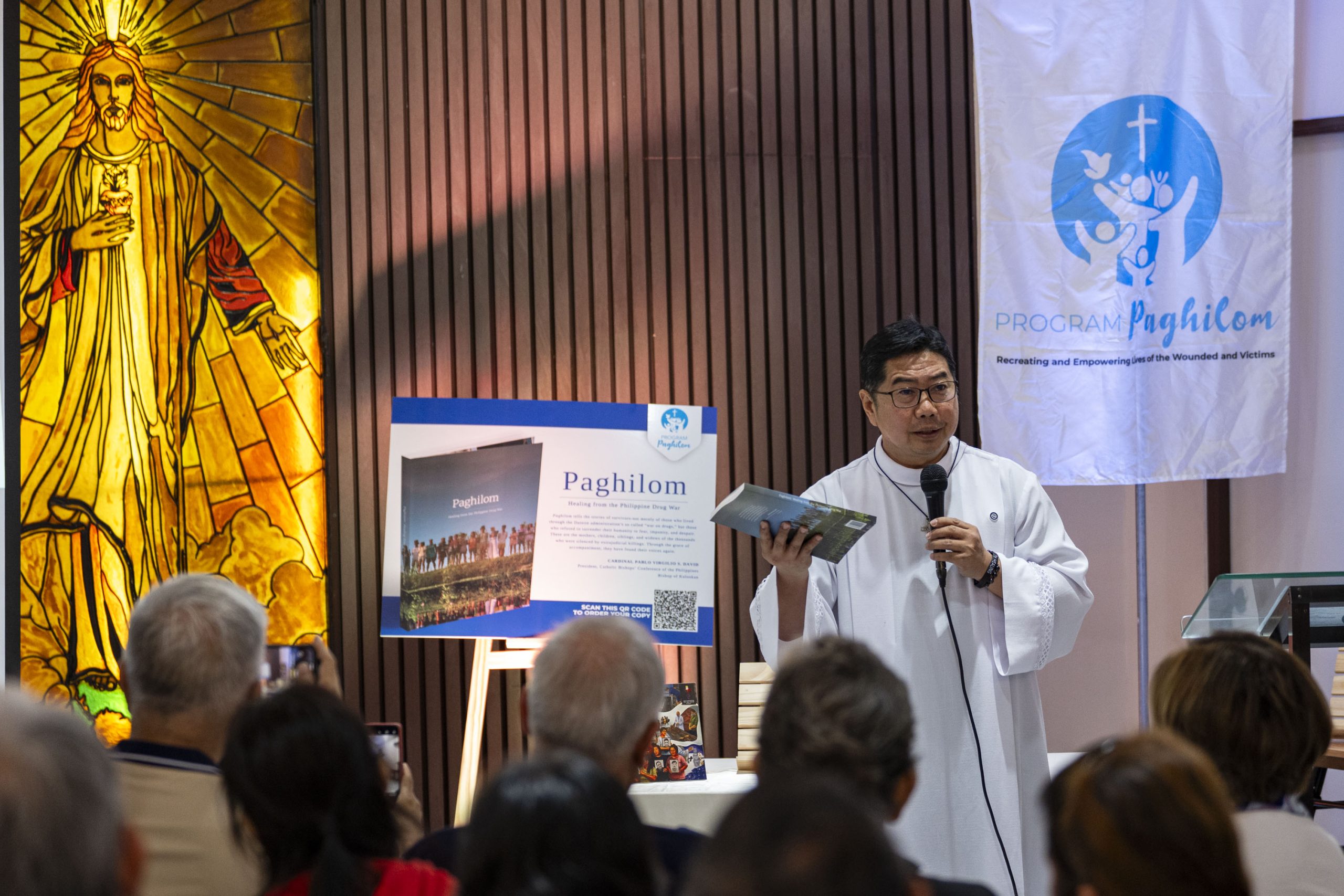
Fr. Flaviano “Flavie” Villanueva said his Ramon Magsaysay Award is not a personal accolade but a summons for the Philippine Church to embrace a prophetic mission that demands truth, accountability, and healing for a wounded nation.
In a LiCAS News interview following the announcement, Villanueva of the Society of the Divine Word (SVD) framed the recognition as a responsibility for the faithful, not a spotlight on one priest.
He said the award should galvanize collective action—within parishes, religious communities, and lay movements—to defend human dignity and protect the poor, especially families scarred by violence and injustice.
“I believe and I pray that this recognition would lead our faithful to that certain opening—a prophetic option for the Church,” he said.
Villanueva stressed that Christian witness cannot be confined to ritual observance, describing discipleship as concrete service to people on the margins.
“In simple terms, to be a Christian today means to be engaged in faith, and that action is love,” he said, adding that it should not be a “faith that hides in the sacraments, but a faith in action that moves us to help restore dignity and bring healing.”
He warned against any normalization of wrongdoing and urged Catholics to resist efforts by perpetrators to rehabilitate their relevance without truth-telling or accountability.
“Most certainly, this heightens our mission, especially as we see perpetrators making themselves more relevant. We cannot allow this to happen,” Villanueva said.
At the center of his appeal is a call for unity and healing grounded in justice.
“For me, greatness of spirit is about truth—standing on the side of goodness and what is right,” he said. “It is about becoming and helping in forging unity and healing, starting with our communities and our nation.”
Villanueva’s stance is consistent with his ministry over the last decade. In 2015, he founded the Arnold Janssen Kalinga Center in Manila to provide dignified care for indigent Filipinos through meals, shelter, hygiene facilities, education, and livelihood.
The center later became a sanctuary for families affected by the anti-drug campaign, organizing psychosocial support and livelihood training through the Paghilom program.
He also helped establish the Dambana ng Paghilom, a memorial columbarium that receives exhumed and cremated remains of drug-war victims, giving families a proper resting place for their dead.
His award citation captured the horizon of that work: “Justice can take many forms—among them, the recovery of one’s self-confidence, and forgiving oneself,” Villanueva said in the foundation’s materials.
In accepting the honor, he dedicated it to “the countless homeless people” and to “the courageous widows and orphans victimized by the war on drugs,” underscoring that “from a fractured world, a beautiful spirit and person can arise.”
In the interview with LiCAS News, he pressed the Philippine Church to lead—parishes, religious congregations, lay groups, and dioceses—to widen spaces where compassion becomes policy and accompaniment becomes systems change.
“Christian integrity is faith in action—doing things that create spaces for kindness,” he said.
For Villanueva, this is neither a reinvention of Church ministry nor a departure from the sacraments; it is an insistence that worship bears fruit in public love and the protection of human dignity.
He described Christian integrity as a life where faith moves—and keeps moving—toward people in pain, organizing hope into institutions that serve.
The Ramon Magsaysay Award, often dubbed Asia’s “Nobel Prize,” recognizes “greatness of spirit” in transformative leadership.
Villanueva’s response redirects that light outward: toward a Church summoned to act, a public demanding accountability, and communities ready to heal together.