
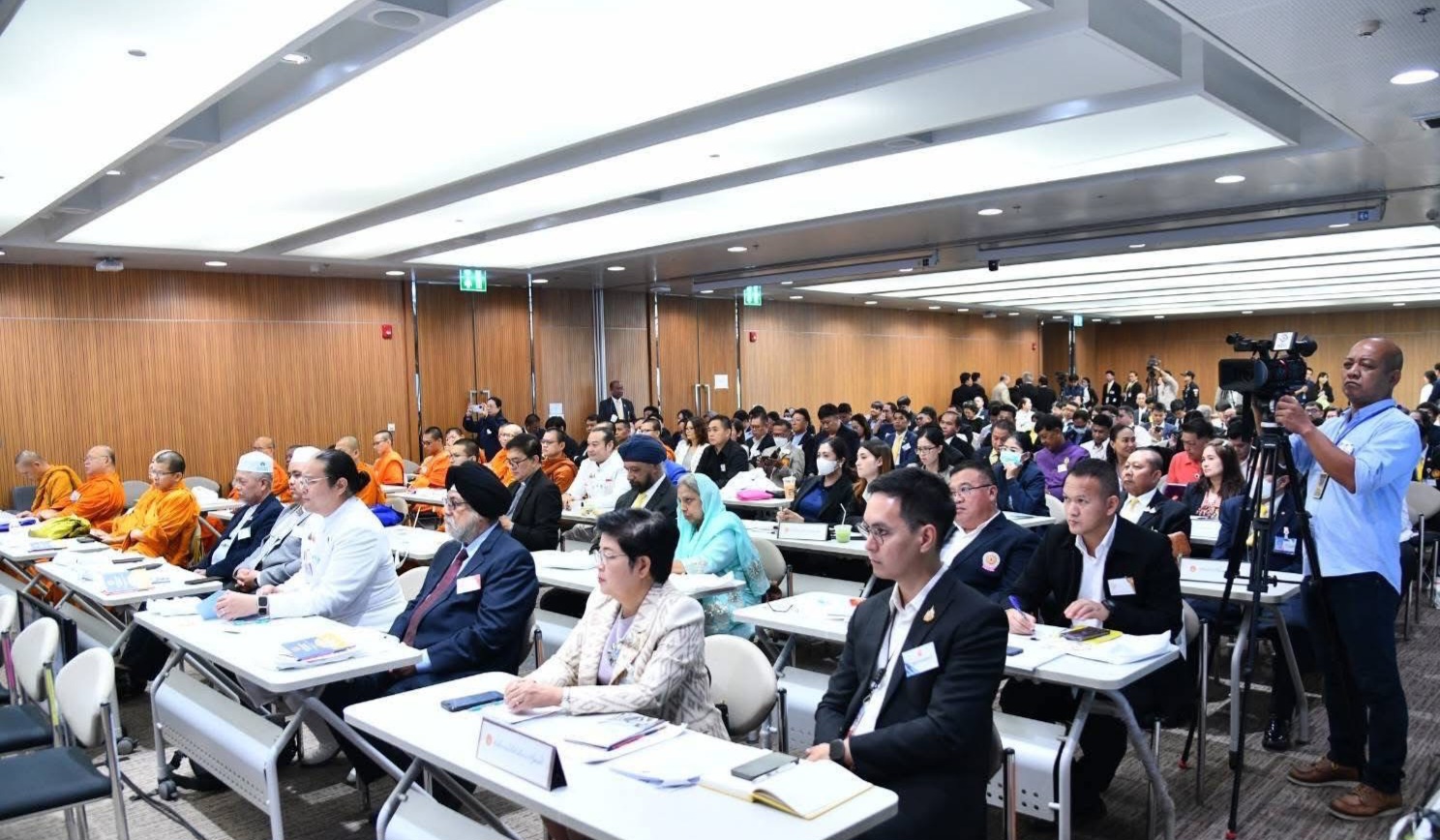
Representatives of Thailand’s five major religions met at Parliament House in Bangkok on Thursday, September 25, to discuss ways to address the misuse of modern media and protect religious faith in society. The forum was organized by the Senate Committee on Religion, Morality, Ethics, Arts, and Culture.
The discussion centered on drafting “Guidelines for the Management of Religious Violations in Modern Media to Sustainably Maintain Faith in Thai Society.”
Senate Vice-President Boonsong Noisopon said that while digital media and modern technology have brought many benefits, they also create serious challenges for religion.
“Distortion or ridicule of religious figures, as well as the misuse of technologies such as artificial intelligence to create offensive content, spreads faster than regulatory mechanisms can control,” Boonsong said. “This requires all sectors to work together to preserve the value of religion in society and prevent the erosion of public faith.”
Representatives of Buddhism, Islam, Christianity, Hinduism, and Sikhism shared their concerns over the spread of inappropriate content online that undermines faith. Participants highlighted gaps in existing laws, which do not adequately cover defamation of religion or abuse of faith through digital platforms.
The seminar called for legal reforms, stronger social measures, and updated regulatory frameworks to keep pace with technological change.
Representing the Catholic Church, Fr. Joseph Anucha Chaiyadej, Secretary General of Catholic Social Communication Thailand (CSCT), urged a deeper look at the roots of the problem.
“The discussion of religious abuse or disrespect in the media must begin with two fundamental questions: How do we view the media, and what exactly constitutes disrespect?” he said.
Fr. Chaiyadej noted that media today is fast-moving, influential, and increasingly complex, making religious sensitivities more vulnerable. He called for a holistic response involving government, media institutions, and religious organizations.
“For Catholics, the discomfort and problems encountered with the media are real,” he added. “Cooperation from the government would allow religious institutions, which serve as spiritual refuges and anchors, to perform their duties more effectively and transparently.”
The concerns echo international calls to protect religious symbols and communities from abuse in the media.
Speaking at the 53rd session of the UN Human Rights Council in 2023, Monsignor David Putzer, Chargé d’Affaires of the Holy See to the UN, strongly condemned “the desecration, destruction or disrespect for religious objects, symbols and places of worship,” warning that such actions abuse freedom of expression and fuel hatred and polarization.
He cited Pope Francis, who has urged global leaders to become “builders of peace, not instigators of conflict; firefighters, not arsonists; advocates of reconciliation, not people who threaten destruction.”
The UN Human Rights Council resolution, adopted on July 12, 2023, called on member states to review and strengthen national laws and enforcement mechanisms to prevent and prosecute acts of religious hatred.