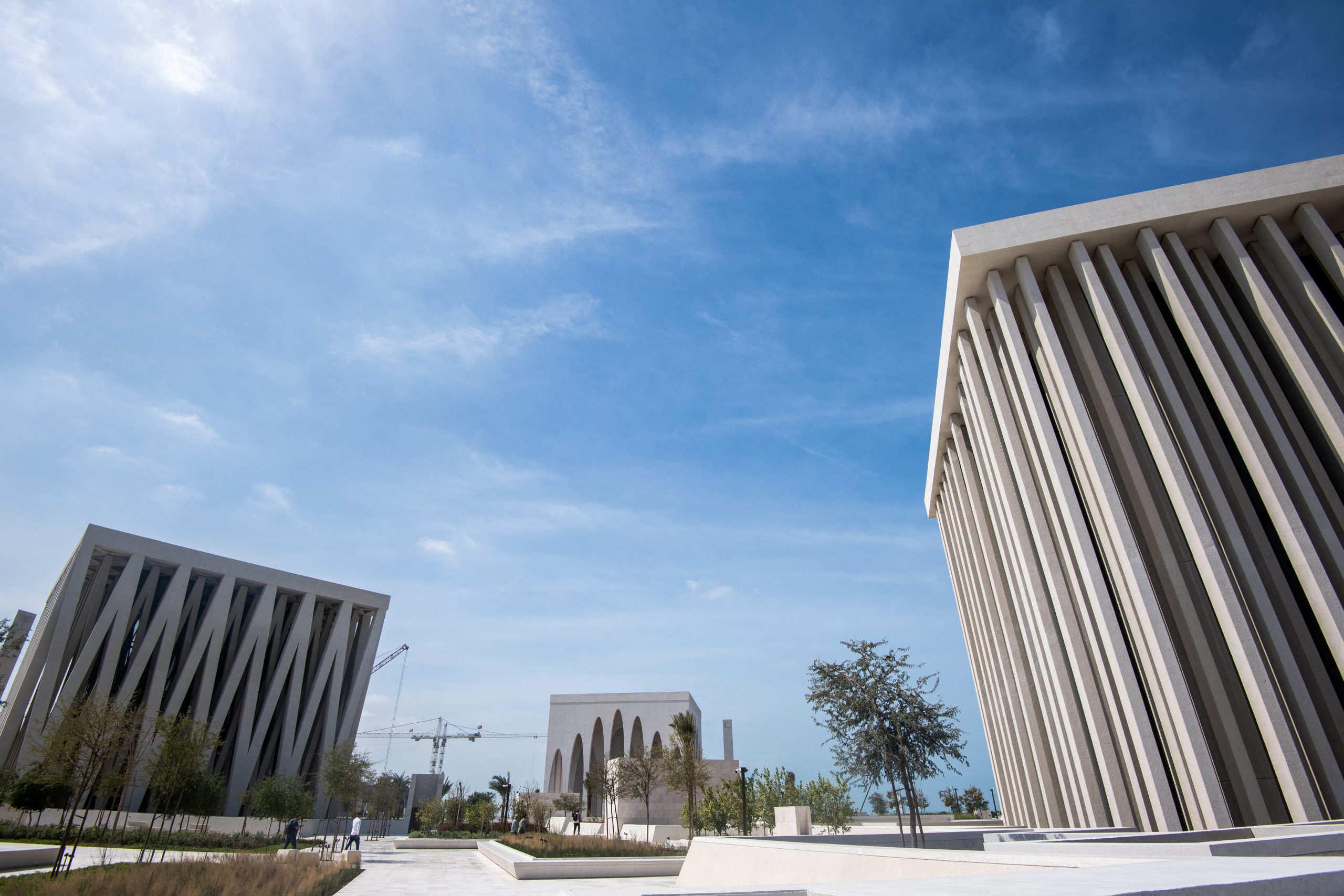
The Apostolic Vicar of Southern Arabia defended interfaith dialogue after the temporary closure of the Abrahamic Family House, as war involving Israel, the United States, and Iran spread across the Gulf.
Bishop Paolo Martinelli, in an interview with AsiaNews, said that the closure is not “a metaphor for this escalation,” but is “temporary, necessary.”
“I don’t believe the closure of the Abrahamic Family House is a metaphor for this escalation. It is a temporary closure, necessary at this time given the situation and the unpredictability of developments,” he said.
The conflict entered its third day with Israeli strikes on Hezbollah targets in Lebanon and reported explosions in Bahrain and the United Arab Emirates. An oil refinery caught fire in Saudi Arabia, though authorities said the blaze was under control.
The Red Crescent estimated more than 550 people have been killed in Iran across at least 130 cities. Leaders from Riyadh to Kuwait accused Tehran and threatened retaliation following attacks on U.S. military or energy targets.
The British RAF base in Cyprus was placed on high alert, with fighter jets scrambling to repel “a suspected drone attack.”
Despite the escalation, Martinelli said the situation in the United Arab Emirates remains “largely under control,” though regional differences persist.
“In the United Arab Emirates, the situation appears largely under control, although regional differences exist. There’s greater concern in Abu Dhabi and Dubai, while in other parts of the country the repercussions are less pronounced,” the prelate said.
He said authorities had repelled the attacks and that many people believed the country could protect its population, though a degree of apprehension remained.
Church life has continued across the vicariate, with precautions. Masses were celebrated regularly, and parish priests confirmed that Sunday services proceeded as scheduled. In Al Ain, near the Oman border, where Martinelli was conducting a pastoral visit, activities were also held as planned. He said the vicariate is following the instructions of civil authorities.
The apostolic vicar said the conflict underscores the deep ties among Gulf states.
“We find ourselves directly involved in a situation that has long concerned us. What’s happening these days further highlights the deep connections between the Gulf countries, which are indeed deeply rooted.”
He noted that migrants, who make up 90% of the resident population, could face uncertainty as the war unfolds. It is still too early, he said, to assess the specific impact on migrant communities.
He added that the Church is praying for the three victims of the war and expressed hope that no further casualties would follow. He also called for a return to dialogue and diplomacy to support what Pope Leo described at the end of Sunday’s Angelus as “the good of the peoples who yearn for peaceful coexistence.”
Martinelli stressed that the Abrahamic Family House remains a symbol of dialogue even while closed. The complex is linked to Pope Francis’ 2019 visit to the United Arab Emirates and the signing of the Document of Human Fraternity with the Grand Imam of Al-Azhar.
“But the very existence of this complex is a positive challenge and a reminder of the value of dialogue between people of different faiths, which we must never tire of fostering. We must fight against any exploitation of religions,” he said.
“Even if it cannot be used at this time, it remains a sign of dialogue and peaceful coexistence. We hope it can be reopened soon.”
Martinelli said he has been in contact with other Church leaders in the region, including members of the Episcopal Conference of Latin Bishops of the Arab Regions.
“Immediately after the attacks began, I wrote a letter to all our faithful, urging them to remain at peace in the Lord and to follow the instructions of the civil authorities. Above all, I asked them to remain united in prayer and to show solidarity with one another, especially with those most in need. I especially encouraged them to recite the rosary together.”
“Prayer, in fact, renews our hope, our trust in God and in Providence, and prepares us to face even difficulties with a positive spirit, open to charity and sharing.”