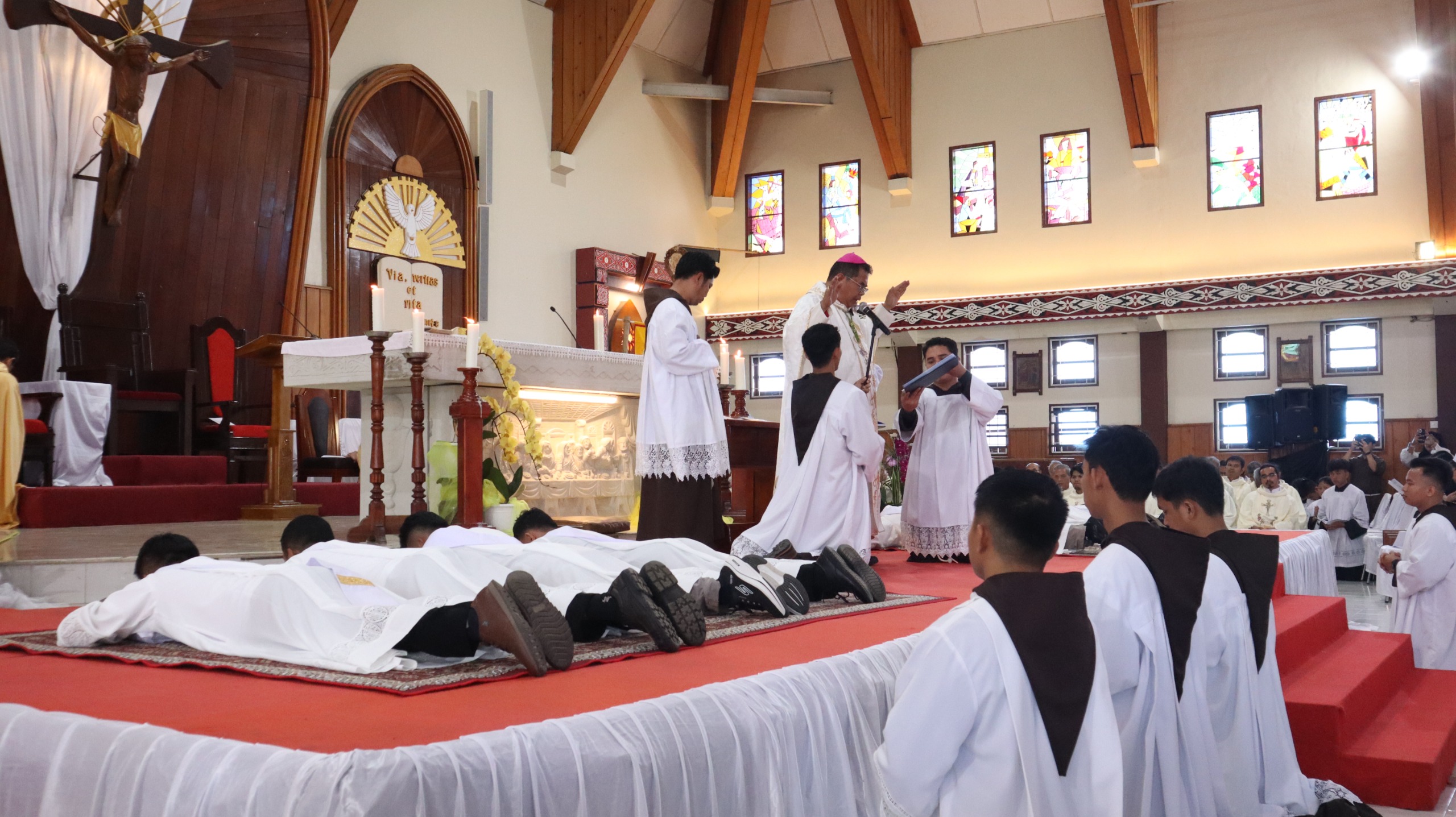
In every age, God continues to call men and women to follow Him in priesthood and consecrated life. Yet vocations do not arise in isolation. They are nurtured within families, parish communities, and faith-filled environments where God’s voice can be heard and discerned.
Today, however, the Church faces a serious challenge. While seminaries and convents in many places are becoming emptier, there is also the danger of reducing vocation ministry to a search for numbers rather than genuine discernment. The Church is called not merely to increase candidates, but to foster mature, Christ-centered vocations rooted in freedom, faith, and generosity.
Biblical Pattern of Every Vocation
Sacred Scripture reveals a common pattern in every vocation story. God takes the initiative, the human person hesitates, God reassures, and finally comes the generous “Yes.” Moses feels inadequate (Ex. 3:11), Jeremiah too young (Jer. 1:6), and Peter unworthy (Lk. 5:8), yet God assures them: “I will be with you” (Ex. 3:12) and “Do not be afraid” (Jer. 1:8). The culmination of every vocation is seen in the response of Isaiah: “Here am I; send me” (Is. 6:8), and Mary: “Let it be done to me according to your word” (Lk. 1:38).
The Family: The First School of Vocation
Within this divine-human dialogue, the family occupies a privileged place. The Second Vatican Council calls the family the “domestic Church” in Lumen Gentium (11), the first place where faith is lived and transmitted. It is within the family that a child first learns to pray, trust God, and recognize His voice. The family thus becomes the first school of discipleship and discernment.
Prayer holds a central place in this culture of discernment. Vocations are not manufactured through strategies or programmes alone. They are born in hearts open to God’s will. Family prayer, participation in the Eucharist, devotion to the Blessed Sacrament and the Rosary, and moments of silence help young people become attentive to the gentle voice of God. In homes where faith is joyfully lived, the seed of vocation often finds fertile soil in which to grow.
Today, many parents hesitate when a son wishes to become a priest or a daughter desires consecrated life. In smaller families especially, fears of loneliness, insecurity, or losing emotional support become real concerns. Yet Scripture reminds us: “Children are a heritage from the Lord” (Ps. 127:3). Children ultimately belong to God, and encouraging them to respond to His call is not a loss but an offering made in faith.
Authentic vocations also flourish when young people encounter the joyful witness of priests, religious, and holy Christian families. Young people are inspired not by pressure or propaganda, but by lives rooted in prayer, simplicity, sacrifice, and joy. A cheerful priest, a compassionate religious sister or brother, or a family deeply committed to the Gospel can silently awaken in young hearts the desire to dedicate themselves fully to God and His people.
The Danger of Focusing Only on Numbers
The present vocation crisis has created another danger within the Church: the temptation to focus excessively on numbers. Various forms of vocation promotion such as vocation talks to catechism students, home visits, “Come and See” programmes, vocation camps, and vocation homes are valuable and necessary. Problems arise, however, when vocation ministry begins to resemble competition among dioceses or religious congregations to secure more candidates.
When quantity becomes the primary goal, discernment suffers. Young people may feel pressured, and formation houses may struggle to maintain standards. At times, unsuitable candidates are retained merely to fill empty spaces. This weakens the future of priesthood and religious life, since authentic formation requires emotional maturity, spiritual depth, discipline, freedom, and a genuine desire to serve God and His people.
Certainly, God forms and shapes those whom He calls. Scripture itself shows how God transformed weak individuals into instruments of grace. Yet this truth should never be used to justify inadequate discernment. Grace builds upon nature. Human maturity, moral integrity, psychological balance, and spiritual openness remain essential foundations for formation.
Jesus Himself did not seek followers merely to increase numbers. Many left Him when discipleship became difficult (Jn. 6:66). Christ desired disciples willing to follow Him wholeheartedly.
Accompaniment Rather Than Recruitment
Therefore, the role of vocation promoters must be understood not as recruitment but as accompaniment. Their mission is to help young people discern God’s will freely and sincerely. They should present the richness of diocesan priesthood and the various charisms of religious congregations, helping young people discover where God truly calls them. The goal is not institutional success but fidelity to God’s plan.
The Church does not need vocations born of pressure, fear, or competition. She needs vocations rooted in prayer, conviction, sacrifice, and love for Christ. Even if the numbers are smaller, genuine vocations bear lasting fruit. Throughout history, the renewal of the Church has depended not on quantity but on holiness.
Families, parish communities, vocation promoters, seminaries, and formation houses must therefore work together in creating a true culture of discernment. When families become genuine domestic Churches, when vocation promoters become guides rather than recruiters, and when the Church values authenticity over mere numbers, the mission of Christ the Good Shepherd will continue to flourish through hearts courageously ready to say: “Lord, here I am.”
Like the Good Shepherd who “calls his own sheep by name” (Jn. 10:3), Christ continues to call men and women even today. The shortage of vocations should never tempt us to accept anyone who simply wishes to join; authentic discernment must always remain the priority.