
Catholic leaders from across Sumatra affirmed local cultures as essential partners in proclaiming the Gospel during a regional meeting in Medan by adopting a joint declaration that encourages the use of local languages, Indigenous traditions, and digital media in biblical evangelization.
The declaration concluded the 2026 Sumatra Regional Meeting of Diocesan Delegates for the Biblical Apostolate, held June 15–19 at the Christosophia Catholic Center of the Archdiocese of Medan. Delegates reaffirmed their commitment to Sacred Scripture while embracing local cultures as authentic instruments of evangelization.
The biennial gathering brought together Biblical Apostolate delegates from the Archdiocese of Medan, the Diocese of Sibolga, the Diocese of Padang, the Archdiocese of Palembang, the Diocese of Pangkal Pinang, and the Diocese of Tanjungkarang.
A delegation from the Biblical Commission of the Bishops’ Conference of Timor-Leste also attended to observe and learn from Indonesia’s experience in integrating biblical ministry with local cultural traditions.
Held under the theme, “Discovering the Face of Jesus in Local Culture,” the meeting focused on strengthening biblical ministry and sharing pastoral experiences across the Church in Sumatra.
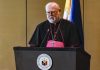
During the opening Eucharistic celebration, Archbishop Kornelius Sipayung OFMCap of Medan encouraged participants to deepen their encounter with God’s Word through dialogue and shared reflection.
“May this meeting become an opportunity to share our experiences and to reflect together on God’s Word in our lives and ministry,” the archbishop said.
Speakers throughout the meeting emphasized that the Gospel is proclaimed within the cultural realities of the people who receive it and that local traditions provide fertile ground for evangelization.
Fr. Albertus Purnomo OFM, chairman of the Indonesian Biblical Institute, said Scripture continues to find life when expressed through culture and contemporary means of communication.
“Sacred Scripture is the living Word of God. To remain alive, the Word must be present through local cultures as well as through modern technology and communication media, becoming an integral part of the identity of God’s people,” he said.
Referring to Dei Verbum, the Second Vatican Council’s Dogmatic Constitution on Divine Revelation, Purnomo said the Church continually translates and contextualizes God’s Word so it can be understood by every people and culture while preserving the integrity of the Catholic faith.
The meeting also explored how Indigenous cultures in North Sumatra embody values that resonate with the Gospel.
Anthropologist Fr. Herman Yosef Nainggolan OFMCap presented the traditions of the Batak Toba, Karo, Simalungun, Mandailing, and Pakpak peoples. He said their understanding of the Divine, together with values of compassion, mutual respect, and solidarity, could be understood as semina verbi, or “seeds of the Word.”
“These noble values are the seeds of the Word that were already present in local cultures long before the Gospel was formally proclaimed,” he said.
Fr. Yonas Manue Hunu SVD, chairman of the Sumatra Regional Biblical Delegates, said Sacred Scripture itself emerged within the cultural contexts of the Jewish, Greek, and Roman worlds.
“God is a contextual God because He always reveals Himself within a particular context. Therefore, we must live both within the context of Sacred Scripture and within our own cultural context, remaining faithful to the faith without becoming detached from our cultural roots,” he said.
Participants also exchanged pastoral experiences and discussed ways to strengthen biblical ministry across Sumatra. They learned from the experience of the Church in Timor-Leste, where translating the Bible into local languages has become an integral part of liturgical life and catechetical ministry.
In their joint declaration, the delegates pledged to promote local languages and cultural symbols, recognize the seeds of the Word within Indigenous traditions, strengthen youth formation, expand the use of digital media, and develop new forms of biblical evangelization that resonate with younger generations.