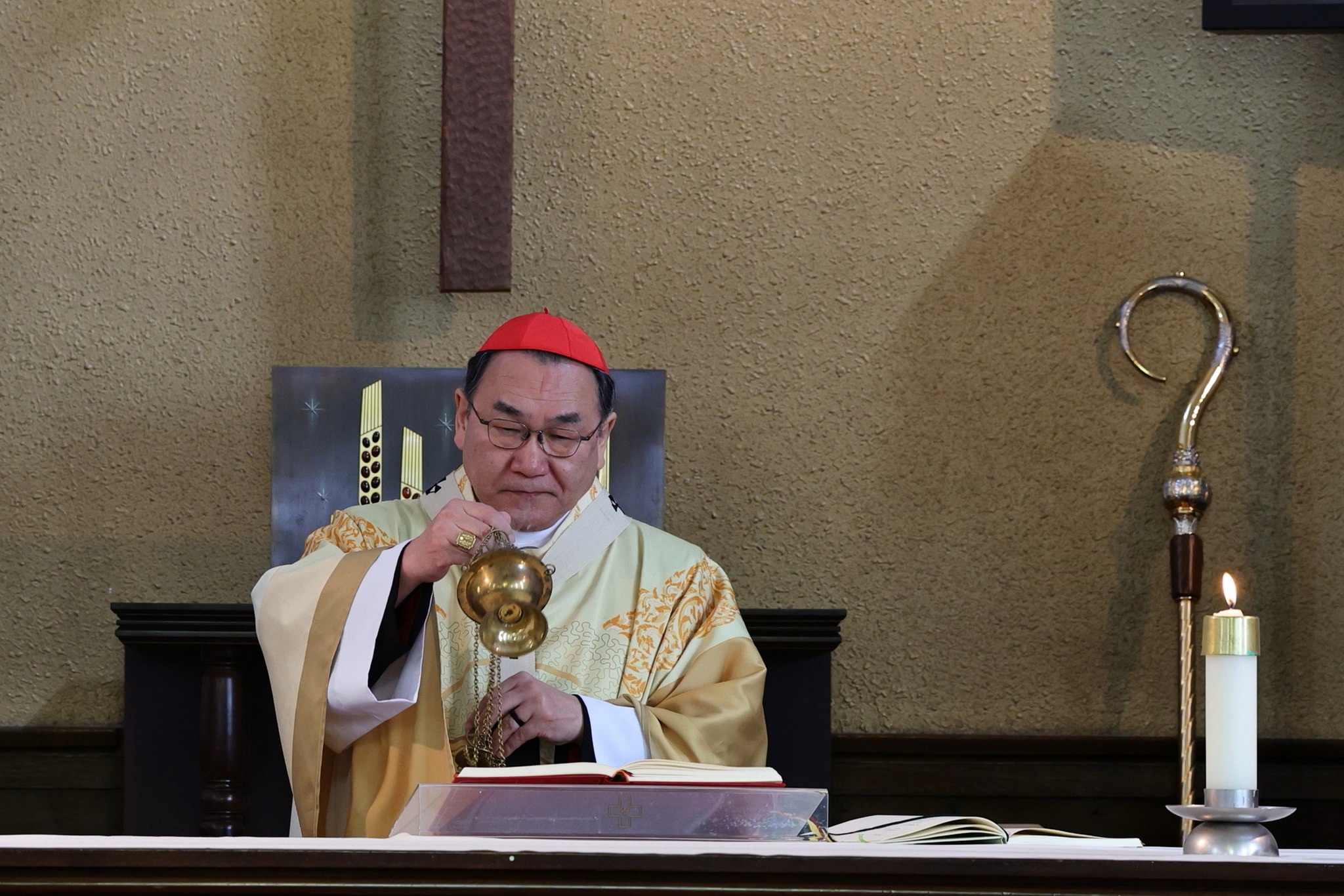
Cardinal Isao Kikuchi acknowledged that harassment and conflict exist within Catholic communities and said that the Church must address those realities if it is to fulfill its mission of bringing hope to a troubled world.
In his weekly message, released July 5, the archbishop of Tokyo reflected on whether the Church has become “a place of peace and comfort” or one that “burdens visitors.”
“Is the church a place of peace and comfort, rather than a place that burdens visitors?” he asked.
The prelate said the world’s continuing violence, oppression, and poverty have exposed the limits of social and technological progress.
“It was once thought that as society develops and technology advances, people’s lives will improve, and hope will be generated, but unfortunately, that is not the reality,” he said.
He said one of the Church’s missions is “to find hope and create peace through encounters between people.”
Drawing on Pope Benedict XVI’s encyclical Spe Salvi (“Saved in Hope”), Kikuchi said human progress alone cannot provide the hope that sustains life.
Quoting the late pope, he said people need many smaller hopes in daily life but “cannot be satisfied without a great hope,” adding that “This great hope can be none other than God.”
Kikuchi said the Church becomes a source of hope not because everyone thinks alike but because it lives as “a synodal community, supporting one another, listening to one another, praying together, and walking together in discerning the guidance of the Holy Spirit.”
He said peace and hope are born when believers “respect,” “listen,” “support,” and “pray for one another,” while keeping Jesus Christ at the center of the community.
The cardinal also acknowledged that the Church does not always live up to that calling.
“Unfortunately, within the church community, there is a reality that suffering, not peace, is being created,” he said.
“It is undeniable that there is harassment at various levels, and conflicts stemming from mutual, and sometimes one-sided, misunderstandings,” he added.
Kikuchi said those failures reflect the reality that everyone in the Church shares the same human frailty.
“Everyone gathered in the church, including myself, is a flawed human being burdened with sin,” he said.
He urged Catholics to let the Eucharist shape how they live and treat others.
“When we receive Holy Communion in the Eucharist and become one with the Lord, He Himself comes into our hearts,” he said.
“As we are with the Lord, let us bear witness to the peace He gives us and find ways to act accordingly,” he added.