For the third time in just over a month, the Java Sea has witnessed a deadly maritime disaster involving vessels carrying people from Java to destinations in other parts of Indonesia.
The latest disaster struck on September 13, when the Virgo Transport 8, carrying 213 passengers and 30 crew members on the Surabaya-Banjarmasin route, capsized in the Java Sea.
The incident came about three weeks after the tanker MT Elisabet sank on August 21, leaving five of its 14 crew members missing, and six weeks after the KMP Mutiara Sentosa 2 caught fire on August 2, killing five people and forcing hundreds of passengers to flee into the sea.
The latest accident has again raised questions about maritime safety in Indonesia, an archipelago of more than 17,000 islands that relies heavily on boats for daily transportation and tourism.
Indonesia’s National Search and Rescue Agency, or Basarnas, said six people had died, 108 had been rescued alive and 129 remained missing as of September 15.
The ferry lost contact with its shipping company shortly after departing from Surabaya, Indonesia’s second-largest city, for Banjarmasin on Borneo.
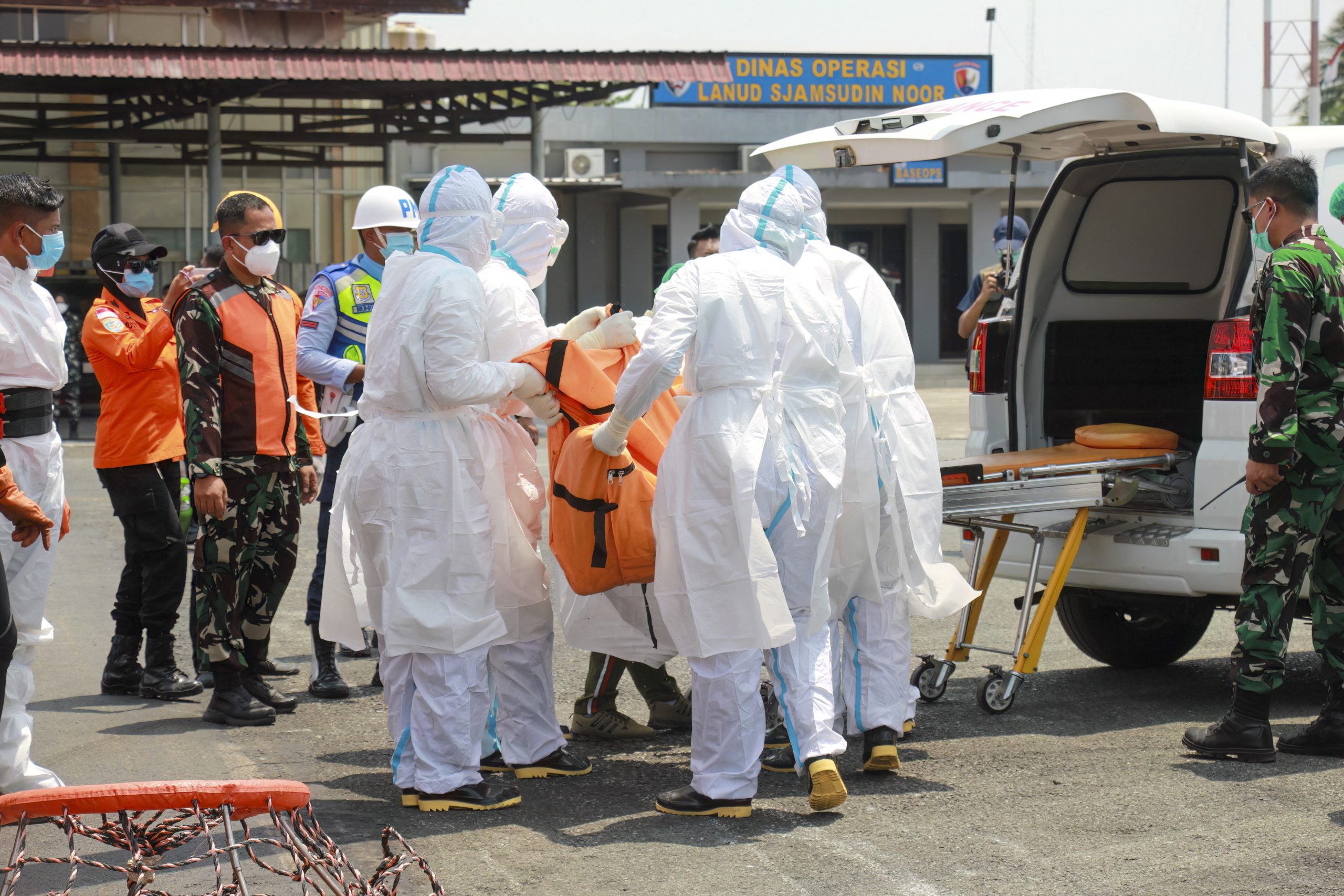
Basarnas said 22 survivors were brought to a harbor in Banjarmasin on September 15 after bad weather prevented their evacuation a day earlier.
“The plan was to evacuate them to Trisakti Port yesterday, but adverse weather conditions prevented us from doing so,” said I Putu Sudayana, head of the local search and rescue agency.
“We cannot fight nature, the swells and waves in the area were extremely high,” he said.
Four bodies were also airlifted to Banjarmasin on September 15, according to Basarnas.
Nearly 1,100 rescuers, including personnel from the navy and police, were involved in the search operation, with more than a dozen vessels and five aircraft deployed.
Families wait for news
Families of passengers and crew members gathered at search and rescue posts at Trisakti Port in Banjarmasin and Tanjung Perak Port in Surabaya, waiting for information about their relatives.
Istiana, a resident of Sidoarjo in East Java, came to the post looking for her nephew, Dede Farandika. She later received information that he had been found and rescued by fishermen.
“I was told that he had been rescued by fishermen,” said Istiana.
Other families continued to wait for news.
Fredy, a resident of Mojokerto, was waiting for information about his younger brother, Stevie Manuhua, a musician working aboard the vessel.
“I hope he can be found. Whatever his condition, I just hope he can be found,” said Fredy.
Bad weather suspected
Before the vessel lost contact, its captain reportedly informed authorities that the ship had begun to tilt after encountering bad weather and high waves.
Bad weather was initially suspected as a factor in the accident, but the exact cause of the capsizing remained under investigation by authorities.
Family assistance posts were established at Tanjung Perak and Trisakti ports. Bhayangkara Hospital in Banjarmasin was also placed on standby to receive victims evacuated from the accident site.