Filipino Cardinal Pablo Virgilio David of Kalookan said youth protests across parts of Europe should serve as a warning to governments against prioritizing military spending over education and the future of younger generations.
In a social media post on Oct. 18, the prelate pointed to demonstrations that began among high school students in France and later inspired similar protests in Italy, Belgium, Germany, and elsewhere.
“Perhaps these demonstrations are also a warning to governments about their budgetary priorities,” David said.
“What kind of future are we preparing for the next generation? What good is military security if we neglect the education, health, livelihood, and human dignity of the very people we claim to protect?” he added.
He cited slogans raised by protesters in Italy and Germany calling for greater spending on schools instead of weapons.
In Italy, demonstrators used the slogan “Più soldi alle scuole, meno soldi alle armi!” or “More money for schools, less money for weapons!” In Germany, protesters declared: “Education, not war!”
David said the demonstrations reflected growing anxiety among young Europeans over underfunded education, rising living costs, economic insecurity and, in some movements, increasing military expenditures.
“What should be a legitimate clamor for a more peaceful and humane future is unfortunately being marred by violent confrontations in some places,” he said.
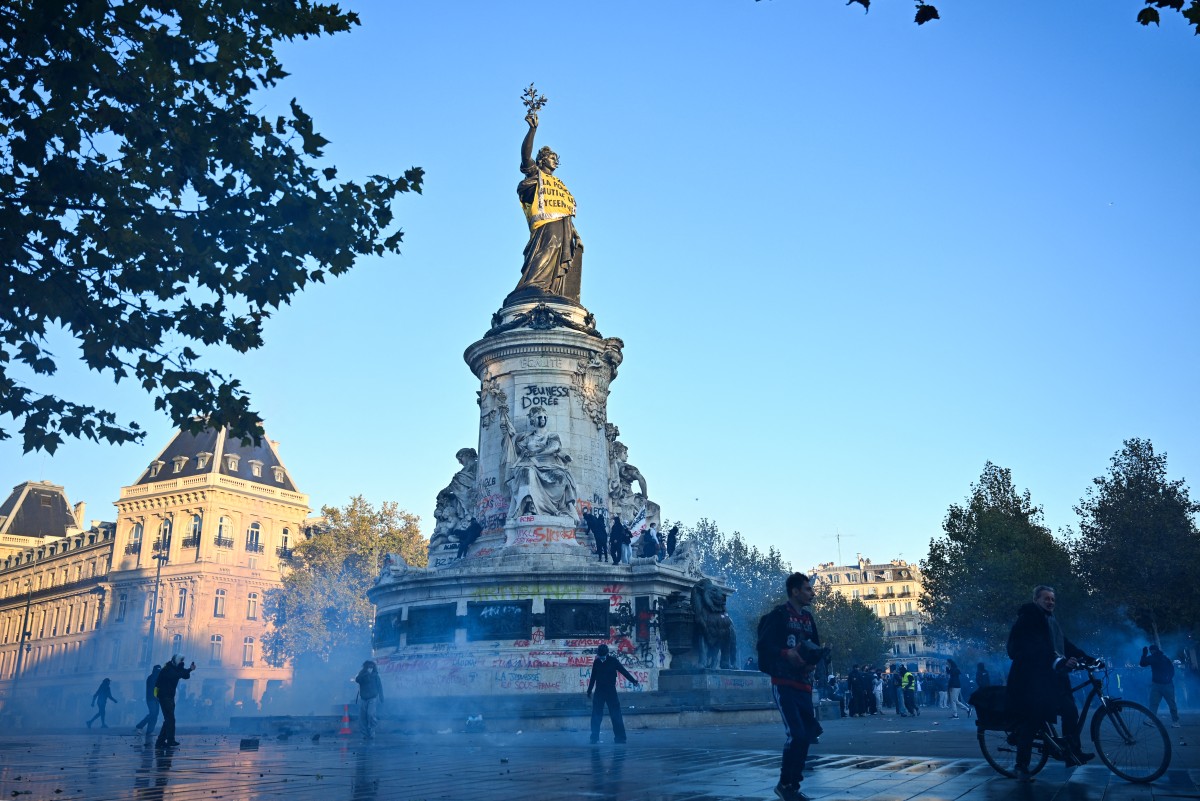
His reflection came as France dealt with the aftermath of nationwide protests that drew about half a million people on Saturday.
The demonstrations, driven by anger over the cost of living, descended into some of the worst violence to hit France in years.
More than 2,500 people were arrested, and almost 1,000 members of the security forces were injured, AFP reported.
Protesters were also injured, including one demonstrator whose hand was blown off by a police crowd-control grenade.
French Interior Minister Laurent Nunez said Monday that police had “lost control” in some major cities and acknowledged a “lack of anticipation” in the deployment of security forces.
The weekend unrest followed four weeks of high school student protests that had at times also turned violent.
David compared the developments with the student revolts of 1968, when protests that began in France became part of a broader international movement challenging the established order, militarism and the Vietnam War.
“It reminds me of 1968 and the generation the French called les soixante-huitards—the young people whose student revolts spread beyond France and became part of a worldwide movement challenging the established order, militarism, and the Vietnam War,” he said.
“It was also the era of the hippies and their famous appeal: ‘Make love, not war! History does not necessarily repeat itself, but sometimes it echoes,” David said.
David also linked the protests to Pope Leo XIV’s appeals for peace rooted in justice, dialogue and respect for human dignity.
He urged governments to listen to the concerns being raised by young people while calling for peaceful dialogue.
“May the voices of these young people be heard. May their legitimate concerns find expression through peaceful dialogue rather than violence,” David said.
“And may those entrusted with political leadership remember that investing in the future of our young people is itself an investment in peace,” he added.