Being a catechist in the Catholic Church is not merely about teaching religious doctrine or preparing people to receive the sacraments. More importantly, catechists are called to accompany people on their journey of faith, foster dialogue, and help them deepen their understanding and practice of faith in everyday life.
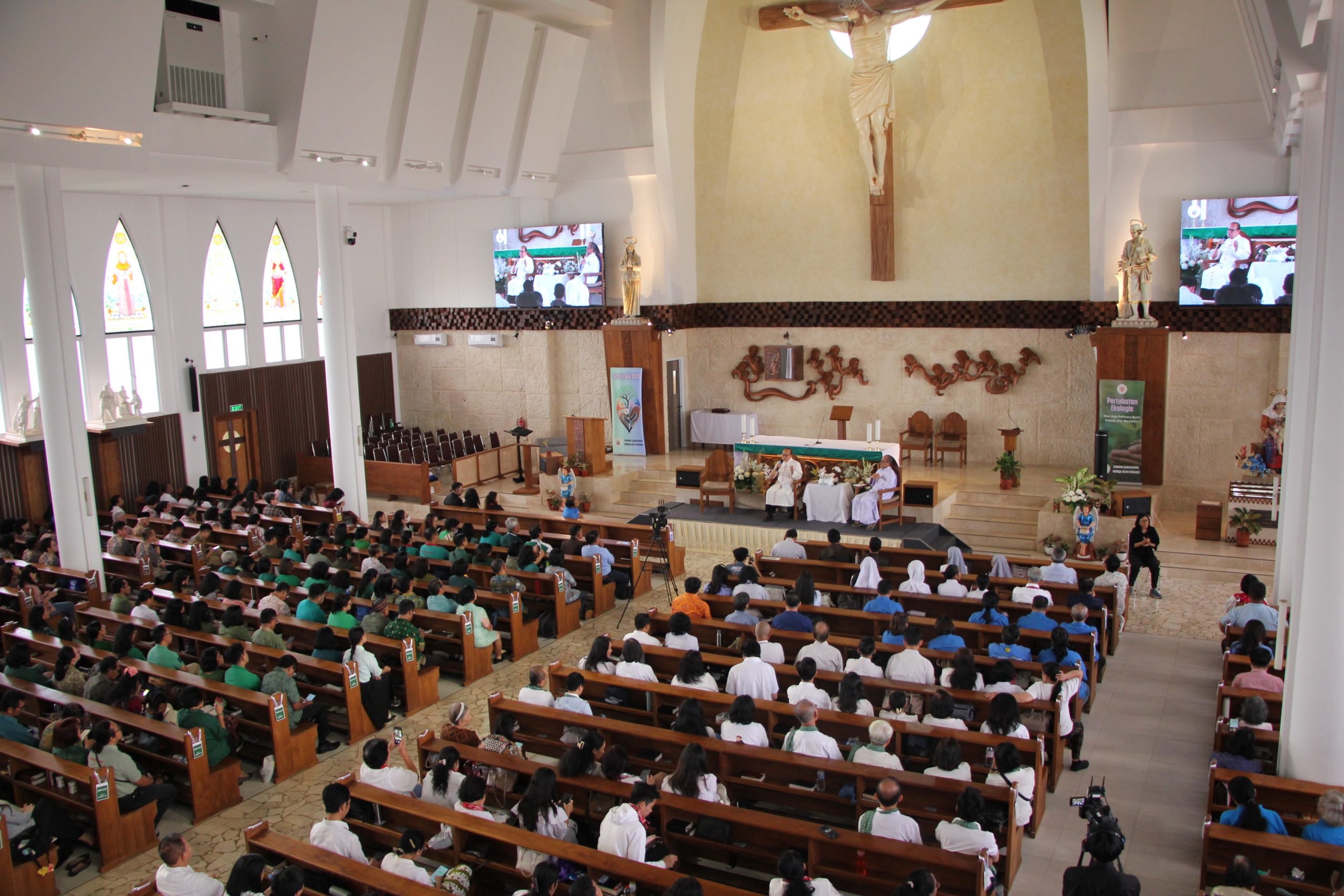
This message was conveyed by Cardinal Ignatius Suharyo, archbishop of Jakarta, and the chairman of the Catechetical Commission of the Archdiocese of Jakarta, Fr. Carolus “Uut” Putranto, during the celebration of Catechists’ Day at Our Lady of the Rosary Church, Jagakarsa Parish, South Jakarta, on Saturday, Oct. 31, 2026.
880 catechists across the Archdiocese of Jakarta
Organized by the South Deanery, the event brought together 880 catechists from 66 parishes across the Archdiocese of Jakarta (KAJ), which comprises eight deaneries as part of its pastoral structure.
The messages from Cardinal Suharyo and Fr. Putranto followed a sharing session in which eight senior female catechists took to the stage to recount their personal faith journeys and experiences of serving voluntarily as catechists in their respective parishes.
Their testimonies illustrated that catechetical ministry involves more than religious instruction. It also requires faithfulness to one’s calling, a willingness to accompany others, and active participation in the life of the Church.
Their experiences provided an opportunity for reflection on how catechists live out their vocation amid the challenges of life and ministry.
Faith formation
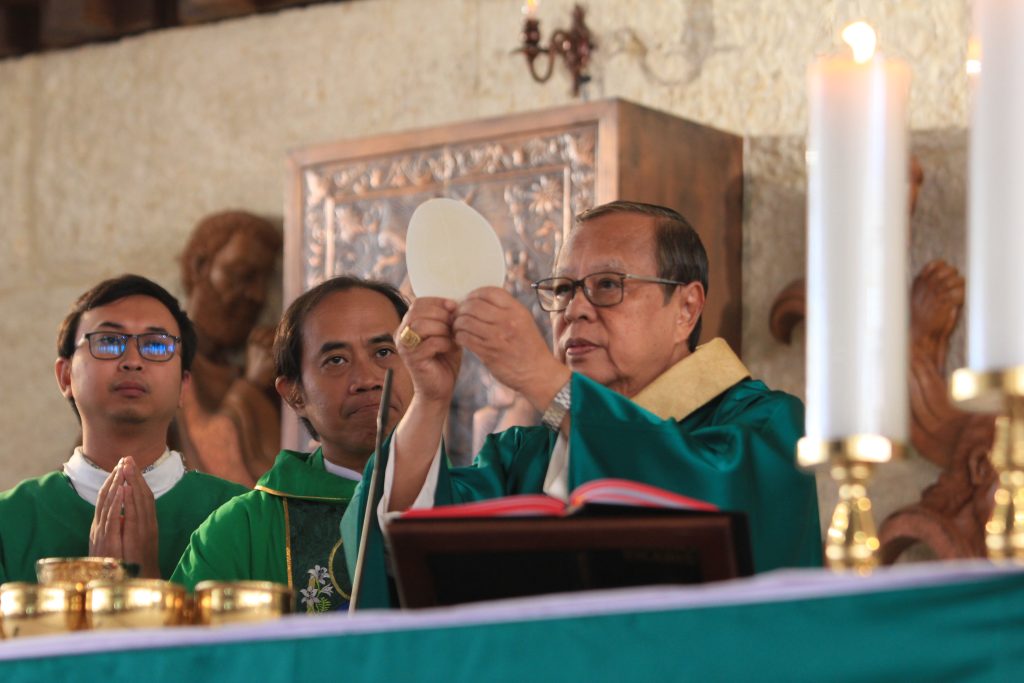
Responding to their testimonies, Cardinal Suharyo invited participants to reflect on the true meaning of faith formation. Christian life, he emphasized, is an ongoing journey toward the perfection of love.
According to the cardinal, faith formation cannot be limited to communicating Church teachings or explaining religious doctrines. Life experiences, encounters with others, and reflection on those experiences are equally important in nurturing faith.
Catechists play a vital role in helping people understand that faith is not merely a collection of religious knowledge but something to be lived and expressed through everyday actions.
Cardinal Suharyo emphasized that the journey toward the fullness of Christian life requires openness to continuous learning, dialogue, and walking together. In this process, catechists themselves are also called to deepen their own faith.
The cardinal also highlighted the importance of dialogue in faith formation. Catechists should not simply provide explanations or answers to participants’ questions. They must also be willing to listen to people’s experiences and struggles in their faith journeys.
Even seemingly simple questions, including those raised by children, can become opportunities for deeper reflection. Rather than immediately providing answers, catechists can encourage participants to think, engage in dialogue, and discover the meaning of their own experiences.
Through this approach, faith formation becomes more than a one-way transfer of knowledge. Catechists themselves can also learn from the experiences of those they accompany.
Different approaches
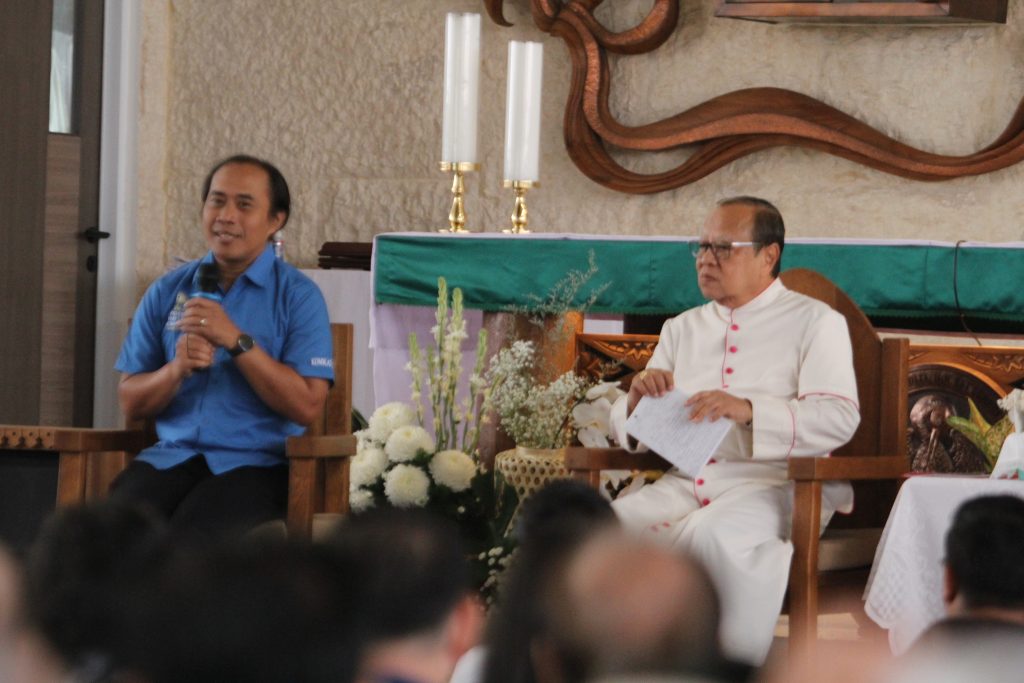
Fr. Putranto, who also serves as a theology lecturer at the Driyarkara School of Philosophy (STF Driyarkara) in Jakarta, participated in the gathering.
The discussions on catechetical ministry also emphasized the importance of an approach that allows people to share their experiences, questions, and struggles of faith.
Every individual has a unique faith journey. Family experiences, encounters with others, and various life events can influence how people understand and live out their religious beliefs.
For this reason, catechetical ministry requires patience, openness, and the ability to understand the circumstances of those being accompanied. Catechists are not only responsible for imparting religious knowledge but also for helping people discover the meaning of faith in their own lives.
Another important aspect highlighted during the gathering was the role of prayer in the lives of catechists and the people they serve.
Prayer should not be regarded merely as a routine activity or religious obligation but as an expression of one’s relationship with God. Through prayer, believers open themselves to the work of the Holy Spirit in their lives.
The discussions also highlighted the importance of faith experiences within the family. The practice of praying together, whether between parents and children or grandparents and grandchildren, can become a means of passing on faith from one generation to the next.
Such experiences demonstrate that faith formation does not take place exclusively through formal religious instruction or sacramental preparation classes. Family life and everyday encounters also provide opportunities for spiritual growth.
Beyond the relationship between catechists and the faithful, the gathering highlighted the need for greater attention and support from priests in catechetical ministry.
Catechists fulfill an important responsibility in the life of the Church, particularly in helping people understand their faith and prepare for the sacraments. However, their ministry cannot be separated from the pastoral responsibilities of priests.
Cooperation between priests and catechists must therefore continue to be strengthened. Catechists need encouragement, guidance, and opportunities to deepen both their religious knowledge and personal faith experiences.
At the same time, priests have a responsibility to support and accompany catechists so that the Church’s mission of evangelization and faith formation can be carried out effectively.
The Catechists’ Day celebration also provided an opportunity for catechists from parishes throughout the Archdiocese of Jakarta to strengthen solidarity and renew their commitment to ministry.
The testimonies of the eight senior female catechists served as a reminder that catechetical ministry grows out of genuine faith experiences, faithfulness to one’s vocation, and the willingness to devote time and energy voluntarily to serving the Church.
Through dialogue, prayer, and continuous accompaniment, catechists are encouraged to embrace their vocation not merely as religious teachers but also as witnesses of faith and companions who walk alongside the faithful on their journey toward the perfection of love.