
Hospitality is such a lonely word in our globalized world.
We have heard of undocumented migrants being hounded in the US. They wanted to “make America great again” — so they let the migrants go. We see daily on TV Israeli bombs extracting Palestinians from their homes for centuries, multiplying the miseries of women and children.
I can go on and on: Ukraine, Iran, Myanmar, Sudan, the Philippines, etc. People are sent out of their homes—running, afraid, hungry. And no one welcomes them. The UN’s latest survey (2024) says there are 304 million migrants worldwide.
Thousands of families were left fatherless in Duterte’s War on Drugs. Thousands of Indigenous Peoples are continually driven from their ancestral domains because of capitalist aggression. People roam homeless in our streets. Truly, hospitality is such a lonely word.
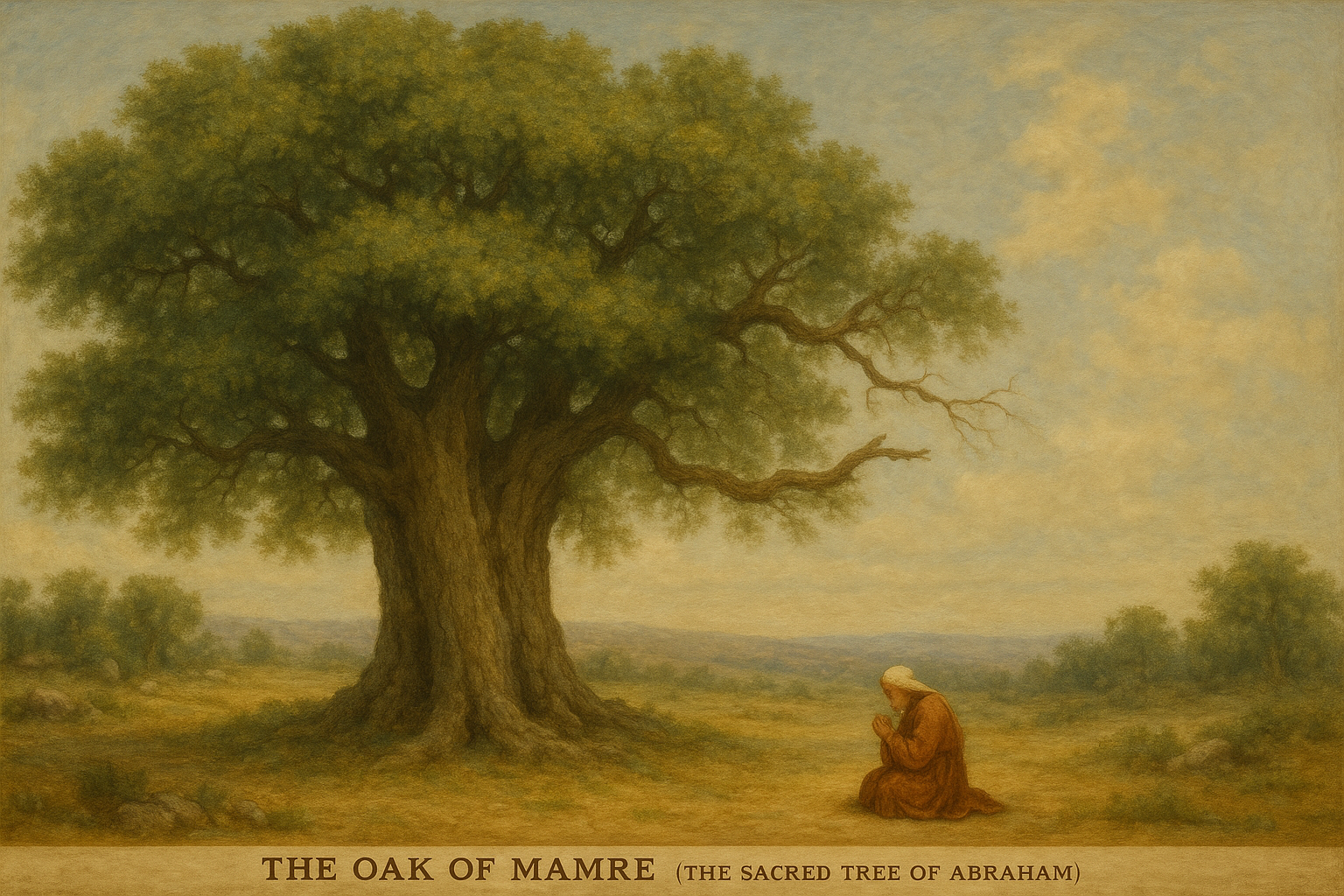
Today’s readings talk about the hospitality of Abraham and Sarah to the three guests at the oak of Mamre (Genesis 18:1–15), and the hospitality of Martha and Mary for their friend Jesus in their house in Bethany.
Migrant hospitality
First, Abraham and his wife were migrants. God called them to leave. Now, on one fine day, Abraham was sitting under the shade of the oak tree at Mamre, where he had pitched his tent. This is not his final destination. They were in transit, on the move. Sarah, his old barren wife, was inside the tent. Then some other strangers came, seeking their hospitality.
Shall he welcome them? Who are they? Why did they come? Will they hurt them? Fighting his fears, he ran to the strangers, washed their feet, offered them bread, and asked Sarah to prepare a good meal.
Hospitality does not start in the stability of one’s dwelling. It can only start from the precariousness of one’s homelessness. It is only a migrant who can offer hospitality to another migrant. It is only the “homeless” who can offer a home.
“Welcome the stranger because you were once strangers in Egypt,” the Lord reminds his people.
This is what Pope Francis means when he says that the Church is a “field hospital.” It is not an established medical facility with all its gadgets and laboratories, but a “field hospital.” Or, to use another image of Pope Francis: “I want a Church that is bruised, hurting and dirty”—not a well-provided and protected Church, but a bruised Church in the streets.
Trinity or strangers?
This scene at Mamre has been immortalized in the 15th-century icon by Andrei Rublev, very much close to the heart of the Orthodox Church. In this reading, Abraham’s visitors were in fact God—the Trinity. But this is a hindsight Christian reflection. The strangers, in the eyes of Abraham, were just that—strangers!
In his commentary on the same text, the great philosopher Emmanuel Levinas asked: Did Abraham run to them because he saw God, or because he wanted to be hospitable to the strangers even if he did not know who they were? As we notice, there is a big gap between verse 1 and verse 2 of Gen 18. It was God who appeared (v.1); when he looked up, it was the strangers who were there (v.2).
Levinas’ answer was that Abraham tended to the strangers not because they were angels of God, but because they were strangers. Abraham suspended his communion with God to painfully attend to the strangers, whoever they were.
Vincent de Paul’s answer goes further. In his mysticism of action, the stranger was God, and God was in the stranger. No dualism, no separation.
Reversal: Law of hospitality
At the end of the story, the guests told the hosts: “Your wife Sarah will have a son!” In short, the guests—the strangers who asked for kindness—became the givers. And Abraham and Sarah, who were the hosts, became the guests who received. As hosts, they had control of the house. Ironically, their mastery and sovereignty were put into question, and they became the guests of their own household.
The hosts, the givers, in the end, were made to receive. And Sarah laughed, the Bible said, because she could not believe in this surprising reversal.
The philosopher Jacques Derrida, a disciple of Levinas, commented on this relationship between host and guest:
It is indeed the inviting host who becomes the hostage — and who really always has been. And the guest, the invited hostage, becomes the one who invites, the master of the host.
Playing on the French word hôte, the guest becomes the host’s host. The guest (hôte) becomes the host (hôte) of the host (hôte). Such are the laws of hospitality (Derrida, Of Hospitality, 123–125).
We are familiar with this reversal, this paradox of life. It is present throughout the Gospel and its stories — the Good Samaritan vs. the priest and Levite; the elder son vs. the prodigal son; the publican vs. the Pharisee, etc.
St. Vincent, the beggar
St. Vincent experienced the same paradox. I am always touched by this painting of Vincent and the beggar, done by Meltem Aktas and now found in the Rosati House in Chicago. Our confrere, Louis Brusati, gave this observation:
St. Vincent is the person who hands bread to people. Here he looks at the bread. But no one can say whether he is the one giving it or asking for it.
Look at Vincent’s left foot. He limped his whole life. In fact, this limping foot matches the deformed hands of the beggar. Only when we realize our own pain can we recognize the pain in the beggar. Only when we realize our being estranged can we recognize the stranger.
It is the beggar and his gaze that defines our being. It is the poor who tell us the truth of our own poverty. Just as it is the migrants—and the way we take care of them—that defines what kind of society we have.
In his letter during the 400th anniversary of our charism, the CM Superior General writes:
“To welcome the stranger within us, to recognize that he exists in every one of us, to embrace this stranger, accept him, and then give it all to Jesus to heal our wounds, to surrender completely to Him and trust totally in His Providence: this was Vincent’s way. Let it be the way for each one of us!”
— Tomaž Mavrič, CM
Father Daniel Franklin Pilario, C.M., is the President of Adamson University in Manila. He is a theologian, professor, and pastor of an urban poor community on the outskirts of the Philippine capital. He is also Vincentian Chair for Social Justice at St. John’s University in New York.