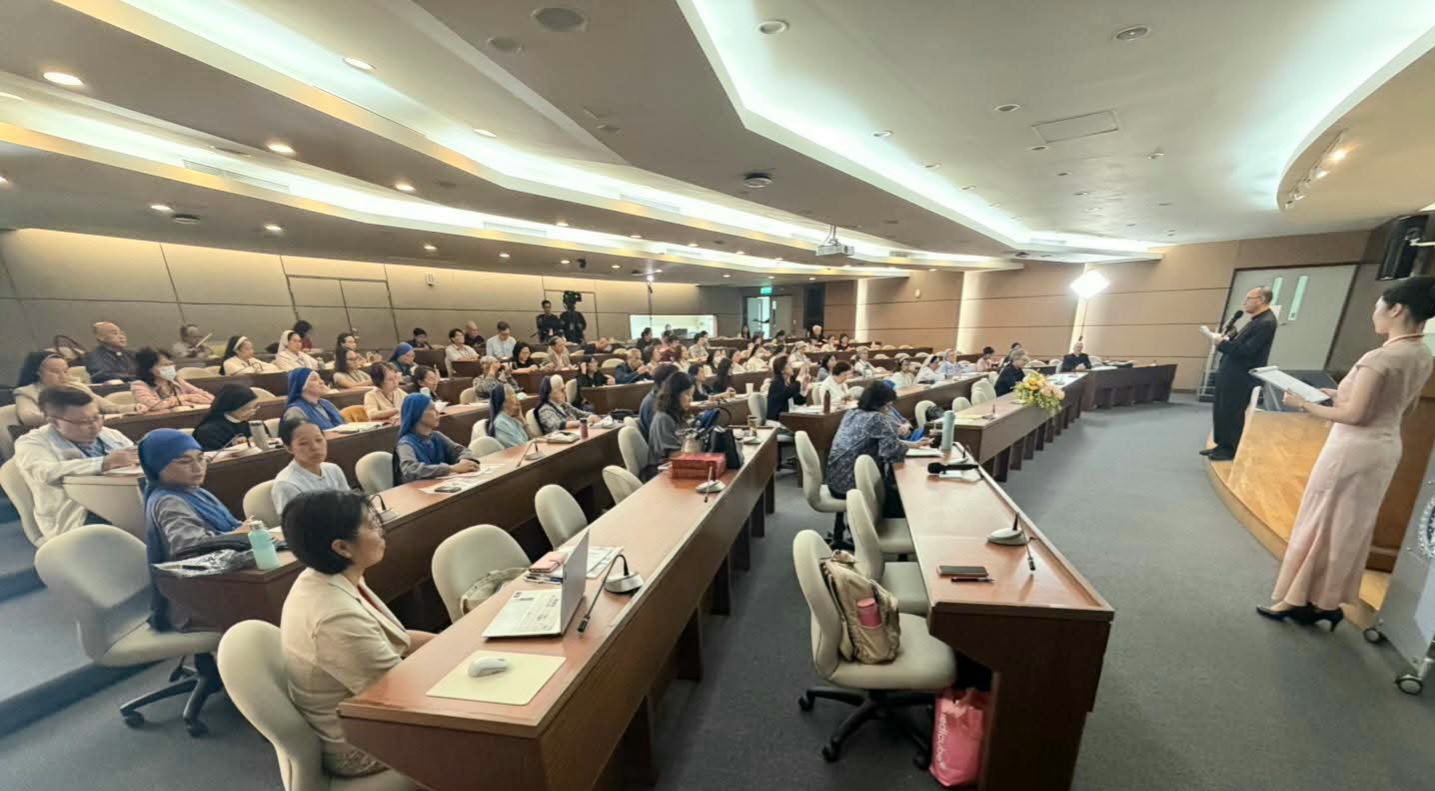
Catholic leaders from across Asia gathered in Taiwan from Nov. 6 to 8 to discuss challenges facing families, including declining birth rates, aging populations and the growing pastoral needs of vulnerable communities.
More than 100 delegates attended the 2026 International Conference on Asian Family Values and Pro-Life at Fu Jen Catholic University, organized by the Chinese Regional Bishops’ Conference (Taiwan).
The three-day gathering brought together bishops, priests, religious sisters, parish leaders, health care professionals, academics, educators, students and pro-life advocates from countries and territories including Thailand, Japan, Indonesia, Singapore, Hong Kong, Macau, India and Bangladesh. Participants from the United States also attended.
The conference examined the effects of economic, technological and cultural changes on marriage and family life, along with bioethical issues and the Church’s responsibility to protect human dignity.
Bishop Norbert Ying-Hsiung Pu of Chiayi, Taiwan, president of the Commission for the Laity, Family, and Life, presided over the opening ceremony alongside Father Wen-Lin Wang, vice president for mission at Fu Jen Catholic University.
Discussions focused on abortion, contraception, euthanasia, declining birth rates and the challenges of transmitting religious and moral values to younger generations.
According to the Thai delegation, participants emphasized the Catholic Church’s teaching on the dignity of human life from conception until natural death. They also discussed the importance of education, dialogue and pastoral accompaniment for people facing illness, disability and old age.
The conference highlighted the family’s role in passing on religious values and supporting vulnerable members of society. Participants examined how parishes and local communities could provide assistance to expectant mothers, older people and persons with disabilities.
Thailand’s experience received particular attention during a workshop examining demographic changes and their implications for Catholic pastoral ministry.
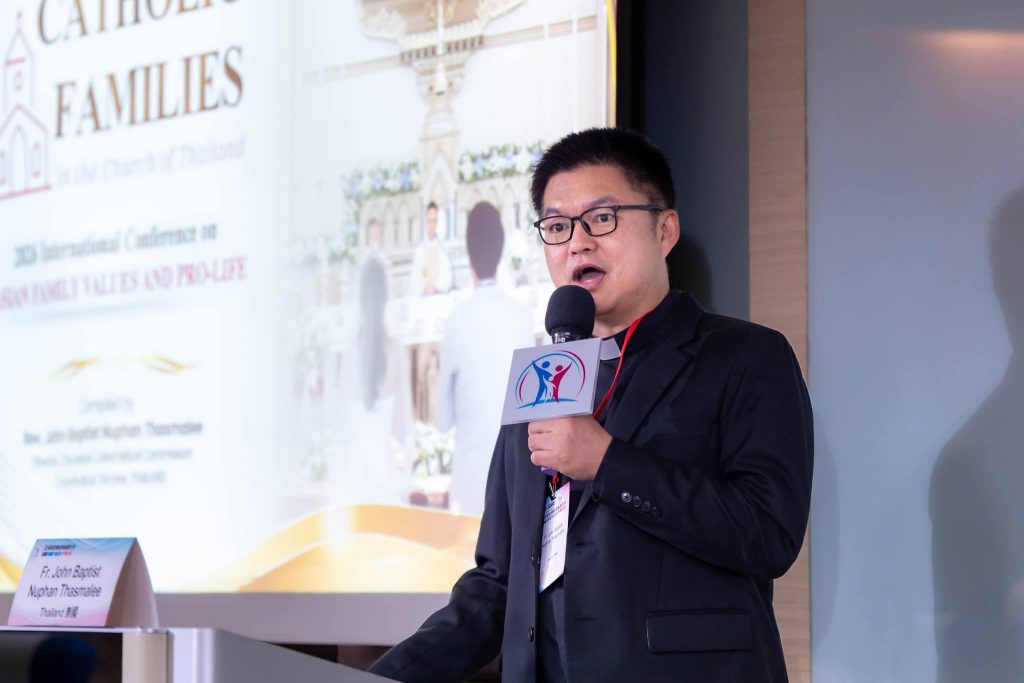
The Thai delegation was led by Father Joseph Phuwanart Naenna, director of the Family Commission of the Catholic Bishops’ Conference of Thailand, and Father John Baptist Nuphan Thatsamali, director of the Catechetical, Biblical and Social Communications departments at the Chanthaburi Diocesan Center.
Father Nuphan presented demographic information on births, deaths, marriages and divorces in Thailand, alongside changing attitudes toward relationships and family life among children, adolescents and young adults.
His presentation examined Thailand’s transition into an aging society and its consequences for Catholic communities, where older people account for a growing proportion of active churchgoers.
Father Nuphan emphasized the need for parishes to expand pastoral care beyond church facilities through home visits, support for people with chronic illnesses and spiritual accompaniment for older parishioners.
The changing age profile of Catholic communities, he explained, requires pastoral programs that respond to the needs of elderly people, including those who can no longer regularly attend parish activities.
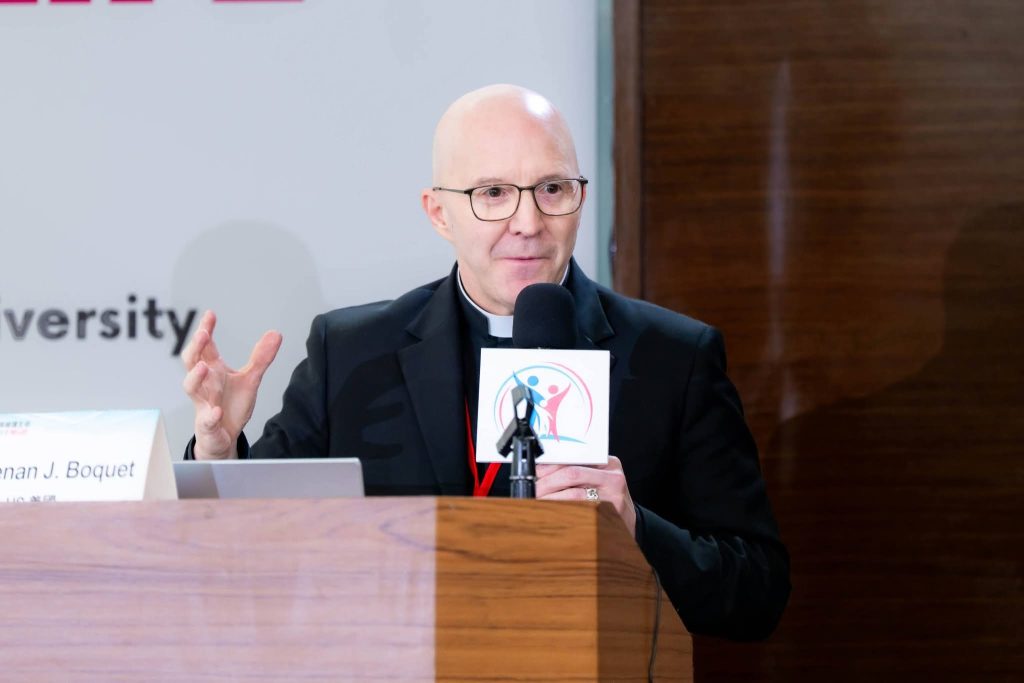
Father Phuwanart presented the Catholic Bishops’ Conference of Thailand’s approach to family ministry, which operates at the family, parish, diocesan and national levels.
He explained that the framework encourages families to support one another while strengthening cooperation between households and Church institutions.
The approach emphasizes mutual listening, dialogue, shared responsibility and collective discernment in responding to the economic and social pressures affecting families.
Father Phuwanart also discussed how parish and diocesan networks could provide support to households facing difficulties and strengthen the participation of families in Church life.
The presentations from Thailand formed part of broader conference discussions on adapting Catholic pastoral programs to demographic and social changes across Asia.
The conference was organized with the participation of the Commission for the Laity, Family, and Life, the St. Gianna Pro-Life Center of the Diocese of Hsinchu, Kuangchi Program Service, and local family advocacy groups in Taiwan.