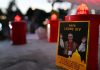
The government’s decision to grant the title of National Hero to former president General Soeharto has sparked outrage across Indonesia, with activists and rights advocates condemning it as a distortion of history.
Civil society groups said the move, announced on November 10 under President Prabowo Subianto’s administration, disregards Soeharto’s record of corruption, human rights violations, and repression during his three-decade rule.
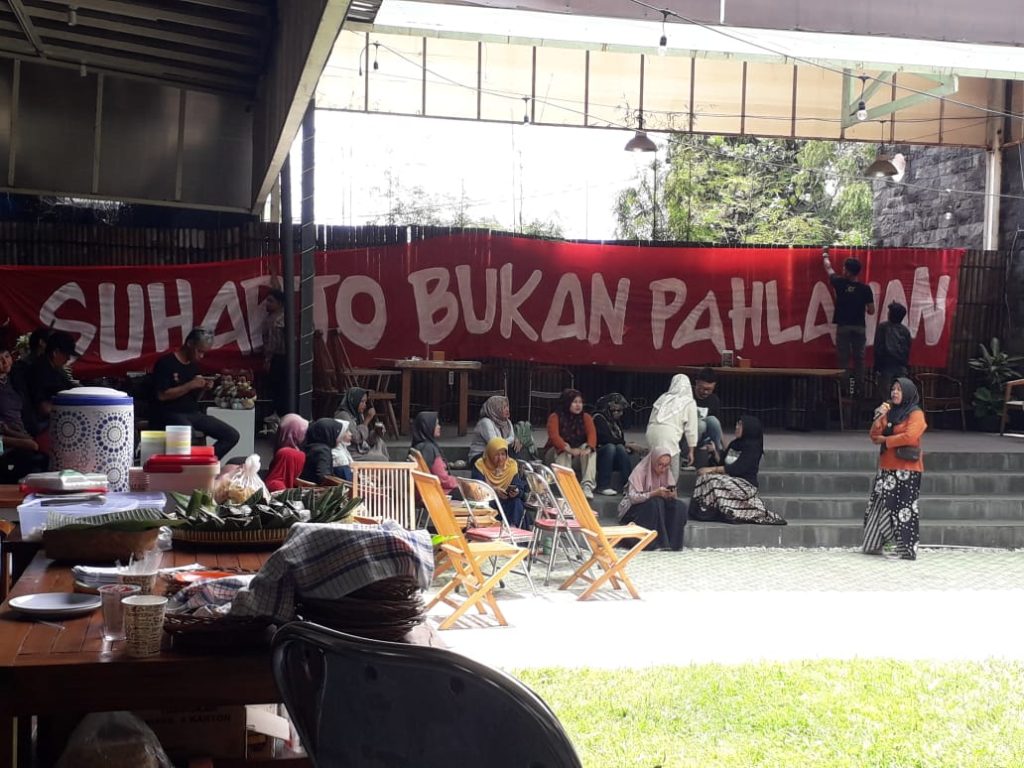
“This decision is utterly inappropriate. The government is manipulating language to mask a painful history. Language can lead people to consent to what should never be accepted,” said Indro Suprobo, an interfaith activist and social observer from Yogyakarta, during a public discussion titled “Suharto Is Not a Hero” on Monday evening.
He warned that a nation unable to tell heroism from wrongdoing risks repeating its own tragedies. “The danger arises when moral criteria become blurred,” said Indro, a writer and editor.
Soeharto and Marsinah: Two names, one controversial list
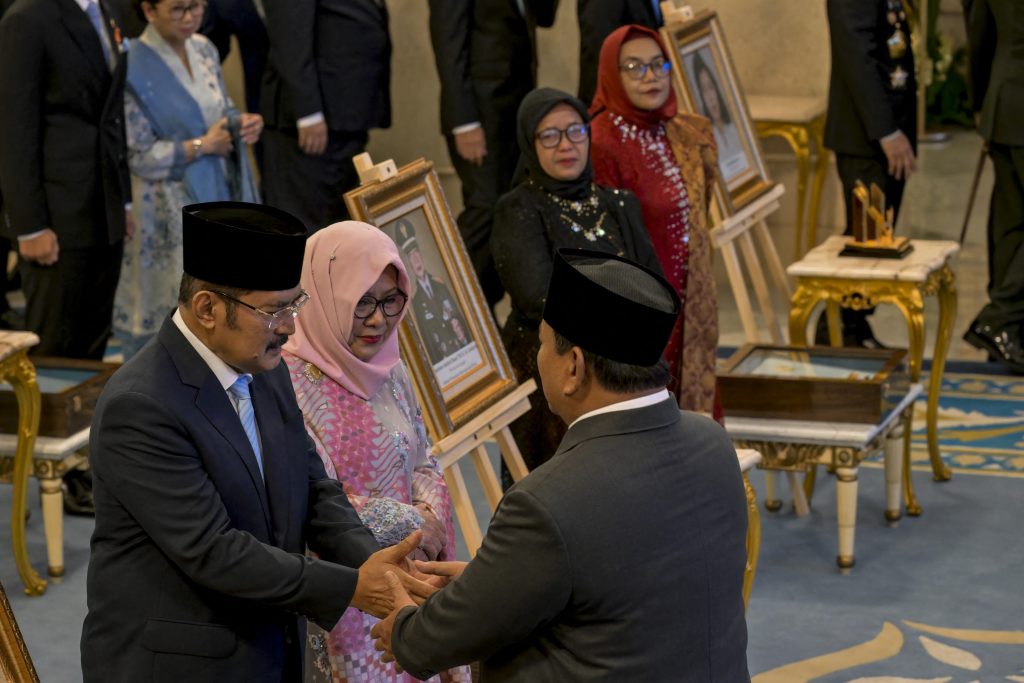
On National Heroes Day, November 10, 2025, the government officially recognized eight figures as National Heroes.
The inclusion of Soeharto’s name immediately drew public criticism, especially since it appeared alongside that of Marsinah, a labor activist who was murdered during his authoritarian regime.
Marsinah (1969–1993) was a factory worker in Surabaya who led a strike demanding fair wages and labor rights.
She was abducted and killed; her mutilated body was found days later. Her death exposed the brutality of the regime and became a symbol of the struggle for workers’ rights in Indonesia.
Ironically, both Soeharto, whose rule was marked by censorship, political persecution, and massive corruption, and Marsinah, one of his regime’s victims, were honored on the same day.
Cendana connection
President Soeharto is the former father-in-law of President Prabowo Subianto, who was married to Soeharto’s daughter, Titiek.
“The Indonesian people are diverse — some agree, some disagree, and that’s perfectly normal,” said Soeharto’s eldest daughter, Siti Hardijanti Rukmana, better known as Mbak Tutut.
She urged the public to recognize what she described as her father’s contributions during his 32 years in power.
“What matters is that we see what my father did. From his youth until his passing, everything he did was a struggle for the country and for the Indonesian people,” she said.
Tutut also appealed for calm and unity amid criticism of the award. “It’s fine to disagree, but let’s not go to extremes. What’s important is that we preserve unity and togetherness,” she added.
Observers noted that Prabowo Subianto and his son, designer Didit Hediprasetyo, remain closely linked to the Soeharto family’s Cendana circle. This term refers to the powerful network named after the Jakarta street where the family has lived for decades.
‘An insult to history and victims’
Political analyst Bachtiar Effendy described the decision as a “fresh wound” for the nation’s conscience.
“Suharto was indeed a major historical figure, but greatness does not mean virtue. He symbolizes a power built on fear, blood, and deception for more than three decades,” Effendy wrote in an opinion piece.
He cited Law No. 20 of 2009 on Titles, Decorations, and Honors, which states that a national hero must possess high moral integrity and must not have committed acts that betray the nation’s ideals. “Measured against this standard, Suharto clearly fails both morally and legally,” he said.
“Declaring Suharto a hero is not only an insult to the victims but also a betrayal of the values of humanity and justice,” Effendy concluded.
A legacy of power and corruption
Soeharto ruled Indonesia for nearly 32 years (1967–1998), achieving economic stability and self-sufficiency in rice production that earned him international praise, including a 1995 FAO award.
But behind the slogan of national development was a repressive regime that silenced dissent, censored media, and ruled through fear.
A 2004 Transparency International report named Soeharto among the world’s most corrupt leaders, estimating that he embezzled between US$15–35 billion in public funds.
Reports from Amnesty International and Indonesia’s National Human Rights Commission (Komnas HAM) documented widespread atrocities, including the 1965–1966 massacres and military abuses in East Timor, Aceh, and Papua.
Gus Dur: A hero widely respected
The public, meanwhile, welcomed the government’s decision to recognize Abdurrahman Wahid, or Gus Dur, Indonesia’s fourth president, as a National Hero.
The grandson of Nahdlatul Ulama’s founder, the country’s largest and most moderate Islamic organization, Gus Dur, was celebrated for championing human rights, promoting interfaith dialogue, and advancing equality for Chinese-Indonesians, including restoring the Chinese New Year as a national holiday.
“Gus Dur dared to uphold humanity amid fear. He is a true hero,” Indro Suprobo told LiCAS News.
2025 National Hero Awardees
In addition to Soeharto, Marsinah, and Gus Dur, the following figures were also honored as National Heroes:
- Prof. Dr. Mochtar Kusumaatmadja, diplomat and former Minister of Foreign Affairs
- General Sarwo Edhie Wibowo, New Order military leader and father-in-law of former president Susilo Bambang Yudhoyono
- Hajjah Rahmah El Yunusiyyah, pioneer in Islamic education
- Sultan Muhammad Salahuddin, educator and diplomat
- Syaikhona Muhammad Kholil, Islamic scholar and teacher
- Tuan Rondahaim Saragih, armed resistance leader from North Sumatra
- Zainal Abidin Syah, diplomat from North Maluku
For many Indonesians, Soeharto’s inclusion reopens deep wounds. “Acknowledging his wrongdoings is not the same as rejecting history,” Effendy wrote. “On the contrary, it is how we safeguard truth — so that it is not erased by ceremonial power.”