In a country battered by civil conflict, mass displacement, and deepening humanitarian collapse, Jesuit Deacon Joachim Anthony Tin Aung Lwin has discovered that ministry is no longer confined to the pulpit.
For him, ministry unfolds daily in shattered villages, troubled hearts, and the silent resilience of ordinary people.
According to Fr. Girish Santiago, SJ, the Jesuit superior in Myanmar, Deacon Joachim, ordained to the diaconate in Rome after completing his theological studies at the Pontifical Gregorian University, returned to Myanmar this year to begin his pastoral mission in Chanthagone Parish in the Diocese of Mandalay.
He is serving in a region where life has been upended by ongoing violence, leaving families impoverished, displaced, and uncertain of their future.
“The mission is a gift; a call to listen, to learn and to walk with the people,” Deacon Joachim reflected in describing his experience.
Yet, behind the simplicity of those words lies a ministry marked by danger, hardship, and profound human encounters.
Serving in villages scarred by war
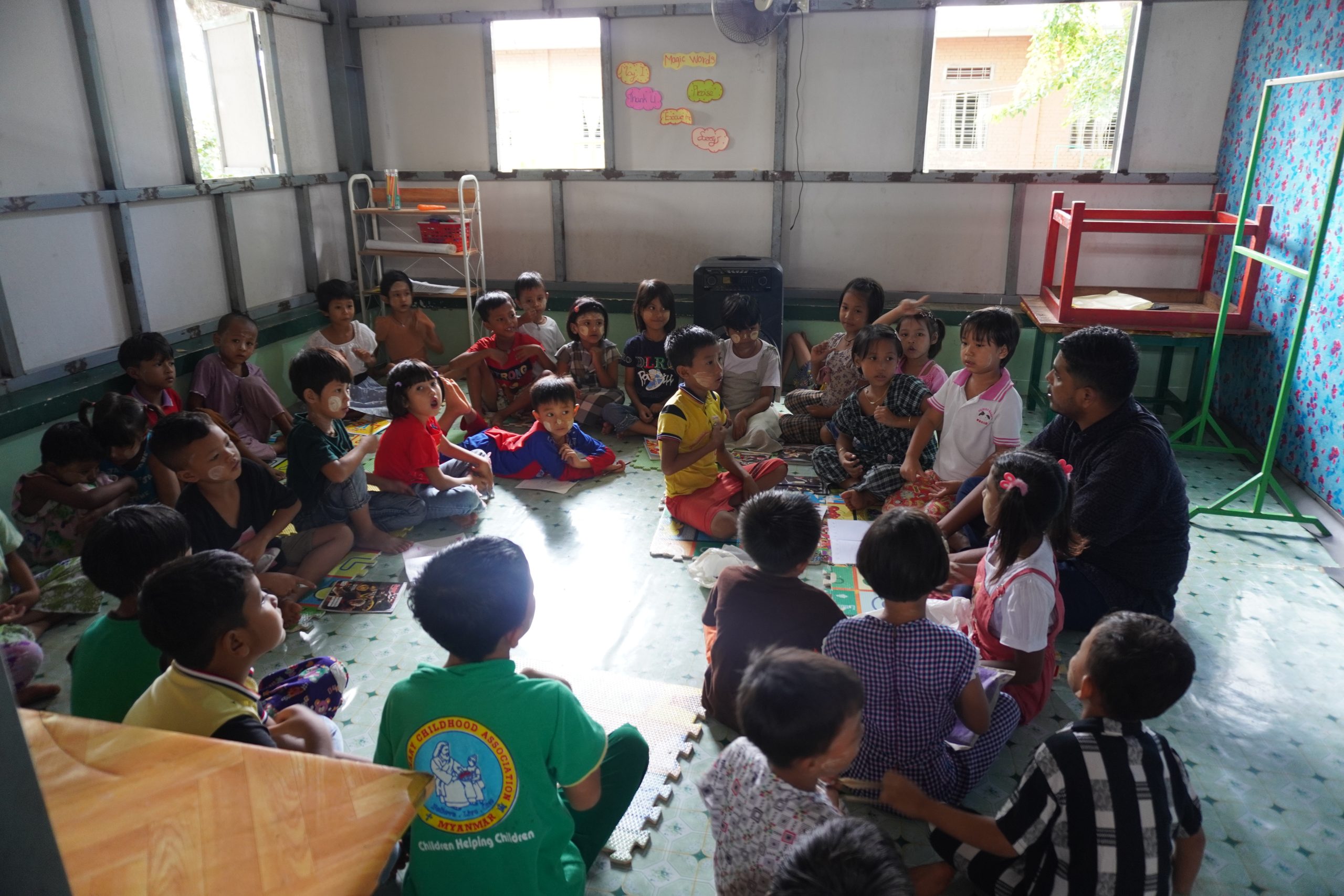
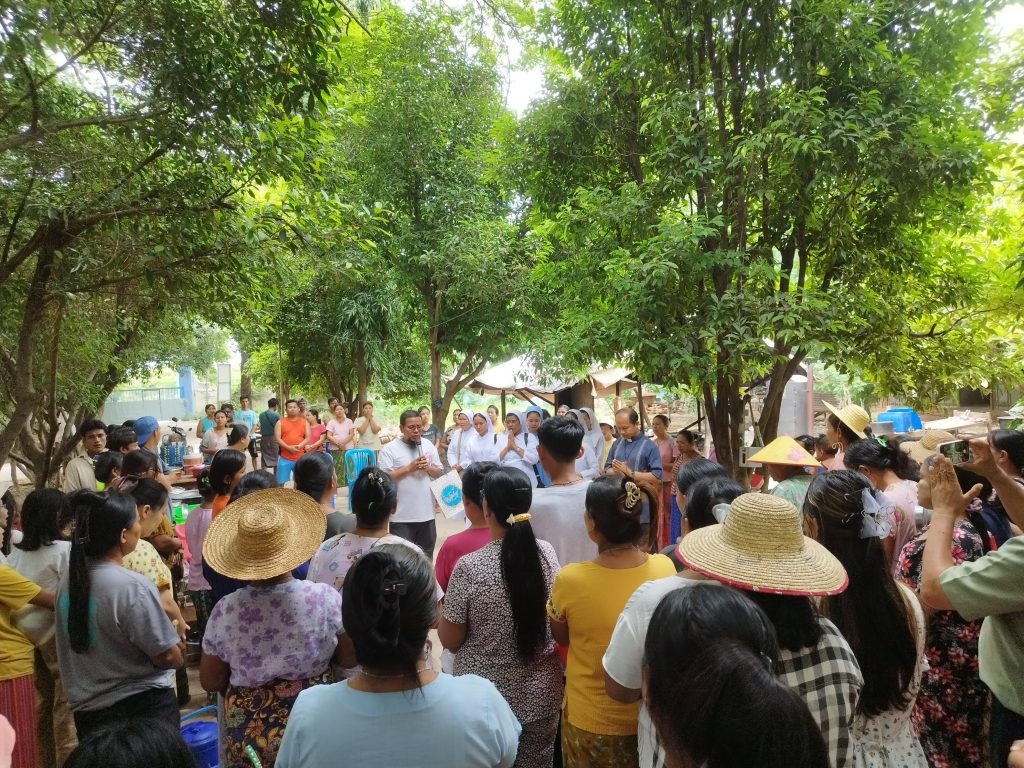
Chanthagone Parish covers six or seven large Burmese villages, many now filled with internally displaced families seeking safety from fighting in other parts of the region. Resources are scarce. Daily life is shaped by fear, instability, and a collapsing local economy.
For Deacon Joachim, the ministry begins with understanding. “Before I can speak the Word of God to others, I must first understand their lives and let the same Word touch my own heart,” he said.
Walking from village to village, he encounters a mosaic of cultures, customs, and expressions of faith: a diversity that reveals both the richness and fragility of community life in crisis.
The displacement has created unusual pastoral challenges. Families who once lived stable lives now struggle with food insecurity, unemployment, and the trauma of sudden loss.
“Their stories, joys, and struggles are like a living Gospel,” he shared. “I see how God’s grace works quietly in their lives despite everything they endure.”
Ministry of presence in time of crisis
Amid the turmoil, Deacon Joachim has learned that presence often matters more than preaching. The church’s sacraments, especially the Eucharist, have become lifelines of hope for people who have lost nearly everything except their faith.
“A sacrament is a visible sign of invisible grace. Here, I see that grace taking flesh in the courage of the people,” he said.
Villagers gather for Mass with whatever they can bring, carrying both their gratitude and grief to the altar. In their celebration, he sees a deep devotion shaped by generations of missionary presence and now fortified by suffering.
His ministry, he says, has become a “sacrament of presence”: listening, visiting homes, sharing anxieties, praying with families, and walking with them in uncertainty. It is a quiet but powerful way of keeping hope alive in communities exhausted by conflict.
Navigating loneliness, fear, inner growth
The diaconate assignment is also his first time living alone in a mission setting. It is a reality that exposes him to solitude, emotional struggle, and moments of fear.
“It is not as easy as I imagined,” he admitted. “There are moments of loneliness and uncertainty. Yet these moments draw me closer to God.”
The parish priest’s support has helped him adjust, but much of the inner work is his own. He is learning to pray through emotional challenges, to discern God’s voice in silence, and to allow the mission to shape his identity as a Jesuit.
“I begin to see each person differently, as someone deeply loved by God, with their own wounds and hopes. This teaches me to serve with compassion and humility.”
Faith amid fragility
While violence continues across Myanmar, churches often become sanctuaries not only of worship but of survival. Deacon Joachim’s ministry unfolds in this fragile space, offering comfort, stability, and spiritual nourishment where few other forms of support remain.
He acknowledges contradictions in the lives of the faithful: devotion mixed with human weakness, but sees in them the same journey of growth he himself is undergoing. “Faith is a journey. My role is to walk with them, not to judge.”
Looking toward priesthood
“Deacon Joachim will be ordained a priest on 12 December 2025 at St. Mary’s Cathedral in Yangon, alongside fellow Jesuit Deacon Nicholas Han Zaw Shing,” Fr. Girish told LiCAS News.
The celebration will take place in a country still longing for peace, a backdrop that gives their ordination deeper significance.
As Deacon Joachim prepares for priesthood, he carries with him the lessons learned in Chanthagone: the resilience of displaced families, the gift of encountering Christ in suffering, and the transformative power of walking with people in their darkest moments.
“Being a deacon means being a bridge, between God and his people, between faith and life, between hope and despair,” Deacon Joachim said. “I pray that every step of this journey leads me closer to Christ and closer to those I am called to serve.”
In a land where many feel abandoned, his mission is a quiet reminder that the church continues to walk with its people, gently, faithfully, and with the hopeful light of Christ.