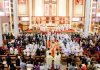
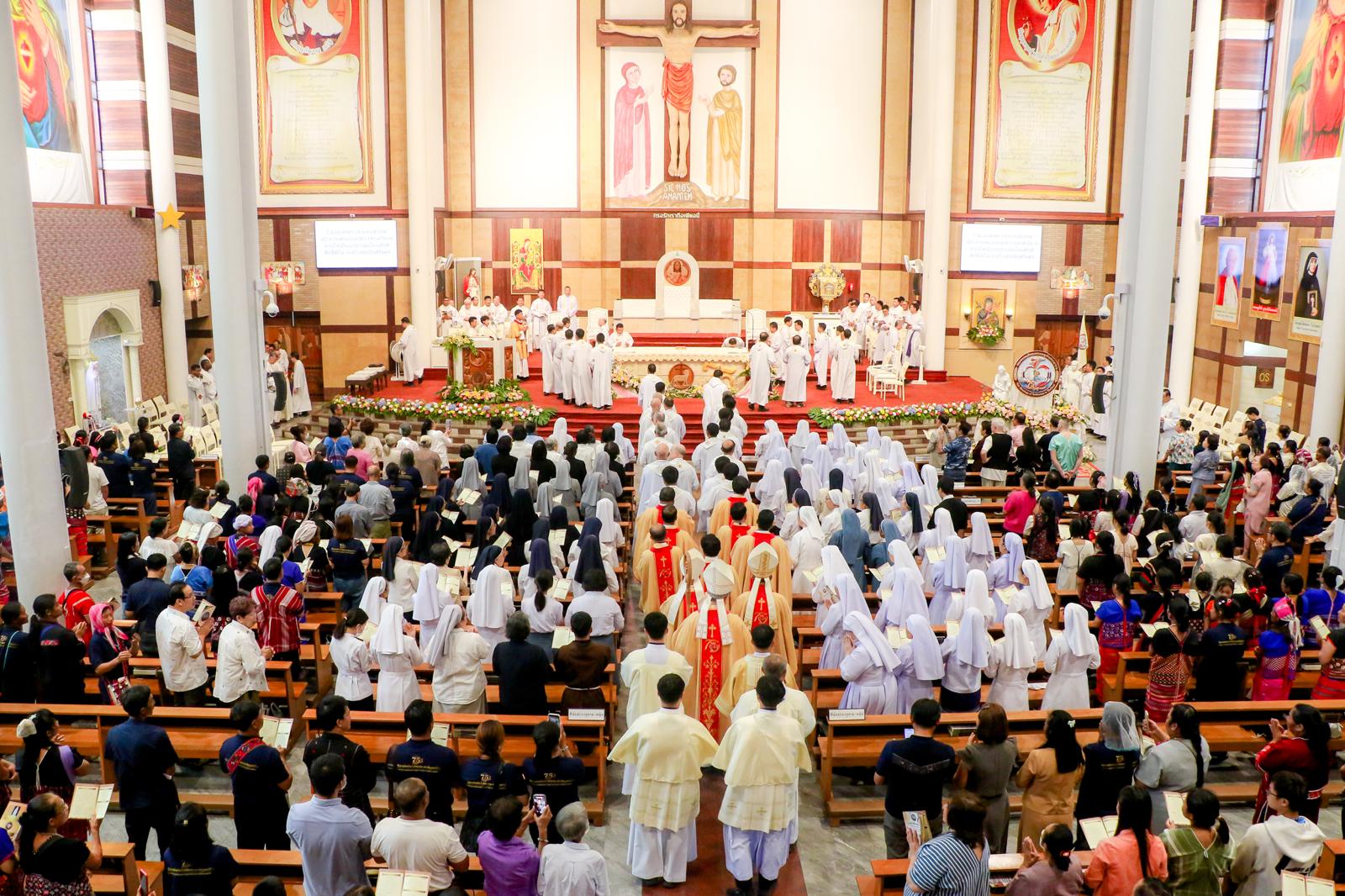
Nearly 2,000 lay faithful, most of them Indigenous Karen, Akha, Hmong, Kachin and Lahu Catholics from northern Thailand, gathered at the Cathedral of the Sacred Heart of Jesus in Chiang Mai on Oct. 24 for a thanksgiving Eucharist marking 75 years of the Betharram mission in the country.
Hundreds of priests and religious also joined the celebration.
Bishop Peter Suphot Roeksujarit of Chiang Mai presided over the Mass. He was joined by Bishop Joseph Vuthilert Haelom of Chiang Rai, another diocese born of the Betharram mission, and Apostolic Nuncio to Thailand Archbishop Peter Bryan Wells.
Bishop Peter praised the missionary zeal of the Betharram priests and acknowledged that without their arrival, the Diocese of Chiang Mai would not be what it is today.
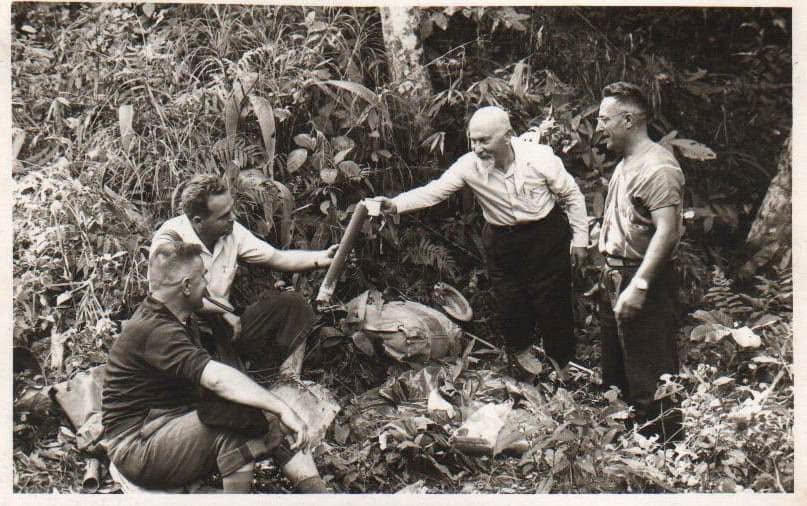
He named the pioneers and recalled the mountain stations they reached on foot, many of which later became diocesan mission centers and parishes.
Roots in France and China
The Priests of the Sacred Heart of Jesus of Betharram were founded in 1835 at the shrine of Our Lady of Betharram in southwestern France by St. Michael Garicoits.
True to their motto, Ecce venio — “Here I am” — he wanted them ready to go wherever they were called, especially to places no one dared to go.
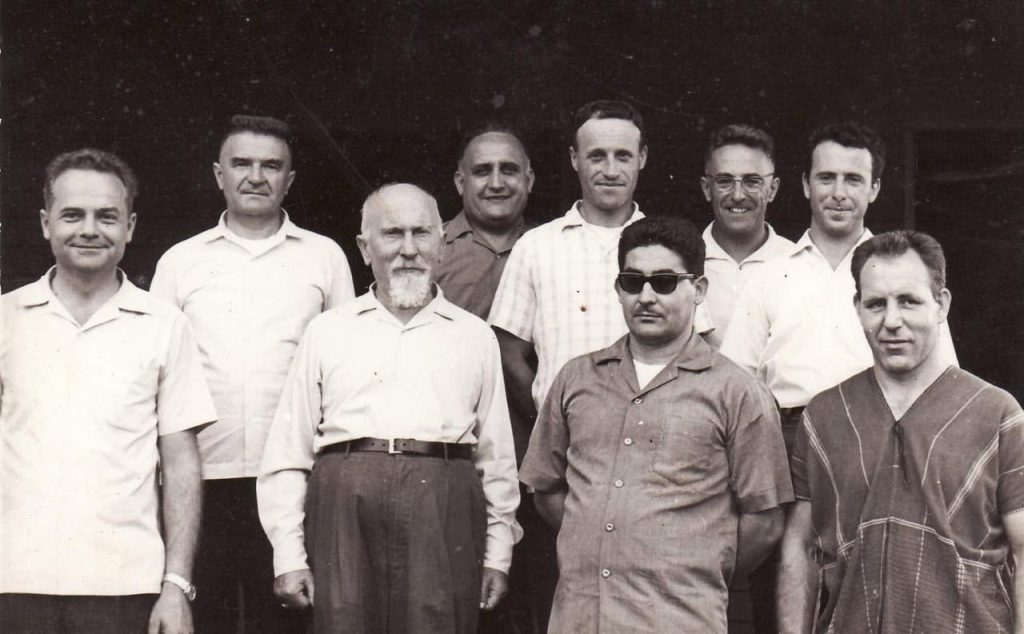
That mission took them to Yunnan, China, from 1922.
Political upheaval ended the mission, and the missionaries were expelled in 1951.
Fr. Jean Saint-Guily reached Bangkok on Nov. 23, 1951, and a group of Betharram missionaries arrived in Chiang Mai on Dec. 15.
Bishop Louis Chorin of Bangkok entrusted them with the northern mission among ethnic minorities.


Left photo: A Betharram missionary celebrates Mass with Karen villagers in northern Thailand during the congregation’s early years of mission among Indigenous communities. Photo from the archives of Bétharram in Thailand
Right photo: Karen villagers, including children, pose with a Betharram missionary during the congregation’s early mission among Indigenous communities in northern Thailand. Photo from the archives of Bétharram in Thailand
Learning the language, living the life
Frs. Joseph Séguinot and Severino Fognini began the Karen mission in 1953, walking through the mountains southwest of Chiang Mai.
They had worked with the Kachin in Yunnan and then learned Karen. From Chom Thong and Mae Pon, they walked for days between villages where there were no roads.
By 1960, hundreds of Karen were among the first baptized.
Work with the Lahu began at Fang in 1958.
In the 1970s, Frs. Urbani and Alberto Pensa accompanied Akha families in Chiang Rai. Hostels and schools followed, providing education for children from poor mountain villages.
Archbishop Wells said the first missionaries “travelled on foot through forests and mountains, crossing rivers and enduring hardship to reach remote villages,” proclaiming the Gospel “through education, healthcare, and the promotion of human dignity.”
Where Betharram serves today
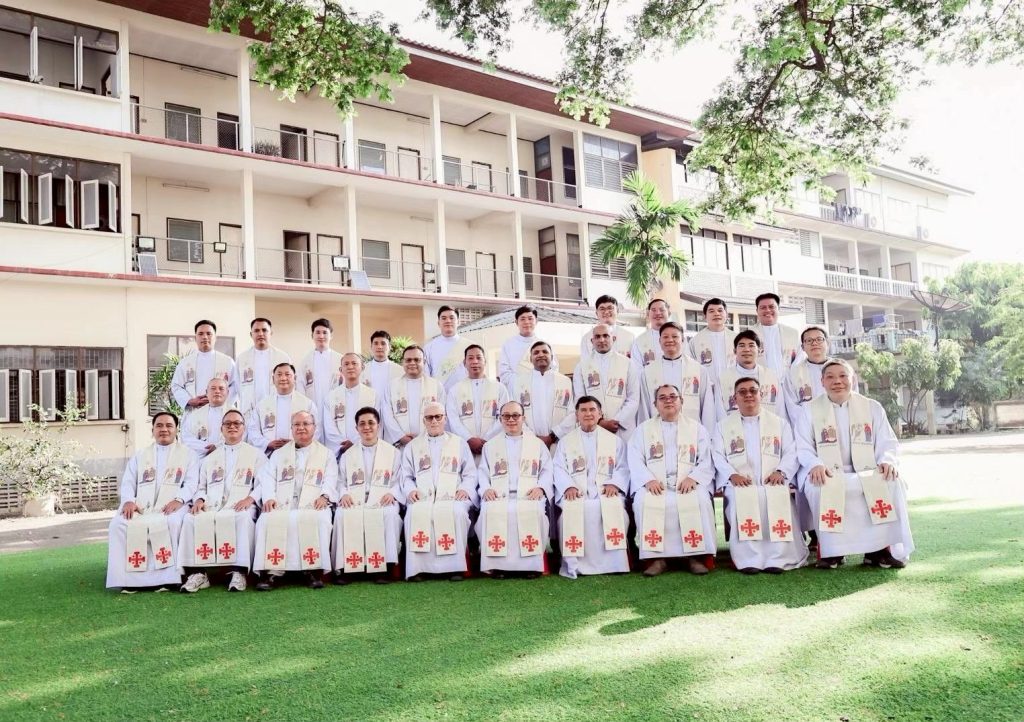
Betharram priests now serve parishes and centers in the Chiang Mai Diocese at Chom Thong, Mae Pon, Huai Tong, Khun Pae, Huai Bong, Mueang Ngam and Fang.
They also serve in the Chiang Rai Diocese at Ban Pong, Panasaeri, Huai Rai and Phayao, and in the Nakhon Sawan Diocese at Mae Tawo.
Young Betharramites are formed at Phayao and Sampran, and since 2015 the mission has also been present in Vietnam.
A mission now led by Indigenous priests
In 2005, there were eight Betharram priests in Thailand.
Today, there are 27, of whom 25 are Karen.
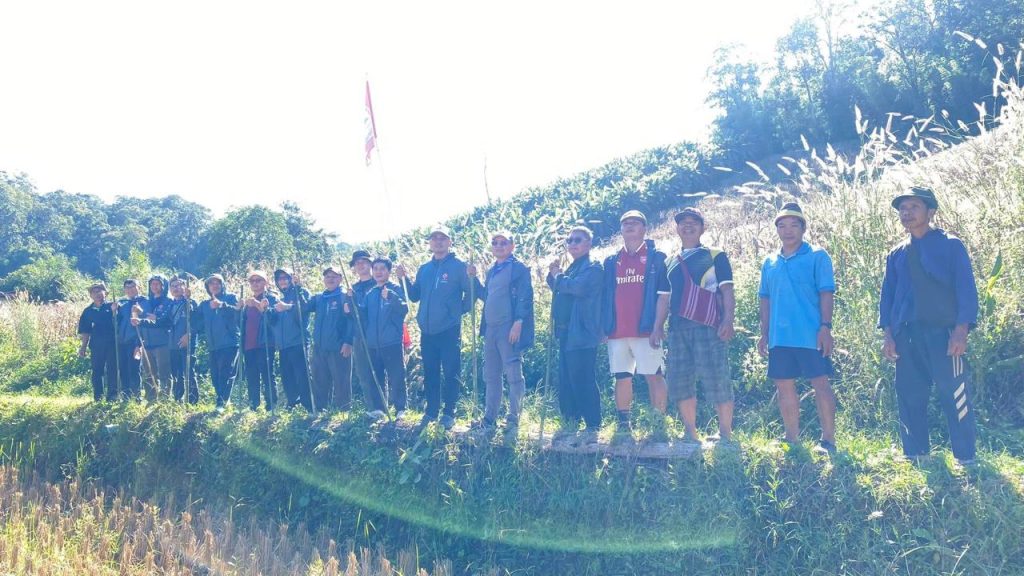
In his jubilee message, Bishop Joseph recalled visiting Karen mountain villages as a seminarian more than 50 years ago.
The missionaries, he said, cared “for both body and spirit,” and most Betharram members today are Karen “as a result of” their work.
Fr. Luke Kriangsak Kitsakulwong SCJ, Superior of the Vicariate of Thailand and Vietnam, thanked God and the people who welcomed the missionaries.
He also renewed the call to missionary commitment among young Betharramites in formation and in the missions.
Fr. Wilfred Pereppadan SCJ, Regional Superior of the Saint Miriam Region, described the 75 years as years of thanksgiving, solidarity, mission and gratuitous providence.
An Indigenous voice
Narongchai Wobue, a senior Karen catechist from Mae Pon, recalled how the missionaries trained village leaders and catechists and supported young Karen who later became priests and sisters.
He quoted a Karen song: “As long as the stream flows, the fish can swim upstream, even up a steep cliff.”
For the Karen, Akha, Lahu and Thai faithful present, the song described a faith that climbed hard slopes with them, not above them — a legacy of the Betharram mission.
All photos from the Diocese of Chiang Mai