
The Catholic Church in eastern Indonesia has formally opened the beatification process for Bishop Arnoldus Johannes Hubertus Aerts of the Missionaries of the Sacred Heart (MSC) and 12 other MSC members who were executed by Japanese troops during World War II.
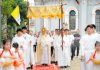
Bishop Seno Ngutra of Amboina promulgated the initial step of the process during a Eucharistic celebration at the Kei Martyrs Pilgrimage Park on Dec. 30, 2025.
The cause seeks the beatification of Bishop Aerts and 12 MSC missionaries who were killed on July 30, 1942, on Kei Kecil Island, Southeast Maluku, “because of their fidelity to the Christian faith and to the missionary mandate of the Church.”
According to the account presented during the celebration, Japanese forces that had landed in Langgur–Tual on Kei Kecil Island began hunting down European missionaries, who were politically regarded as nationals of “enemy” countries.
One MSC missionary priest from Germany survived the killings because Germany was considered an ally of the Japanese Empire at the time.
Reflecting on the martyrdom, Father Yong Ohoitimur, MSC, said in a 2012 reflection that the missionaries chose to remain with the local faithful despite having an opportunity to flee.
“They actually had the chance to flee to Australia, as did officials of the Dutch Colonial Government. Yet out of fidelity to their mission, they chose to stay and accompany the people,” he said.
He called on Catholics to remember the martyrs with gratitude for their faith and fidelity, even in the face of death.
The Church’s traditional expression, Sanguis martyrum semen Christianorum—the blood of martyrs is the seed of Christians—was cited in previous reflections quoted by MSC Provincial Secretary Father Yance Mangkey, MSC.
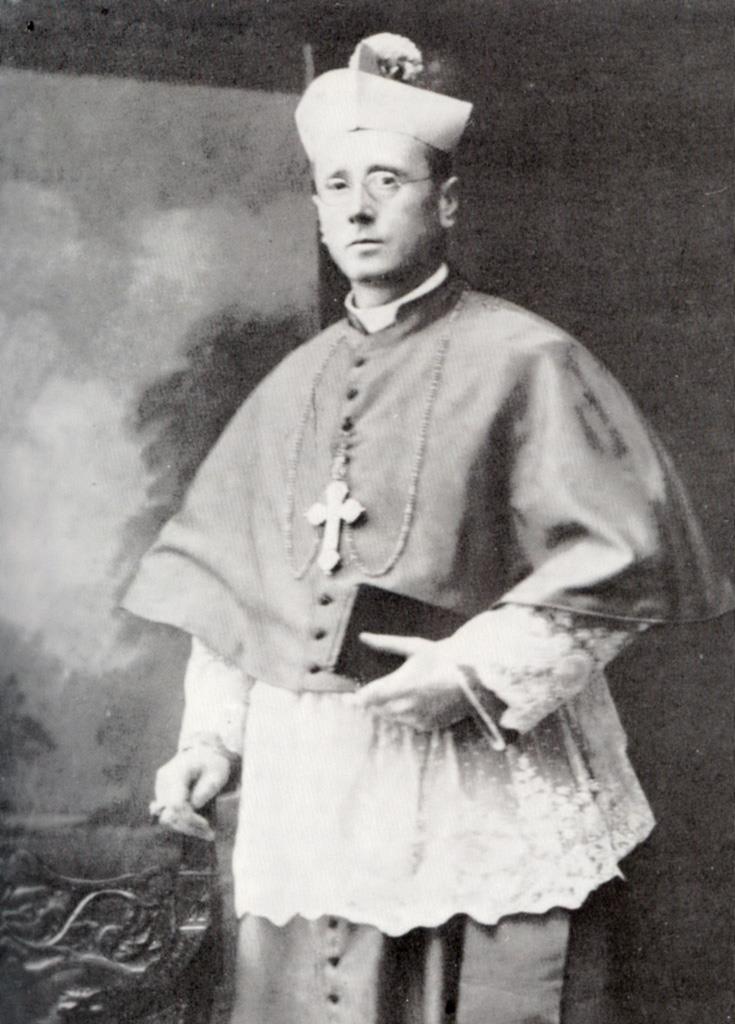
Bishop Aerts, the first bishop of what later became the Diocese of Amboina, was born in Swoglen, the Netherlands, on Feb. 3, 1880, and was ordained an MSC priest on Aug. 6, 1905.
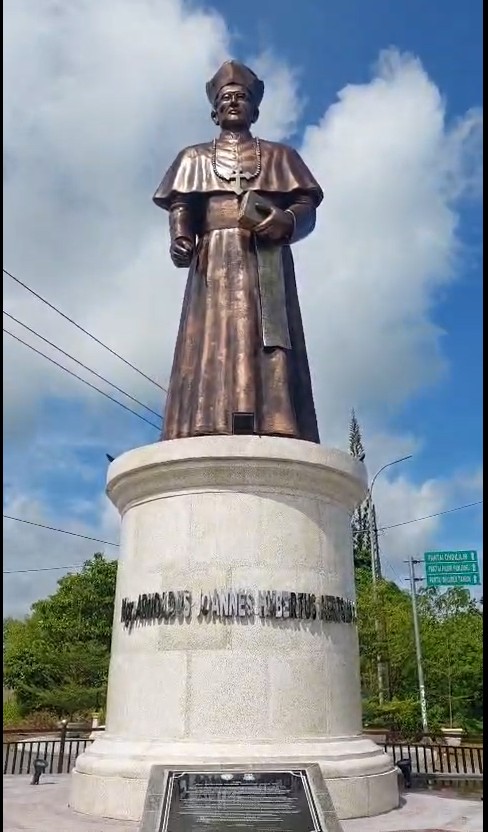
Initially prepared for mission work in the Philippines, he was later sent to the Dutch East Indies. Pope Benedict XV appointed him titular bishop of Apollonia on July 12, 1920, and named him apostolic vicar of Nova Guinea Olandese on Aug. 28, 1920.
He served in Maluku and Papua from 1921 and was executed at age 62 on the shore of Langgur Beach on July 30, 1942.
The other MSC priests executed by firing squad were Fathers Hendricus Cornelissen, Gerardus Berns, Yacobus Akkermans, and Yacobus Ligtvoet.
The MSC brothers who died as martyrs were Brothers Yohannes Joosten, Adrianus Peeters, Cornelius Beijer, Wilhelmus Houdijk, Franciscus Raaijmakers, Wilhelmus de Rooy, Yohannes van Schaik, and Theodorus Folker.
In his homily, Bishop Ngutra urged the faithful to recognize Langgur as holy ground, sanctified by the blood of the martyrs.
“Do you realize that you are standing on holy ground? Jesus Christ came into the world not first of all to live, but to die. And His death was the highest form of love’s sacrifice,” he said.
He said the Kei martyrs chose to give their lives so that the faith of the people “might grow and bear fruit.” “They did not stay to seek name or honor. They stayed because of their great love for this land and for the people entrusted to them,” he added.
According to the bishop, the Christian faith later spread from Kei to Ambon, North Maluku, and Papua because of their sacrifice.
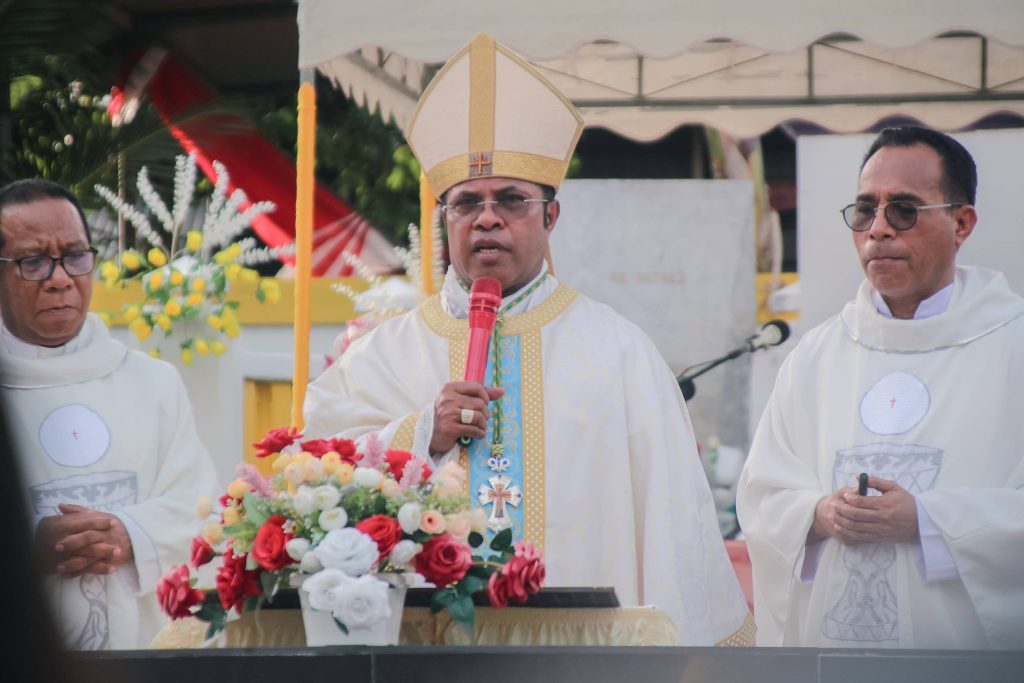
“Therefore, it is most fitting that we call them martyrs. The sacrifice of their lives is the clearest proof of fidelity to God and to faith,” he said.
Bishop Ngutra emphasized that the beatification and canonization process ultimately depends on God’s will. “If God wills it, the way will be opened and all obstacles will be removed. Our task is to pray,” he said, calling on the faithful to safeguard the Kei Martyrs Pilgrimage Complex as a place of prayer.