The International Court of Justice (ICJ) has found Myanmar responsible for committing genocide against the Rohingya and ordered the country to provide reparations, hold perpetrators accountable and allow refugees to return home safely.
The November 19 judgment marked the first time in the court’s 80-year history that judges found a state responsible for committing genocide.
The court ruled 9-6 that Myanmar committed genocide against the mostly Muslim Rohingya minority during military operations in northern Rakhine state in 2017, according to Physicians for Human Rights (PHR).
“The Republic of the Union of Myanmar has committed genocide against the Rohingya group in northern Rakhine state,” said ICJ President Yuji Iwasawa, delivering the ruling in The Hague.
The court ordered Myanmar to “allow and facilitate the safe, voluntary, and dignified return to their place of residence” of Rohingya refugees who fled the violence.
Judges also ordered Myanmar to investigate and punish those responsible for genocide and provide compensation, with the amount to be determined later.
More than 700,000 Rohingya fled to Bangladesh during the 2017 military crackdown, which involved mass killings, sexual violence and the destruction of hundreds of villages.
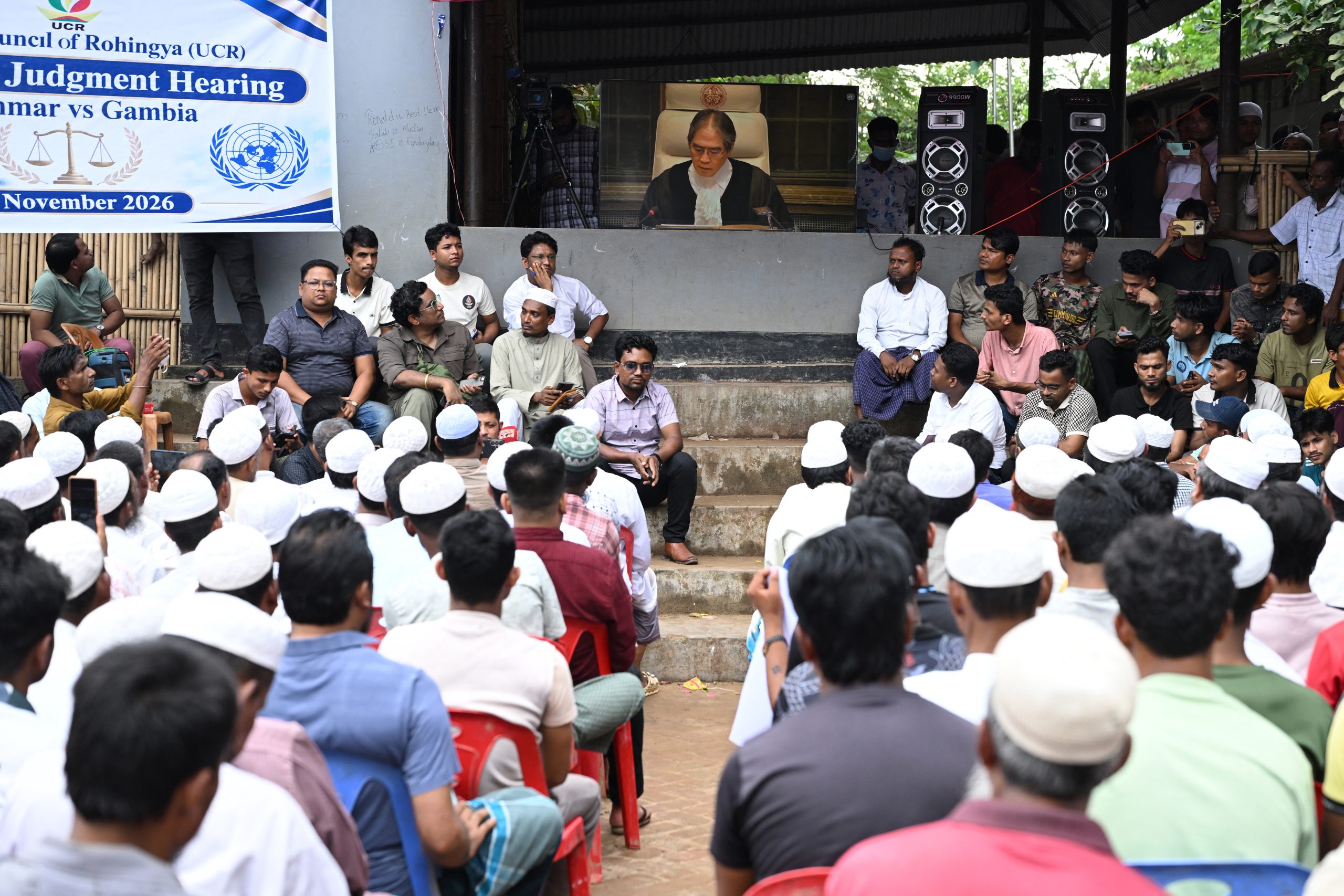
In Cox’s Bazar, Bangladesh, hundreds of refugees watched the proceedings on a giant screen, with many breaking down in tears as the judgment was announced, according to Agence France-Presse (AFP).
Mohammed Osman, 20, whose parents and four siblings were killed by Myanmar’s military, said the ruling vindicated survivors who had spent years seeking justice.
“I am overwhelmed … But we have achieved only 50 percent of what we wanted. We will achieve 100 percent when we are repatriated with dignity,” Osman told AFP.
The court found that Myanmar’s security forces killed thousands of Rohingya civilians, committed widespread sexual violence against women and subjected children to extreme violence.
Evidence presented during the proceedings pointed to about 10,000 deaths. Judges also examined the systematic destruction of Rohingya villages, some of which were subsequently occupied by non-Rohingya residents.
The court concluded that the atrocities demonstrated an intention to destroy a substantial part of the Rohingya population.
It also found that Myanmar failed to investigate the crimes, interfered with international investigations, destroyed evidence and denied remedies to survivors.
Physicians for Human Rights said the judgment recognized medical and forensic evidence documenting sexual violence, physical injuries and psychological trauma among Rohingya survivors.
“This judgment is a landmark moment for Rohingya survivors who have demanded justice and recognition of the grave atrocities committed against them,” said Sam Zarifi, executive director of PHR.
The organization said the court cited its research seven times, including findings on sexual violence and its long-term consequences.
The court also recognized that sexual violence, together with restrictions on marriage and births, constituted measures intended to prevent births within the Rohingya community.
PHR said surveys involving leaders from more than 600 Rohingya hamlets found that over 88% reported violence directly affecting their communities during the 2017 operations.
The organization called for reparations covering compensation, family reunification, assistance in identifying missing persons, and long-term medical and psychological care.
Fortify Rights, which provided evidence to The Gambia during the proceedings, urged Myanmar and United Nations member states to ensure that Rohingya survivors have a central role in determining reparations.
“We’ve waited for this moment for the last seven years, and while we know this judgment will not immediately meet all the needs among Rohingya people globally, it is a massive step of justice and repair,” said Zaw Win, a senior human rights specialist at Fortify Rights.
“Now our work begins to make sure the Rohingya have a reparations program that will help survivors heal, grow, and thrive, despite what has happened.”
Fortify Rights also called for the restoration of full and equal citizenship rights, the return of confiscated homes and land, and the repeal of discriminatory policies restricting Rohingya access to education, health care and freedom of movement.
The Gambia brought the case against Myanmar in November 2019 under the 1948 Genocide Convention, which allows countries to pursue legal action against states accused of violating the treaty.
In January 2020, the ICJ ordered Myanmar to prevent further acts of genocide and preserve evidence. The court heard arguments on the merits of the case in January 2026.
Myanmar has denied committing genocide, maintaining that its military operations targeted insurgents following attacks on security personnel.
The judgment establishes Myanmar’s responsibility as a state but does not determine the criminal liability of individual military officers.
Fortify Rights called on governments to support separate investigations and prosecutions, including proceedings before the International Criminal Court and national courts exercising universal jurisdiction.
“Today, the world’s highest court held Myanmar responsible for genocide. Governments now have a responsibility to press Myanmar to comply with the judgment and help secure reparations for survivors,” said Matthew Smith, chief executive officer and founder of Fortify Rights.
The ICJ’s judgments are binding and cannot be appealed, although the court has no independent mechanism to enforce its decisions.
Min Aung Hlaing, who commanded Myanmar’s military during the 2017 operations, became civilian president following restricted elections this year.
There was no immediate response from Myanmar authorities to the ruling, according to AFP.
UN Secretary-General Antonio Guterres urged Myanmar to allow Rohingya refugees to return home, while Gambian President Adama Barrow described the judgment as a “historic day for international justice.”
Fortify Rights urged UN member states to press Myanmar to comply with the judgment and ensure that survivors receive reparations.
The organization warned that Myanmar’s military continued attacking civilians across the country, raising concerns about the safety of Rohingya who hope to return.
“The junta must immediately stop all attacks against civilians in the country and fully comply with the Court’s judgment,” said Chit Seng, a senior human rights specialist at Fortify Rights.