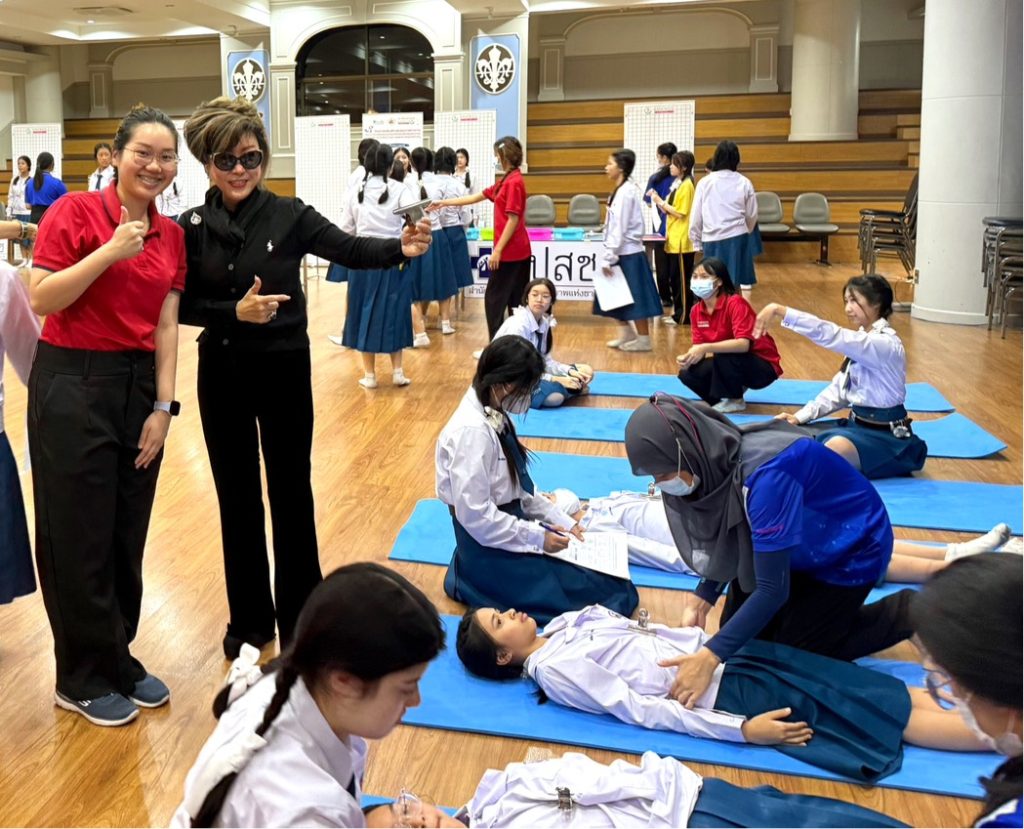
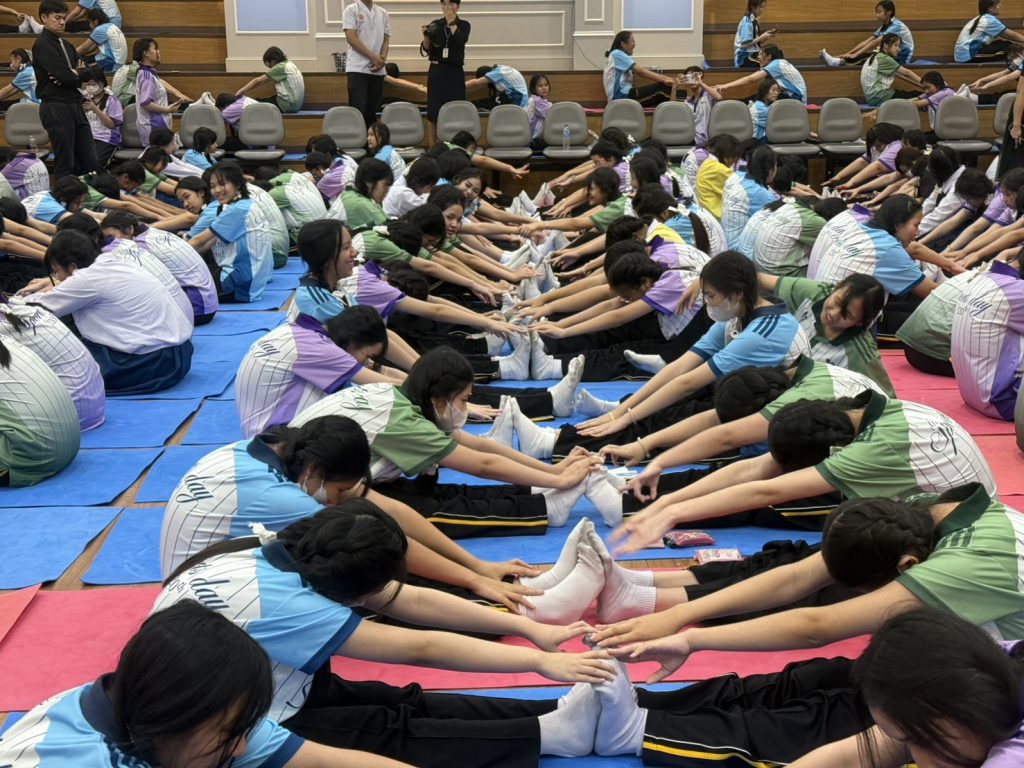
About 5,000 students from seven schools in Bangkok have taken part in a Student Physical Fitness Enhancement Program, an initiative led by two Catholic schools with support from Thailand’s National Health Security Office (NHSO).
The program is spearheaded by St. Francis Xavier Convent School and Santa Cruz Convent School, both administered by the Sisters of Saint Paul of Chartres (SPC), and coordinated through the Saint Paul de Chartres Students’ Society (SPCSS), a nationwide alumni network of SPC schools.
“The program focuses on adolescent physical health, so most of the participating students are in middle and high school,” said Dr. Suwanna Wongsurakrai, president of SPCSS, in an interview with LiCAS News.
According to Dr. Suwanna, a total of seven schools are participating in the year-long initiative, which aims to promote preventive health care among young people at a critical stage of physical and emotional development.
Holistic view of health rooted in Catholic teaching
Dr. Suwanna emphasized that the program reflects the Catholic Church’s holistic understanding of health, which sees physical well-being as inseparable from mental, emotional, and spiritual dimensions.
“The Catholic Church views health and well-being holistically, encompassing the entire person, body, mind, and spirit, seeing physical health as a blessing and deeply interconnected with spiritual life,” she said.
She also referenced St. John Paul II’s Theology of the Body, which highlights the dignity and meaning of the human body within God’s creation.
“The body, and it alone, is capable of making visible what is invisible: the spiritual and the divine,” St. John Paul II taught. “It was created to transfer into the visible reality of the world the mystery hidden since time immemorial in God.”
Dr. Suwanna noted that such teachings continue to inspire Catholic educational institutions to care for students not only academically but also physically and morally.
Addressing modern health challenges among youth
“The concept of ‘wellness’ is ever-growing in popularity, with social media, workouts, diets, and other trends attempting to address the issue,” Dr. Suwanna explained. “But young people need structured, evidence-based guidance, especially within a supportive school environment.”
The program allocates one hour per week over the course of one academic year and addresses common health concerns among adolescents, including obesity, weight control, hypertension, diabetes, and scoliosis (a sideways curvature of the spine that often appears during early adolescence and can lead to uneven shoulders, hips, or posture problems if left untreated).
Organizers said the partnership with the National Health Security Office underscores the program’s alignment with national public health priorities, while Catholic schools provide a values-based educational setting.
Roots in Royal encouragement and alumni unity
The Saint Paul de Chartres Students’ Society traces its origins to December 14, 1977, during the 72nd anniversary celebration of Saint Joseph Convent School.
The occasion was presided over by the late Queen Sirikit, the Queen Mother, herself an alumna of Saint Francis Xavier Convent School.
During the celebration, Her Majesty encouraged greater unity among alumni of Saint Paul de Chartres schools nationwide.
“Alumni of the Saint Paul de Chartres school network should unite, creating relationships and ‘power’ to become one,” the Queen Mother told Mother Miriam Nipa Kitcharoen, then provincial superior. “This will enable them to work more effectively for the nation.”
That vision of unity and service, Dr. Suwanna said, continues to guide SPCSS initiatives today.
Longstanding mission in education and child protection
The Sisters of Saint Paul of Chartres, founded in France, have served in Thailand since 1905.
Today, they operate an extensive network of schools across multiple provinces, many of which focus on education for Indigenous and disadvantaged children, with a strong emphasis on child protection and integral human development.