A grassroots initiative based in Thailand is quietly transforming surplus food into a lifeline for the poor, as millions across Asia continue to struggle with hunger amid rising living costs.
The VV Share Foundation is drawing growing national and church recognition for rescuing edible food that would otherwise be discarded and redirecting it to children, the elderly, and vulnerable families, turning waste into an act of solidarity and hope.
Caregivers and community partners say the foundation’s work goes beyond addressing physical hunger, offering dignity, inclusion, and reassurance to people who often feel forgotten by society.
“As a caregiver of the children at Father Ray Children’s Village, I would like to sincerely express that what VV Share Foundation is doing goes far beyond simply redistributing surplus food,” a staff member said. “It is, in fact, the sharing of values, dignity, and hope with our children every single day.”
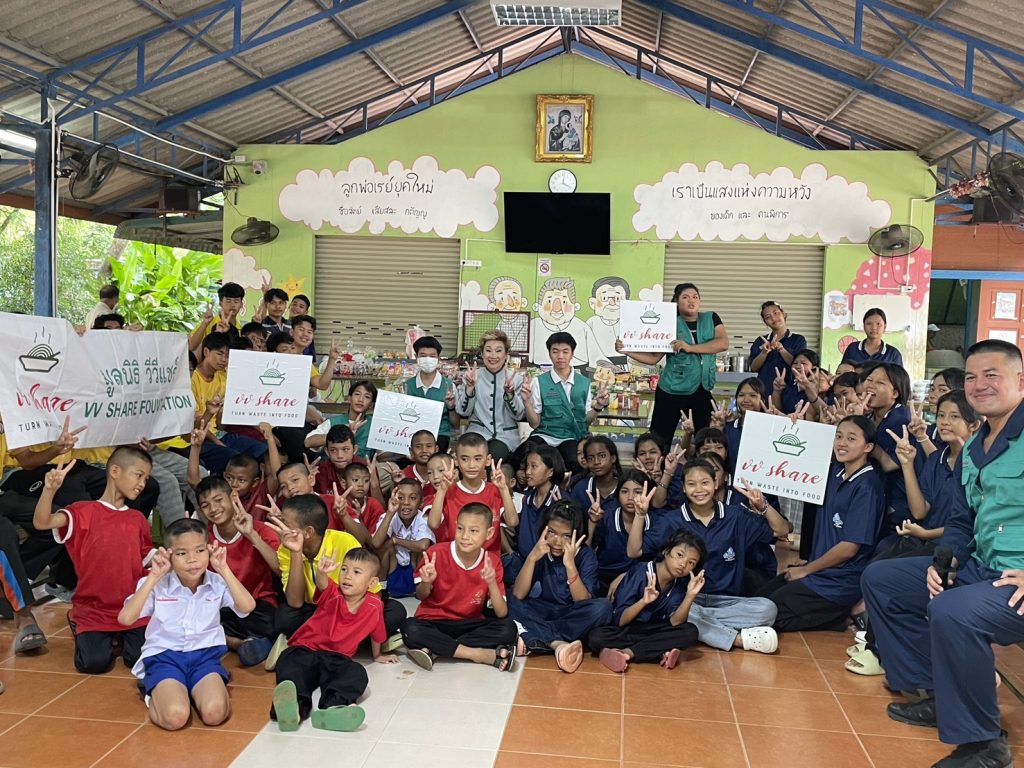
The children’s joy is visible whenever snacks and meals arrive from partner convenience stores and food outlets. “These small things create smiles, excitement, and a sense that ‘we are not forgotten,’” the caregiver added, noting that access to the same food items enjoyed by other children helps reduce emotional inequality and nurture a sense of belonging.
Founded in 2008, Father Ray Children’s Village provides family-style homes for young children in need of care. Each house becomes a small family unit, with siblings and a house parent whom the children call “mum” or “dad.” Its outreach arm, the Child Protection and Outreach Work Center, works to keep families together whenever possible.
“Our main priority, before we accept any child into our care, is to try to keep the family together,” the caregiver said.
The village traces its origins to the mission of Rev. Fr. Raymond Allyn Brennan, a Redemptorist priest who arrived in Pattaya in 1972.
His life changed one morning when he found an abandoned newborn at the church doorstep. Unsure what to do, he began caring for the child himself, seeking help from friends on how to feed and care for an infant.
News spread, and more abandoned children, many born amid the social disruption surrounding the nearby U.S. military presence during the Vietnam War, were entrusted to him.
Fr. Brennan dedicated his life to these children until his death in 2003 at the age of 70.
Observers say the VV Share Foundation stands out not only for redistributing food but also for building a professional, dignified system of food rescue.
From developing a food collection application to implementing weighing, screening, and quality control procedures, the foundation emphasizes accountability and respect for recipients. “This is not merely giving, but giving with standards, care, and dignity,” the caregiver said.
The initiative echoes the Catholic Church’s long-standing teaching on food waste.
Pope Francis repeatedly described waste as a symptom of a global “throwaway culture,” saying that discarding food is akin to “stealing from the table of the poor.”
His successor, Pope Leo XIV, has continued this moral call, denouncing hunger amid abundance as a “collective moral failure.” Speaking at the 80th anniversary of the UN Food and Agriculture Organization in October 2025, he described the persistence of hunger in a world of surplus as an “outrageous paradox.”
Appreciation for the VV Share Foundation’s work has come from across Thailand.
The Volunteer Club for Social Development and Human Security in Pathum Thani Province credited the foundation with redistributing more than 800,000 meals over the past four years, sourced from convenience stores, hotels, and bakeries.
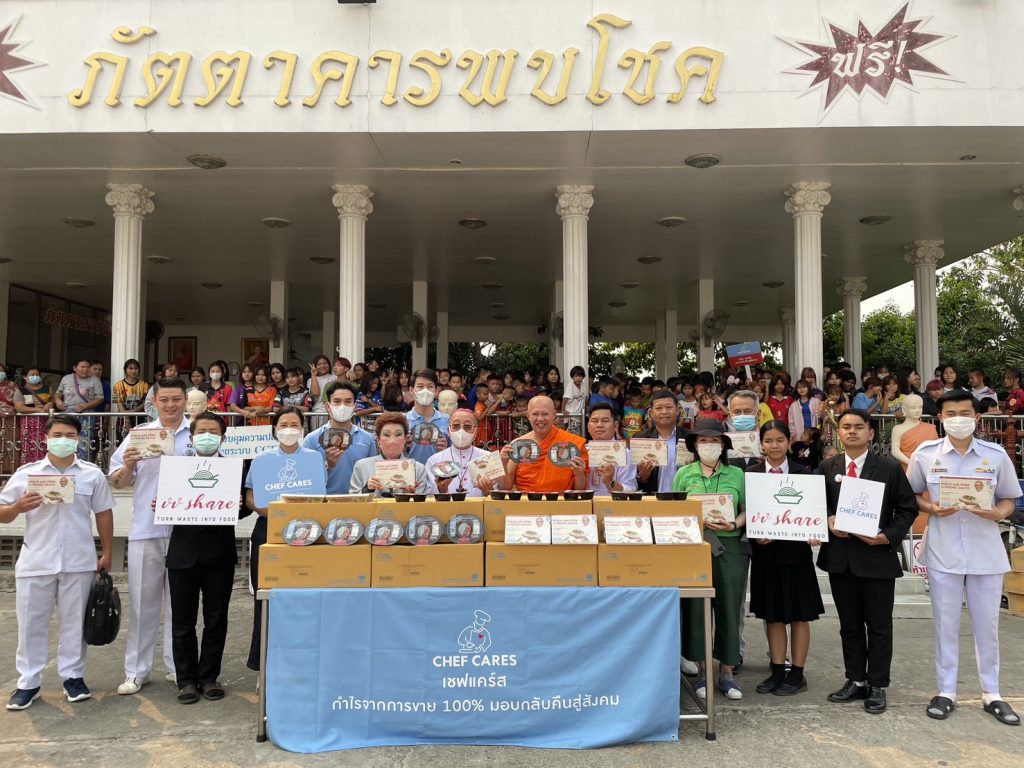
“The food waste has been redistributed to the elderly, people with disabilities, children, and struggling families in our province,” the group said, pledging to support the foundation’s “Zero Food Waste” initiative.
In northern Thailand, the Diocese of Chiang Rai has also benefited from the program.
“Our Cathedral of the Nativity of Our Lady has distributed the food to the needy in many areas, including to poor children under the care of a Buddhist monk,” said Bishop Joseph Vuthilert Haelom. He added that the operation has been effective in helping impoverished children “regardless of race or religion.”
For Mary Sarindhorn Mativacharanon, president and founder of the VV Share Foundation, the mission requires challenging long-held attitudes about waste and abundance. “My work involves persuading supermarket and hotel executives of the benefits of redirecting food that would otherwise be wasted to feed the poor and children’s centers,” she told LiCAS News.
As of December 31, 2025, the foundation had rescued more than 362,580 kilograms of surplus food, equivalent to 54,001 boxes, and produced more than 818,000 meals for people in need.
Sarindhorn’s personal journey mirrors the transformation she hopes to inspire in society. Born into a Buddhist family, she studied at Mater Dei School in Bangkok and later earned a business degree in the United States.
She was baptized as a Catholic in 1996 at the age of 55 after overcoming years of personal struggle. Four years ago, she established the VV Share Foundation’s flagship “Zero Food Waste” project, for which she received the 2021 National Moral Award.
In a region where abundance and deprivation often exist side by side, the VV Share Foundation’s work stands as a practical response to what the Church has called a moral scandal of our time.
By bridging excess and need with professionalism, compassion, and respect, the foundation offers a living witness that the fight against hunger is not only about feeding bodies, but about restoring dignity, one rescued meal at a time.