A Catholic technical school in southern Cambodia used media training, cultural performances, and intergenerational dialogue to help Indigenous youth preserve ancestral knowledge and identity amid growing globalization.
The Don Bosco Technical School in Kep Province held the second edition of its Media Communication Training for Young Indigenous Leaders from May 4 to 8, gathering 80 Indigenous students from the Jarai, Tampung, Kreng, Kraveth, and Lun peoples.
The participants included high school students and Indigenous youth enrolled in technical programs in electricity, media communication, secretarial studies, and information technology.
They were joined by 10 Cha-Thom elders who shared ancestral wisdom, rituals, and spiritual traditions, while the youth contributed their skills in technology and media production.
The program was organized through the Brother Sun Scholarship Program and sponsored by ROOTS Asia, the Catholic Network of Asian Indigenous Peoples, and the Don Bosco Foundation of Cambodia.
According to Fr. Albeiro Rodas, director of Don Bosco Kep, the initiative aimed to foster “teamwork between generations and open communication among diverse Indigenous groups,” with Indigenous participants themselves leading the activities.
Throughout the training, participants produced a video, a song, and a dance centered on Indigenous identity and culture.
Organizers said the program deliberately moved away from traditional workshop models “where Indigenous peoples are passive recipients of external instruction.”
Instead, the training sought “to cultivate organic intellectuals – leaders emerging from within the communities – capable of guiding the spiritual and cultural awakening of their peoples.”
Fr. Rodas described the Don Bosco Kep campus as “a space of nature, tradition, and spirituality, rooted in local cultures and promoting transculturality,” where the Salesian Preventive System is adapted through “interculturality and inculturation.”
The report warned that many formal education systems alienate Indigenous youth from their communities by imposing “monocultural models, national languages, and religious practices that risk erasing ancestral languages and traditions.”
“The training at Don Bosco Kep thus represents a counter-movement: education as reconciliation, where Indigenous voices, traditions, and creativity are not only preserved but empowered to lead,” the priest said.
Sessions during the training explored Indigenous knowledge about plants, ancestral wedding and funeral rituals, environmental stewardship, and concerns over the loss of Indigenous identity in the face of globalization.
“Education should be a space to affirm Indigenous identities, not to erase them,” said Rodas.
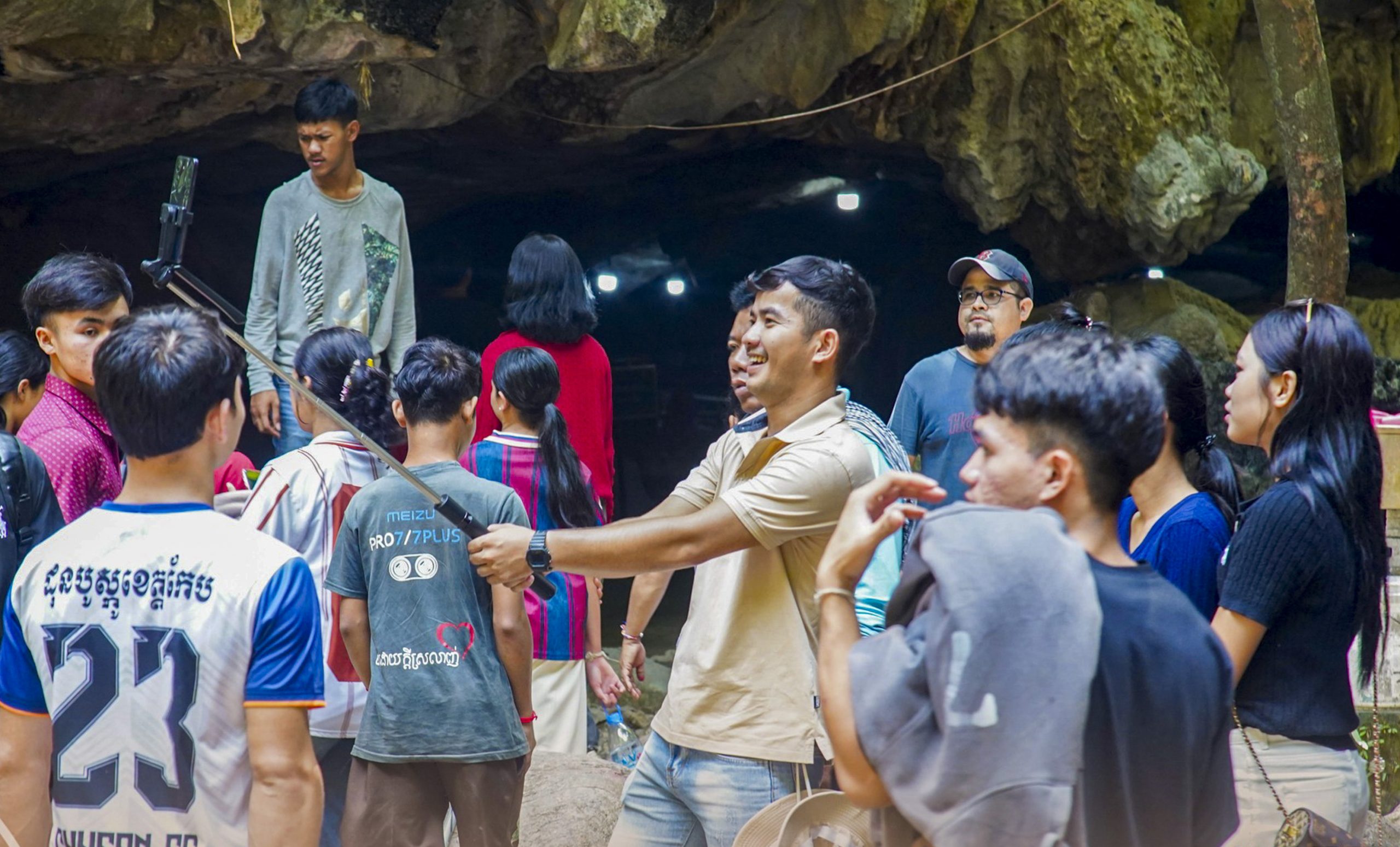
On the final day, participants visited Kampong Trach Kiri Mountain, where a local Indigenous elder who serves as guardian of ancient caves shared stories linked to Cambodia’s history, including violence during the Khmer Rouge period.
The visit also emphasized “the respect for ancient sites as a sign of connection with God and ancestors,” according to Fr. Albeiro.