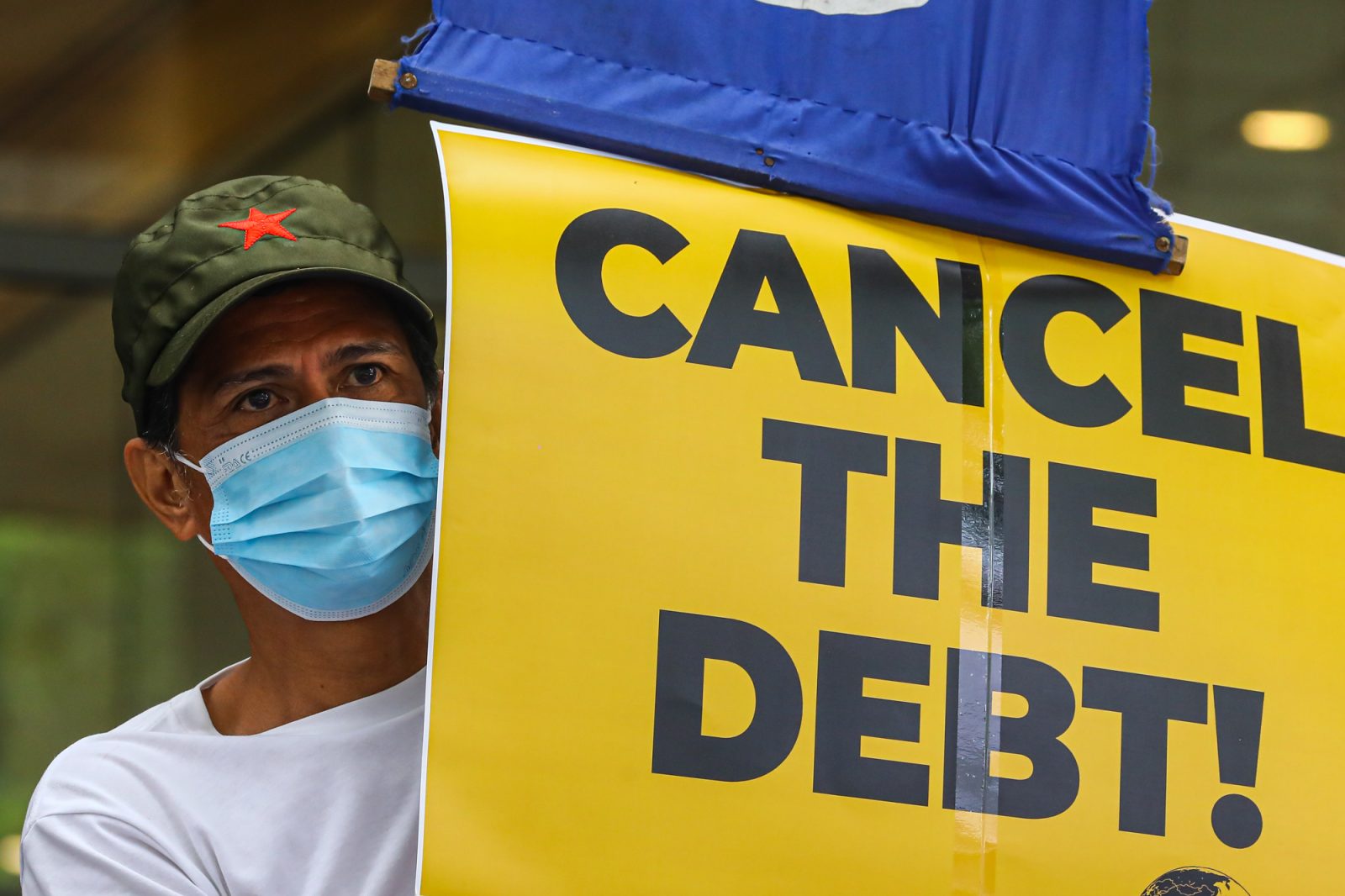
Church groups across Asia warned that rising debt burdens are weakening climate resilience, forcing some of the region’s most climate-vulnerable countries to divert resources from public services, disaster preparedness, and climate adaptation to debt repayments.
The Turn Debt Into Hope campaign, supported by Caritas Asia, Caritas Internationalis, and the Federation of Asian Bishops’ Conferences, said debt, poverty, and climate change have become intertwined challenges across the region, particularly in countries repeatedly hit by climate-related disasters.
Jing Rey Henderson, author of a regional report prepared for the campaign, said the research found a growing pattern in which governments borrow to recover from disasters while debt obligations limit their ability to prepare for future crises.
“The clearest evidence is the growing pattern across Asia where climate disasters force governments to borrow for recovery, while debt repayments reduce their ability to invest in resilience before the next disaster strikes,” Henderson told LiCAS News.
The Philippines illustrates the pattern described in the report. Following Super Typhoon Yolanda in 2013, international assistance helped rebuild affected communities, but much of the support came through loans that eventually had to be repaid.
Henderson questioned why communities repeatedly devastated by climate-related disasters are expected to assume additional debt simply to recover.
“The people who lost homes, livelihoods, and loved ones did not cause the climate crisis, yet they are often left carrying its financial costs,” she said.
As disasters become more frequent and severe, governments are forced to borrow repeatedly, creating what the report describes as a cycle in which climate shocks generate debt while debt obligations reduce resources available for adaptation, social services, and future preparedness.
The report identifies Sri Lanka, Pakistan, Bangladesh, Nepal, and the Philippines among the countries facing overlapping pressures from climate vulnerability, poverty, and rising debt obligations.
In the Philippines, Henderson noted, the government allocated nearly P979 billion for debt servicing in 2026 while planning to borrow more than P2 trillion to finance its budget deficit.
“The issue is not simply the size of the debt,” she said. “It is the fact that countries already struggling to protect vulnerable communities must devote enormous resources to repayments while also trying to find funding for disaster response, recovery, and climate adaptation.”
She said many of the countries most exposed to climate impacts are also those with the least fiscal capacity to absorb them.
Sri Lanka emerged as another case highlighted in the research. Henderson said debt pressures have constrained public spending and reduced the government’s ability to respond to social and economic needs, particularly following climate-related disasters.
“When debt repayments come first, schools, hospitals, and disaster preparedness often come second, or third, or forth, or at the bottom of the budget chain,” she said.
Researchers also gathered testimonies from communities in Bangladesh, Nepal, Sri Lanka, Pakistan, India, Indonesia, and the Philippines. Across those countries, families described losing homes, crops, and livelihoods, then taking on loans to survive and rebuild.
“The most common theme was uncertainty,” Henderson said.
“For many families, a climate disaster does not end when the floodwaters recede—it continues through years of debt.”
The findings are also shaping Church advocacy across Asia, where bishops’ conferences and Catholic organizations have begun linking debt justice with climate and ecological concerns.
Henderson said several bishops’ conferences and Church institutions committed to raising awareness, integrating debt and ecological justice into formation and education programs, supporting advocacy efforts, and amplifying the experiences of affected communities.
She noted that the Federation of Asian Bishops’ Conferences included debt justice in its advocacy ahead of international climate negotiations, including calls for wealthy countries to provide climate finance without further indebting nations in the Global South.
“The Church is increasingly recognizing that debt is not only an economic issue—it is a human dignity issue,” Henderson said.
While supporting debt relief and restructuring, the report argues that broader reforms are needed, including greater access to grant-based climate finance, investment in climate-resilient agriculture and disaster preparedness, stronger ecosystem protection, and policies that address widening economic inequality.
“Debt relief is necessary, but it is not sufficient,” Henderson said.
She said debt relief should be viewed not only as an economic measure but also as part of a broader effort to protect vulnerable communities facing the growing impacts of climate change.
“Ordinary citizens should not be asked to pay twice—first through climate disasters, and then through debt repayments,” Henderson said.