
In a nation where the saffron robes of the Buddhist monastic order form the dominant visual fabric of daily life, the small minority Catholic Church in Thailand is finding its voice—and its strength—not in isolation, but in deep, intentional conversation with its neighbors.
Two recent encounters, spanning from the forested retreats of Saraburi to the coastal stretches of Surat Thani, demonstrate how interreligious dialogue is quietly serving as a bulwark for social cohesion, countering religious extremism and deepening the faith of all involved.
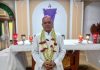
On June 29, a remarkable reunion took place at Wat Sao Hai in Saraburi province, north of Bangkok. Father Rangsiphol Pleanphan of Nakhon Sawan Diocese, north of Bangkok, traveled to the retreat center to visit Phra Mon, a Buddhist missionary monk normally based in Sweden, who had returned to Thailand for a period of intensive prayer and meditation.
The two men share a history forged on the pavement. They previously collaborated on the “Walk for Peace” project, an initiative through which Phra Mon continues to use the literal act of walking to advocate for global harmony.
“We haven’t seen each other for a long time,” Father Rangsiphol reflected. “I took the opportunity to visit him, and we enjoyed a deep dialogue regarding the search for truth in the human world.”
Their conversation quickly ventured into deep theological waters, comparing the Buddhist concept of the Five Aggregates (khandhas), which constitute human existence, with Catholic anthropology.
Father Rangsiphol noted that while foundational beliefs regarding “self” and “salvation” differ significantly, the comparative exercise illuminates the beauty of both traditions.
“Experiencing how other religions practice devotion actually helps Catholics better understand their own faith, and vice versa,” Father Rangsiphol explained.
One day earlier, on June 28, a parallel spirit of openness unfolded in the southern Diocese of Surat Thani.
At St. Michael the Archangel Church in Somwang, Father Joseph Sittichok Sawaengkan and his parishioners opened their doors to an unusual delegation: three Buddhist monks.
The visiting monks were not ordinary pilgrims. They are undergraduate students in the Bachelor of Buddhist Studies program at the Surat Thani campus of Mahachulalongkornrajavidyalaya University, majoring in Religion and Philosophy.
The focus of their academic and spiritual exploration was singular and profound: “The Principle of Forgiveness in Christianity.”
Participants described the atmosphere inside the parish hall as warm and familial.
For the student monks, the interfaith dialogue provided a living laboratory for understanding how the Christian mandate to forgive “seventy times seven” functions as a practical mechanism for social peace.
For the Catholic minority, it offered an opportunity to clear up historical misunderstandings and build relational trust.
In a world increasingly fractured by religious polarization, Thailand’s religious leaders are charting a different course.
By stepping out of their respective sanctuaries and into each other’s spaces, these priests and monks are proving that true interreligious dialogue does not require compromising one’s doctrinal convictions.
Instead, by discovering common ethical foundations, they are ensuring that the minority Catholic community and the Buddhist majority can walk side by side toward a more harmonious future.