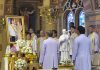

Cardinal Filipe Neri Ferrão of Goa and Daman called on religious men and women to make synodality a lived reality by accompanying people, listening with openness, discerning together, and witnessing to the Gospel.
He made the appeal during the annual general meeting of the Conference of Religious India (CRI) Goa Unit at the St. Joseph Vaz Spiritual Renewal Centre in Old Goa.
Describing religious and consecrated persons as “a valuable resource” and “a precious treasure” for the Church in Goa, Ferrão acknowledged their contribution to education, health care, social services and other ministries in Goa and the mission territories of Daman and Nagar Haveli.
Recognizing that much of their ministry may not always be visible or adequately appreciated, he assured them that “God is looking at our ministry” and thanked them for their witness amid growing challenges.
Linking synodality with the archdiocese’s pastoral theme for the year, “Abide in Me” (John 15:4), the cardinal said ministry must flow from a deepening relationship with Christ.
He highlighted three dimensions of the pastoral program: rootedness in faith through the Word of God, formation in faith through catechesis, and celebration of faith through the liturgy, especially the Eucharist.
Reflecting on the Church’s synodal journey, Ferrão recalled Pope Francis’ vision of the Church as “a synodal community of missionary disciples,” rooted in communion, participation and mission.
He said religious and consecrated persons, together with priests, have a responsibility to translate this vision into relationships and community life.
Using the Gospel account of the disciples on the road to Emmaus (Luke 24:13-35), Ferrão presented journeying, listening, discerning and witnessing as four dimensions of a synodal Church.
Speaking about accompaniment, Ferrão described Jesus as a “gentle companion” who walked with the disappointed disciples and entered into their pain.
He urged religious to follow this example by accompanying members of their communities, priests, fellow religious, lay collaborators and young people experiencing difficulties.
“If we want to build a synodal church, we are called to journey with people,” he said.
Ferrão said such accompaniment could include visiting families, encouraging individuals and strengthening relationships in parishes, communities and institutions.
The cardinal also emphasized listening as part of synodality. He noted that Jesus did not immediately provide answers to the disciples on the road to Emmaus but first allowed them to express their anxieties and experiences. Only then did he open the Scriptures and help them interpret their experience in the light of God’s Word.
Ferrão encouraged religious communities to adopt “conversation in the Spirit” in their decision-making.
Such discernment, he said, should begin with prayer and Scripture and be guided by the question, “What is the Spirit telling us?”
Personal preferences and human reactions, he cautioned, should not determine community decisions. Instead, members should seek together to understand God’s will.
The Eucharist, he added, has a place in this discernment, recalling that the disciples recognized Christ when their eyes were opened in the breaking of the bread.
Ferrão said synodality must ultimately lead to witness. The disciples who encountered the risen Christ on the road to Emmaus did not keep the experience to themselves but returned to Jerusalem to proclaim what they had seen and heard.
In the same way, he said, the Church cannot become inward-looking or self-referential but must remain outward-looking, evangelizing and missionary.
Ferrão identified silence, humility, self-sacrifice, forgiveness and joy as attitudes that can nurture synodality. He stressed humility and self-emptying, a readiness to forgive one another and the ability to remain joyful amid difficulties.
The cardinal also called for a “ministry of presence” in the areas of Sattari and Sanguem in Goa.
He invited religious communities to consider these areas as places requiring a sustained “ministry of presence” and encouraged communities across Goa to support such efforts.
Concluding his address, Ferrão called on religious and priests to begin the synodal journey within their own communities and relationships.
He urged them to journey with pastoral clergy, other religious, lay collaborators and the faithful by caring for and listening to one another, discerning God’s will together and becoming a witnessing and missionary Church at every level.