Across the global Catholic Church, a profound shift is underway as the faithful grow in their understanding of the inherent dignity of baptism.
Whatever their individual vocations—whether as lay leaders, religious sisters, or community organizers—all the baptized are being called to claim the Church as their own and actively contribute to its life.
This global evolution is not merely top-down; it is a tapestry woven from the highest halls of the Vatican to the remote mountain villages of Northern Thailand.
High-Level Horizons: A Growing Voice in Rome
At the universal level, the landscape of ecclesial leadership has undergone historic shifts. Pope Francis opened unprecedented doors by appointing women to high-ranking advisory and decision-making bodies, including the Dicastery for Bishops and the International Theological Commission.
Milestones were forged when Sister Nathalie Becquart became the first woman to hold voting rights as under-secretary of the Synod of Bishops.
Building upon this trajectory, Pope Leo XIV recently appointed Italian Salesian Sister Alessandra Smerilli, F.M.A., as prefect of the Vatican’s Dicastery for Promoting Integral Human Development.
As the first woman to head this major Vatican office, Sister Smerilli’s appointment reflects a deepening commitment to integrating female leadership into the governance of the universal Church.
Yet, the true measure of this movement is visible far beyond Rome. Worldwide, women make up the vast majority of those in consecrated life—serving in education, healthcare, and missionary frontiers.
Day by day, they serve as chancellors, university presidents, school directors, catechists, and local parish leaders, acting as the bedrock of everyday ecclesial life.
Grassroots Leadership in Northern Thailand
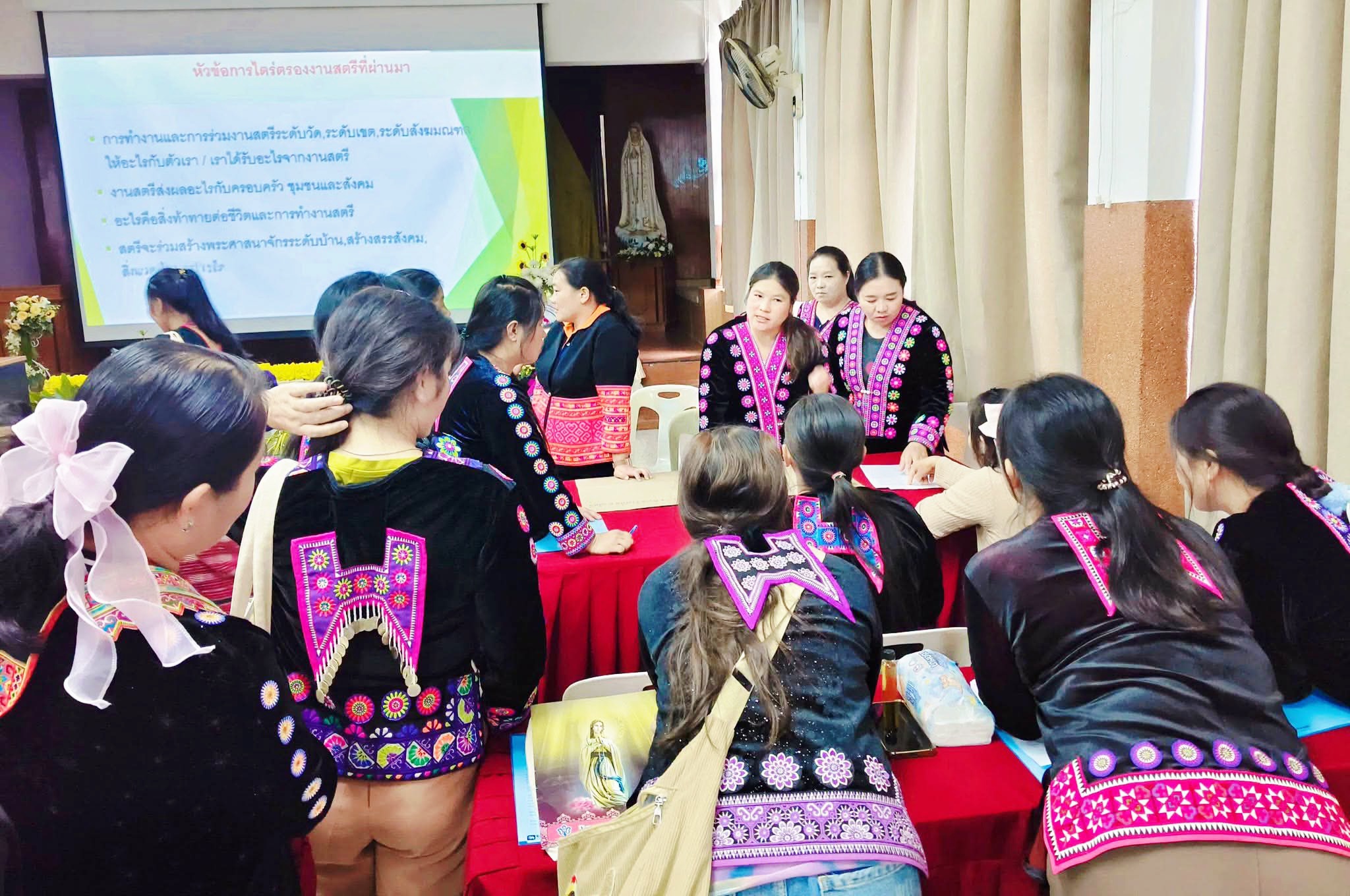
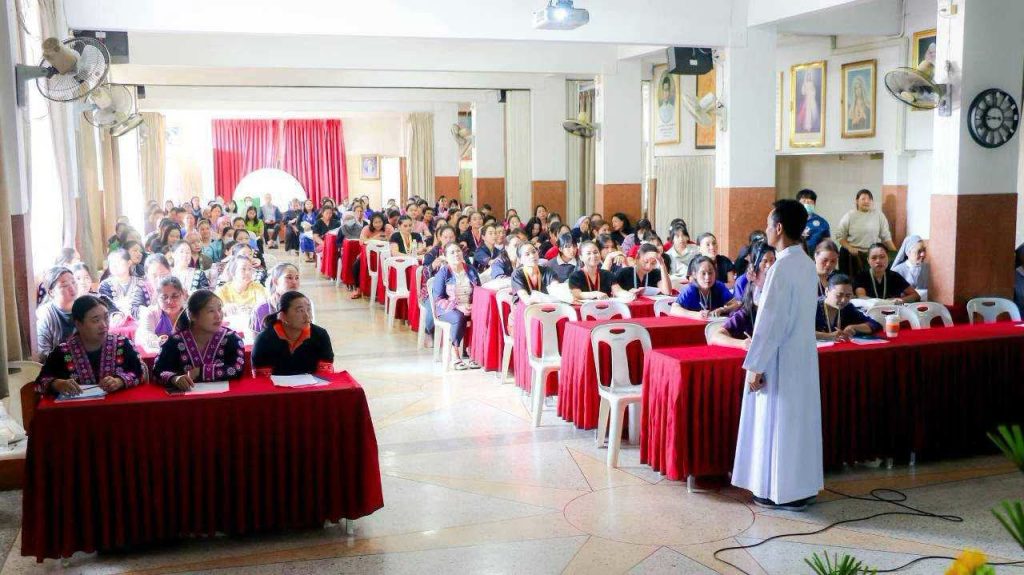
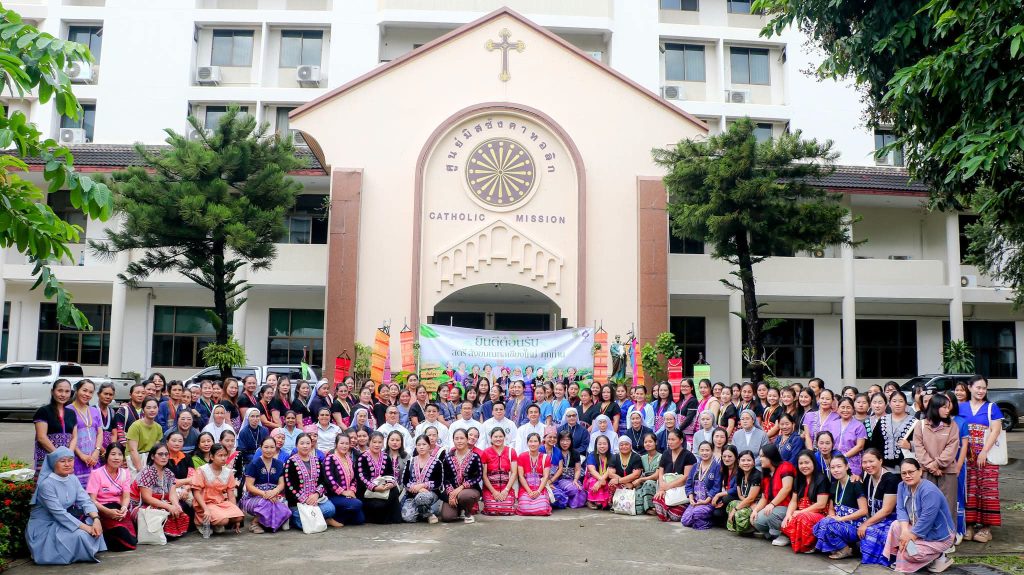
This global spirit of co-responsibility was vividly expressed from September 11–13, 2026, at the northern Chiang Mai Diocesan Center. There, the Catholic Committee for Social Development (Women’s Section) of the Diocese of Chiang Mai hosted its annual seminar for women leaders.
The gathering brought together over 120 women representing a rich tapestry of parishes, agencies, organizations, religious congregations, and Indigenous hill tribes. They assembled around a vital theme: “Empowering Women Leaders to Co-create the ‘Domestic Church’ (Family) in the Spirit of Christianity.”
“We come to encourage one another so that, empowered by faith, we may return to live out our calling in the communities and societies from which we came. Even though we may seem like small, ordinary individuals within our communities, let us have the courage to stand firm.”
Father Luka Kriangsak Kitsakulwong, SCJ, Superior of the Thailand-Vietnam Region of the Congregation of the Sacred Heart of Jesus of Bétharram, presided over the opening Eucharistic celebration alongside regional spiritual directors.
Drawing from the biblical figure of Sarah, Father Kriangsak reminded the assembly that authentic faith is demonstrated through action.
“Just as Abraham had to leave his homeland to journey toward the new place God desired for him, we too have stepped out of our homes to gather and strengthen the Church,” Father Kriangsak reflected.
“In today’s society, we must be courageous. We must make room for God within our families and in our society… Rather than relying solely on ourselves, we must pray; God will always arrive at the right place and the right time.”
Key Pillars of the Chiang Mai Seminar
The three-day gathering was designed to move beyond reflection into practical, community-centered action through four central objectives:
- Theological Grounding: Fostering a shared understanding of how to co-build the “Domestic Church” in alignment with Gospel values and Catholic Social Teaching.
- Contextual Analysis: Examining real-world challenges by evaluating the concrete, firsthand experiences of families within local parishes.
- Legal Understanding: Studying Canon Law regarding Christian marriage and family life to better support local communities.
- Actionable Guidelines: Developing strategic work plans that emphasize moving forward together, integrating leadership with a genuine spirit of love and humble service.
From the administrative desks of the Roman Curia to the diverse tribal communities of Chiang Mai, women are demonstrating that leadership in the Church is fundamentally about communion, service, and shared responsibility.
As these 120 leaders return to their respective mountain villages and urban parishes, they carry forward a renewed conviction: that the transformation of both the family and the wider society begins with a courageous, action-oriented faith.