Catholics in Indonesia were urged to defend human rights, demand transparency in public policy, and take a more active role in social issues, with Church and civil society leaders saying faith must extend beyond liturgical life.
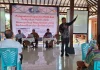
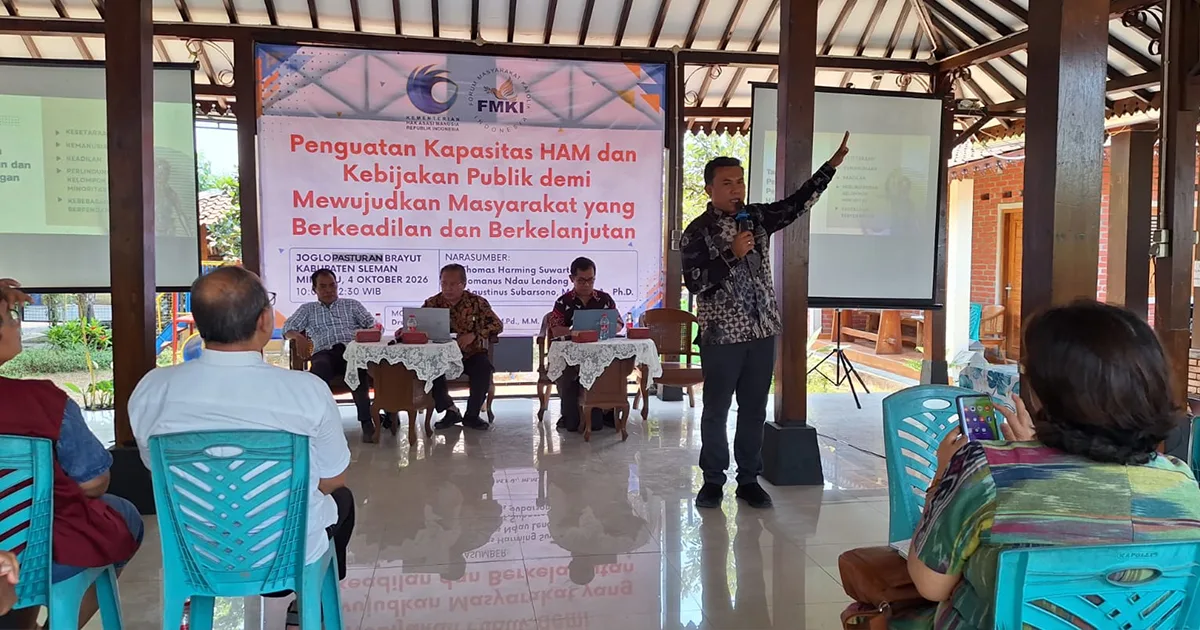
The appeal was made during an Oct. 4 public dialogue in Sleman Regency organized by the Indonesian Catholic Community Forum (FMKI), in cooperation with Indonesia’s Ministry of Human Rights.
About 180 people attended the gathering at St. John Paul II Parish in Brayut, Sleman, in the Special Region of Yogyakarta, according to the Archdiocese of Semarang.
Participants included members of Catholic organizations, Catholic youth groups, parish communities, academics, and community leaders.
Father Benediktus Hanjar Krisnawan, parish priest of St. John Paul II, said Catholic life should not be expressed only through worship but also through an active presence in society.
He urged Catholics to deepen their understanding of the law, show concern for society, and speak the truth responsibly.
The Archdiocese of Semarang said the message underscored the need to put faith into practice through concern for others and engagement in issues affecting communities.
Mathias Sumardi, chairman of FMKI in Sleman, said the organization sought to serve as a common space for Catholic organizations, parish commissions and other groups to strengthen communication and cooperation.
FMKI said such collaboration could help promote a more peaceful and sustainable society.
Petrus Doni Karno, an expert staff member to Indonesia’s human rights minister in the field of public communication dissemination, said human rights belong to every person as a human being created by God.
Respect for human rights, he said, was not solely the responsibility of government but also required public concern and participation.
Karno urged participants to pay attention to equality, humanity and justice, as well as the protection of groups needing greater support, including persons with disabilities, women, children and older people.
He also introduced community-based human rights programs, including reconciliation and peace villages and human rights-aware villages.
Karno said strengthening human rights should be reflected in daily life through mutual respect and concern for others.
Agustinus Subarsono, an academic and expert on political economy and public policy at the Faculty of Social and Political Sciences of Gadjah Mada University, said public policy should be guided by transparency, justice and sustainability.
He said people should be given space to know and understand how public policies are made, while policymakers should take into account the circumstances and needs of communities, particularly vulnerable groups.
Public policy, he said, should also take a long-term view and consider data, experience and its impact on society and future generations.
Subarsono stressed the importance of public participation, saying citizens, civil society organizations and the media had a role in monitoring policies from formulation through implementation and evaluation.
Human rights advocate Romanus Ndau Lendong, director of the Institute for Information and Democracy Studies, focused his presentation on the public’s right to know.
He said the right to information was grounded in Article 28F of Indonesia’s 1945 Constitution and Law No. 14 of 2008 on Public Information Disclosure.
Accurate and accountable information, Lendong said, was important in helping people understand public issues and take part in society.
He said access to information also helped build trust and encouraged responsible public participation.
During the closing session, Father Rosarius Sapto Nugroho, chairman of the PK3 Commission of the West Yogyakarta Vicariate, encouraged Catholic communities in West and East Yogyakarta to strengthen ties with government, local legislatures and civil society organizations.
The Archdiocese of Semarang said such cooperation could strengthen the contribution of Catholics to building a just, dignified, and sustainable society and advancing the bonum commune, or common good.