
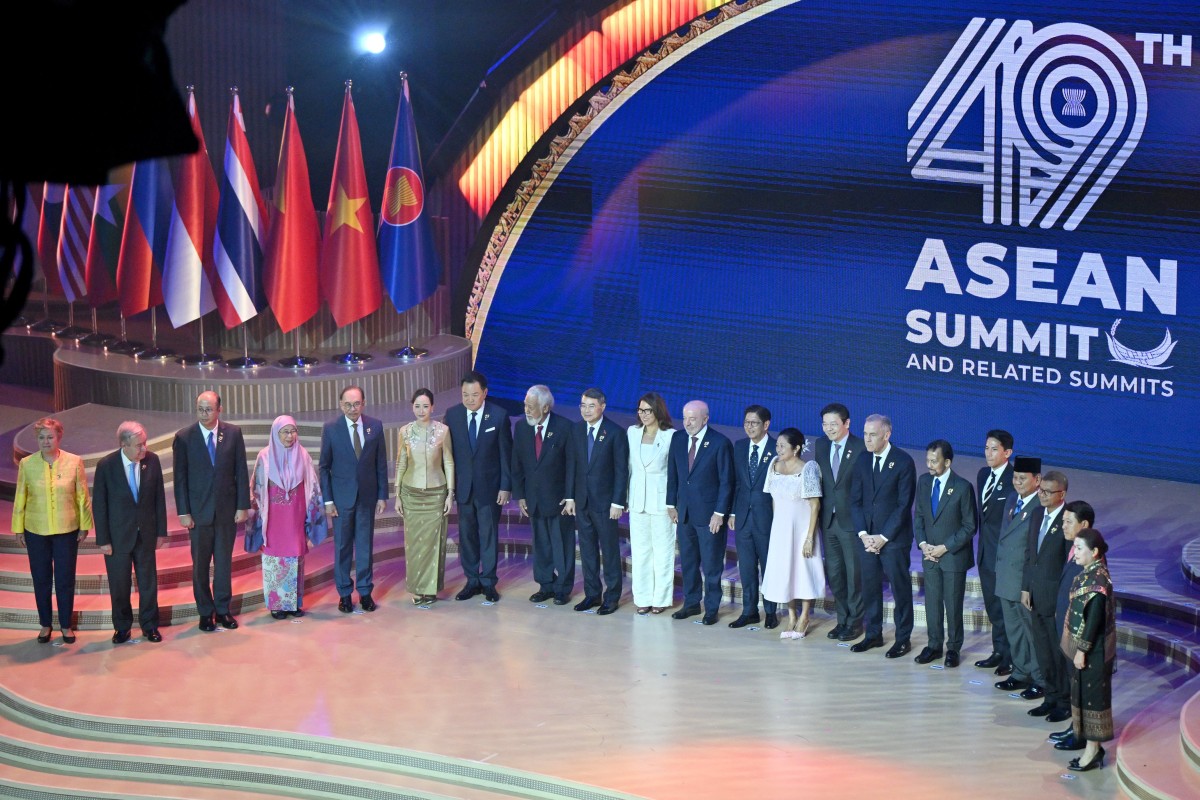
Climate advocates urged Southeast Asian leaders Monday to commit to renewable energy-based electrification and move away from fossil fuels, warning that energy policies without clear renewable energy targets could deepen the region’s dependence on costly fossil fuels.
The Center for Energy, Ecology, and Development (CEED) called on governments attending the COP31 climate negotiations in Antalya, Türkiye, and the 49th Association of Southeast Asian Nations (ASEAN) Summit in Manila to prioritize renewable energy, particularly distributed renewable energy systems.
The appeal coincided with a call from United Nations Secretary-General António Guterres for a just transition to renewable energy and stronger climate resilience as Southeast Asia faces rising energy costs, geopolitical tensions and worsening climate impacts.
Speaking at the 16th ASEAN-United Nations Summit in Manila on Nov. 16, Guterres urged stronger international cooperation to help developing countries withstand economic shocks and strengthen their resilience against disasters.
He called for reforms to international financial institutions and greater support for climate-vulnerable countries, including measures to accelerate a just transition to renewable energy.
Gerry Arances, executive director of CEED, warned that the electrification agenda under discussion at COP31 lacks clear commitments to renewable energy and reliable electricity access for underserved communities.
“Southeast Asia has suffered disproportionately from the global energy crisis because of our extreme reliance on fossil fuels. Any electrification agenda delivered here will benefit our region only if it prioritizes renewables, especially distributed renewable energy,” said Arances.
He urged Southeast Asian governments to ensure that renewable energy remains central to electrification targets being negotiated at the climate summit.
CEED also called on the Philippines, as host of the ASEAN Summit, to take a leading role in pushing for stronger regional climate commitments.
“Unprecedented warming is already our reality. Electricity that can help strengthen our people’s resilience while contributing to mitigating worse climate change will only come from renewables. Southeast Asian governments need to step up in bringing this fact to negotiation tables,” said Arances.
He warned that failure to advance these commitments would undermine the interests of communities already facing severe climate risks.
The appeal followed developments during the first week of COP31, when Brazil, which hosted COP30 in Belém last year, turned over a roadmap for advancing the global transition away from fossil fuels.
Guterres and negotiating blocs representing more than 70 parties also called for further progress on the transition.
Nuclear energy push draws criticism
Climate group 350.org Japan criticized the Japanese government’s reported plan to enter into an agreement with the Asian Development Bank (ADB) to expand nuclear power in Asia.
The group described the initiative as an “expensive and dangerous distraction” from efforts to phase out fossil fuels, arguing that nuclear projects carry higher costs and long-term radioactive risks compared with solar and onshore wind power.
Masayoshi Iyoda, Japan campaigner for 350.org, said governments should prioritize renewable energy instead of expanding nuclear power as part of global electrification efforts.
“Electrification must be underpinned by a shift to cheaper, safer renewables – not a pivot to discredited nuclear technology that pushes developing economies into further debt and the never ending chaos of nuclear waste disposal,” said Iyoda.
The criticism came as 100 civil society groups, including 350.org Japan, issued a joint statement opposing the promotion of nuclear power at COP31.
The groups urged Japan and international financial institutions to support developing Asian countries in phasing out fossil fuels and expanding solar and wind power.
ASEAN advances regional energy cooperation
At the ASEAN Summit, the Philippine Department of Energy announced that all ASEAN member states had signed the Enhanced Memorandum of Understanding on the ASEAN Power Grid.
The agreement aims to strengthen regional energy security through cross-border electricity connections as Southeast Asian countries confront growing energy demand and supply vulnerabilities.
Philippine Trade and Industry Secretary Christina Roque also said five countries had expressed interest in regional stockpiling efforts: the Philippines, Singapore, Indonesia, Malaysia and the United Arab Emirates.
The initiative is not yet operational, and its implementation timetable remains unclear.
Japan and the Philippines are also expected to sign a memorandum of understanding this week to strengthen cooperation on oil reserves.