
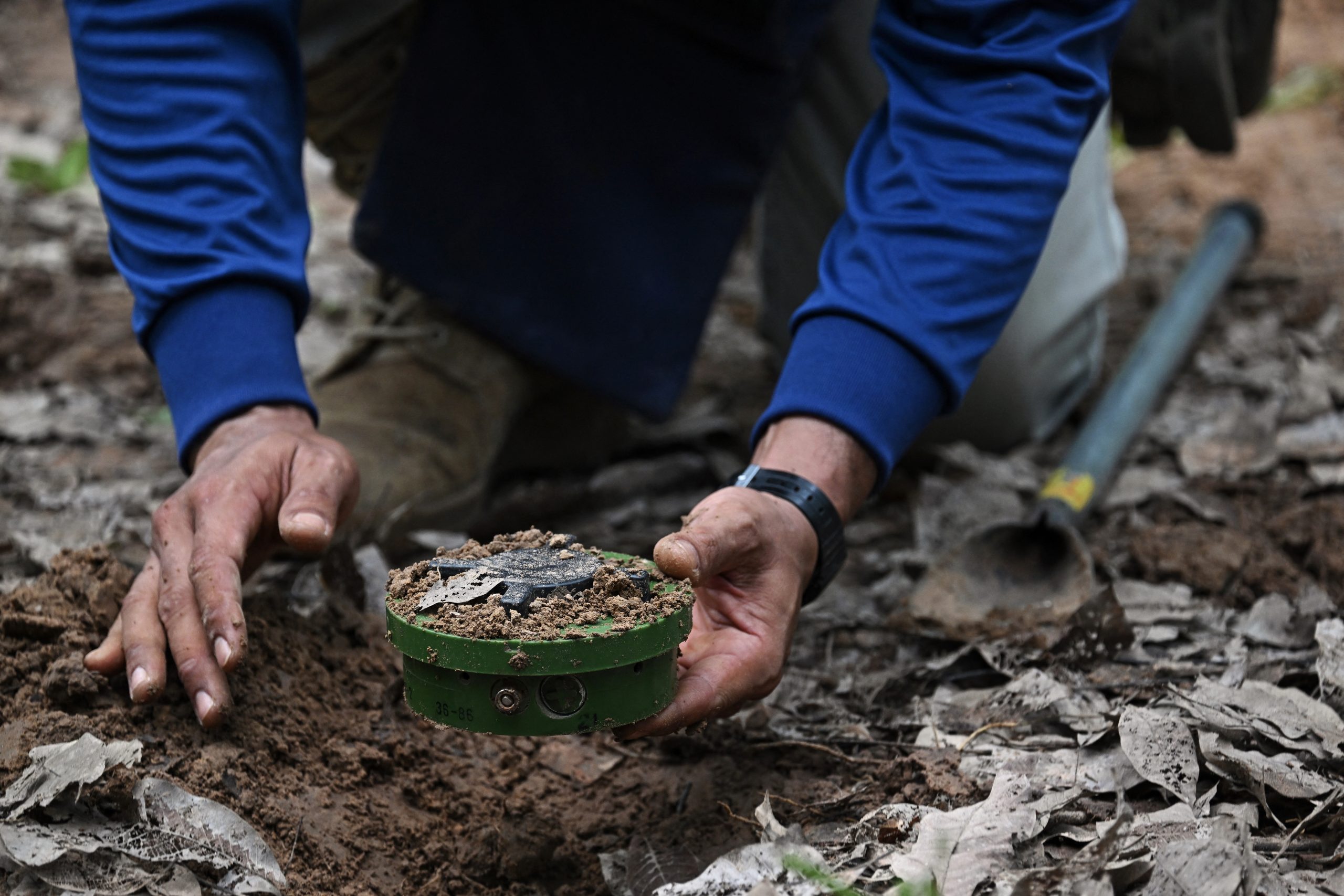
Thailand has accused Cambodia of violating the Anti-Personnel Mine Ban Convention (Ottawa Convention) and called on the international community to uphold the treaty’s humanitarian principles.
Bangkok made the call after a series of new landmine incidents along its shared border.
Foreign Minister Maris Sangiampongsa, addressing States Parties at the Palais des Nations in Geneva on August 27, warned that the renewed use of mines threatens decades of progress in global disarmament and undermines the dignity of victims and border communities.
Maris stressed that landmines are “more than weapons of war” and instead represent a humanitarian tragedy. “The APMBC is more than a treaty. It is a symbol of humanity’s determination to end the suffering caused by one of the most indiscriminate and inhumane weapons ever invented,” he said.
Landmines, Maris noted, devastate families and communities long after conflicts end. Farmers cannot cultivate their land, children live in fear, and survivors face permanent disability. “Mine action is about saving lives, protecting dignity, safeguarding human rights, and advancing development,” he said.
The Thai Army revealed on Thursday (August 28) that another three of its soldiers were injured in a landmine attack along the Thailand–Cambodia border on Wednesday.
The Catholic Church has been among the strongest voices against anti-personnel mines, condemning them as weapons that strike indiscriminately. Church leaders stress that the landmine issue is not only about weapons but also about the sanctity of life and healing for wounded communities.
Pope Francis has called them “insidious and cruel devices” that prevent reconciliation, while St. John Paul II urged their total ban, saying the suffering they cause “cries out to heaven.”
Maris’s appeal in Geneva reflected these moral concerns. He announced Thailand’s decision to join the UN Secretary-General’s Global Advocacy Campaign on Humanitarian Disarmament and Mine Action, underscoring Bangkok’s commitment to a mine-free world.
In his 2017 address to the International Conference on Healthcare, Pope Francis underlined that healthcare must always begin with compassion, serving the most vulnerable and upholding human dignity.
Applied to landmine survivors, that vision means ensuring not only medical care for the maimed but also their full reintegration into society. “Health care is not a business, but a mission: a mission of compassion and human dignity,” the Pope said.
For Thailand, this vision of healing and restoration stands at the heart of its appeal in Geneva. “Mine action is about saving lives, protecting dignity, safeguarding human rights, and advancing development,” Maris said. “Thailand stands ready to work with the United Nations and all partners toward the noble objective of a mine-free world.”
While welcoming Cambodia’s agreement in principle to cooperate on humanitarian demining, Maris cautioned that genuine progress requires an immediate halt to new mine-laying and respect for Thai clearance operations.
Quoting Nobel Peace Prize laureate Jody Williams, he said landmines “do not stop an invasion” and “don’t influence the outcome of war.”
“All they do is mutilate or kill your own people. It is time these inhumane weapons be fully removed and never used again,” he said.