The Catholic Church in Japan has stressed the role of “spiritual capital” in shaping education, highlighting its long-term impact on young people and society.
The call was made during the 49th National Conference of the Japan Catholic Education Association, organized by the Japan Society for the Study of Catholic Education.
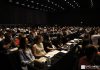
More than 150 Catholic educators, researchers, and school staff gathered at the University of the Sacred Heart in Tokyo from August 29 to 31 to exchange views and present findings on Catholic education and values.
Professor Nobuhiko Maeda of Ritsumeikan University said that in the social sciences, spiritual capital is “intangible capital” that “imbues material capital such as wealth and power with special meaning and value.”
He added that while the concept overlaps with religion, “spiritual capital is not limited to any particular religion.”
Citing Pope Francis, who in 2022 told young people that “since humans, created in God’s image, seek meaning before pursuing material gain, spiritual capital is the primary capital of society, and that it is also necessary for the economy,” Maeda stressed the need to view Catholic education with “a fairly long-term perspective.”
A nationwide survey he led in 2024 found that graduates of Christian junior and senior high schools in their 20s “possessed greater amounts of spiritual capital than graduates of non-Christian schools.”
The study also showed that while spiritual capital “declined sharply toward their 40s,” it rose again “after their 50s.”
Auxiliary Bishop Toshihiro Sakai of Takamatsu, who presided over the closing Mass, reminded educators: “In order to educate people to share Catholic values, we (educators) must live them.”
Other scholars also emphasized the importance of connection and dialogue.
Professor Naoki Kuwahara of the University of Tsukuba warned that Catholic schools in Japan have “primarily developed as individual religious orders,” making “strengthening connections with the Church, including the bishops, an urgent issue.”
Professor Yukiko Aoki of Musashino Gakuin University explained that John Henry Newman, declared a Doctor of the Church this year, positioned universities as “communities of learning.”
Meanwhile, Professor Saho Matsumoto of Nihon University highlighted the role of Christian work in international humanitarian organizations.
Educators said they were encouraged to reflect more deeply on Catholic education.
Keisuke Tanaka, vice principal of Kosen Catholic Junior and Senior High School, said he was “deeply encouraged by the spiritual capital that is helping students in their daily educational activities,” adding that the discussions broadened his horizons and made him consider “with whom I want to connect.”
Professor Kana Hamatani of Chuo University said she was able to reflect on “the possibilities and challenges of Catholic education from various perspectives,” noting that “‘diversity’ and ‘inclusion’ are also themes in the field of education.”
She added that she would like to consider dialogue “not only within Catholicism, but also with the secular world and other religions.”
The 50th national conference is scheduled for next year at Nanzan University in Nagoya.