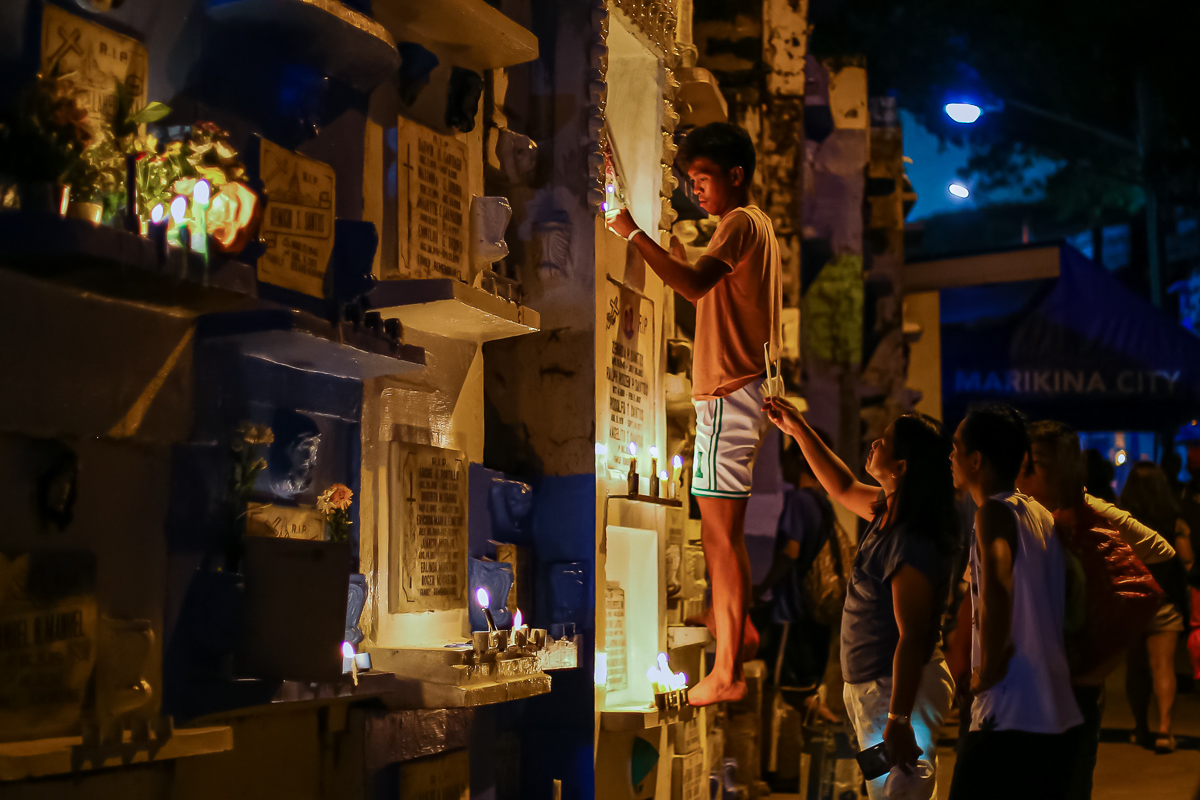
Cardinal Pablo Virgilio David of Kalookan reflected on the uniquely Filipino tradition of Undas — the local term for All Saints’ and All Souls’ Days — describing it as a “national pilgrimage” that reveals the people’s deep understanding of love, faith, and communion beyond death.
“Every year, as November comes, Filipinos prepare for a national pilgrimage—not to a distant shrine, but to our cemeteries and memorial parks,” the cardinal wrote in his reflection posted on his Facebook page.
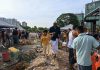
He said the annual observance is “one of the most quietly moving sights in our culture,” marked by families bringing flowers and candles, sharing meals, and telling stories among the tombs.
“Far from being gloomy, our cemeteries become places of family reunion. They are not silent fields of loss, but lively gardens of memory,” he wrote.
Responding to those who see the practice as morbid, Cardinal David explained, “It is not death we are celebrating—it is love. And love, as St. Paul says, never ends.”
‘Communion of Saints’ in Filipino faith
The prelate said Filipinos do not treat death as separation but as continuity — “as belonging.” He linked this instinctive understanding to the Apostles’ Creed: “I believe in the communion of saints.”
“What do we mean by this?” he asked. “That those who have walked before us in faith are not gone. They are united with us in Christ. We are one family, the living and the departed, bound together by God’s love.”
Cardinal David said that every November, when Filipinos visit their departed, they affirm “what our hearts already know: we do not walk alone.”
Blessed lives, blessing Llves
Recalling a conversation with a priest friend, the cardinal reflected on the meaning of sainthood.
“He had asked me before why the Church has two stages in declaring saints: beatification and canonization. The answer is simple and profound. Beatification means to be declared Blessed. Canonization means to be declared a blessing.”
He added, “Holiness begins by realizing we are blessed. We have been loved. And when one knows he is blessed, he desires to be a blessing.”
For the Filipino faithful, he said, visiting cemeteries is not an act of sorrow but of thanksgiving.
“This is why we gather at cemeteries—not to cling to sorrow, but to thank God for those who have been blessings to us. They lived blessed lives and then became blessings.”
Faith rooted in love, memory
The cardinal praised the way Filipino families “sanctify” the memory of their dead through simple acts of devotion.
“Filipinos do not fear the memory of death; we sanctify it. We hallow time and space with prayers and candles. We baptize grief with gratitude.”
He said these traditions also form a quiet catechism for the next generation: “We teach our children to clean graves, to whisper the names of grandparents they never met, to light candles ‘para sa mga kaluluwa’ (for the souls of the departed), not out of superstition, but out of love. And in that tender practice, we are catechizing them: Love is stronger than death. Memory is sacrament. Family is forever.”
The cardinal also noted how some Filipinos describe the day humorously as “Para tayong nagpiknik sa sementeryo” (“It’s like we’re having a picnic in the cemetery”)—a lighthearted remark that, he said, captures how love makes remembrance an act of joy, not fear.
Grief, hope, and communion
Cardinal David reflected that grief is “not a sign of weakness; it is proof that we have loved.” He said that only those who have loved can truly hope.
“This year as you visit the cemetery—say a prayer, light a candle, laugh at old family stories, whisper to your beloved departed, ‘Salamat sa pag-ibig’ (‘Thank you for the love’),” he wrote. “Feel the communion that binds heaven and earth.”
For Cardinal David, cemeteries are not places of ghosts but of communion — “with God, with our beloved dead, with each other.”
He described how, after every visit, “smelling of candle smoke, carrying melted wax on our fingers, our hearts strangely warmed—we know something sacred has happened.”
In that quiet act of remembrance, he said, love is rekindled and eternity is touched: “We have remembered, and in remembering, we have loved again. And in loving again, we have touched eternity.”
For the Kalookan prelate, Undas is not merely a cultural ritual but a profound encounter with the divine — “We are the communion of saints—the blessed striving to become blessings.”