Civil society groups at COP30 warned that continued fossil fuel expansion in major biodiversity hotspots threatens global commitments to protect climate and nature.
The groups cited new findings that map extensive overlaps between extraction zones and protected ecosystems.
New data presented in Belém, Brazil, show that oil and gas projects intersect with key conservation areas in the Amazon and the Coral Triangle.
In the Amazon alone, about 25 million hectares or 14 percent of key biodiversity areas overlap with oil and gas exploration.
In Southeast Asia’s Coral Triangle, 16 percent of oil and gas blocks coincide with 210,000 square kilometers of conservation areas and 80 protected areas.
“It is essential that governments recognize this pattern – oil and gas expansion is not only a climate threat. It’s directly threatening indigenous peoples, local communities, nature, food security, livelihoods, and ultimately the future of all,” said Florencia Librizzi, Deputy Director at Earth Insight.
“So if we’re really serious about protecting these ecosystems, we must align policy and finance with the transition away from fossil fuel expansion, both on land and at sea,” she added.
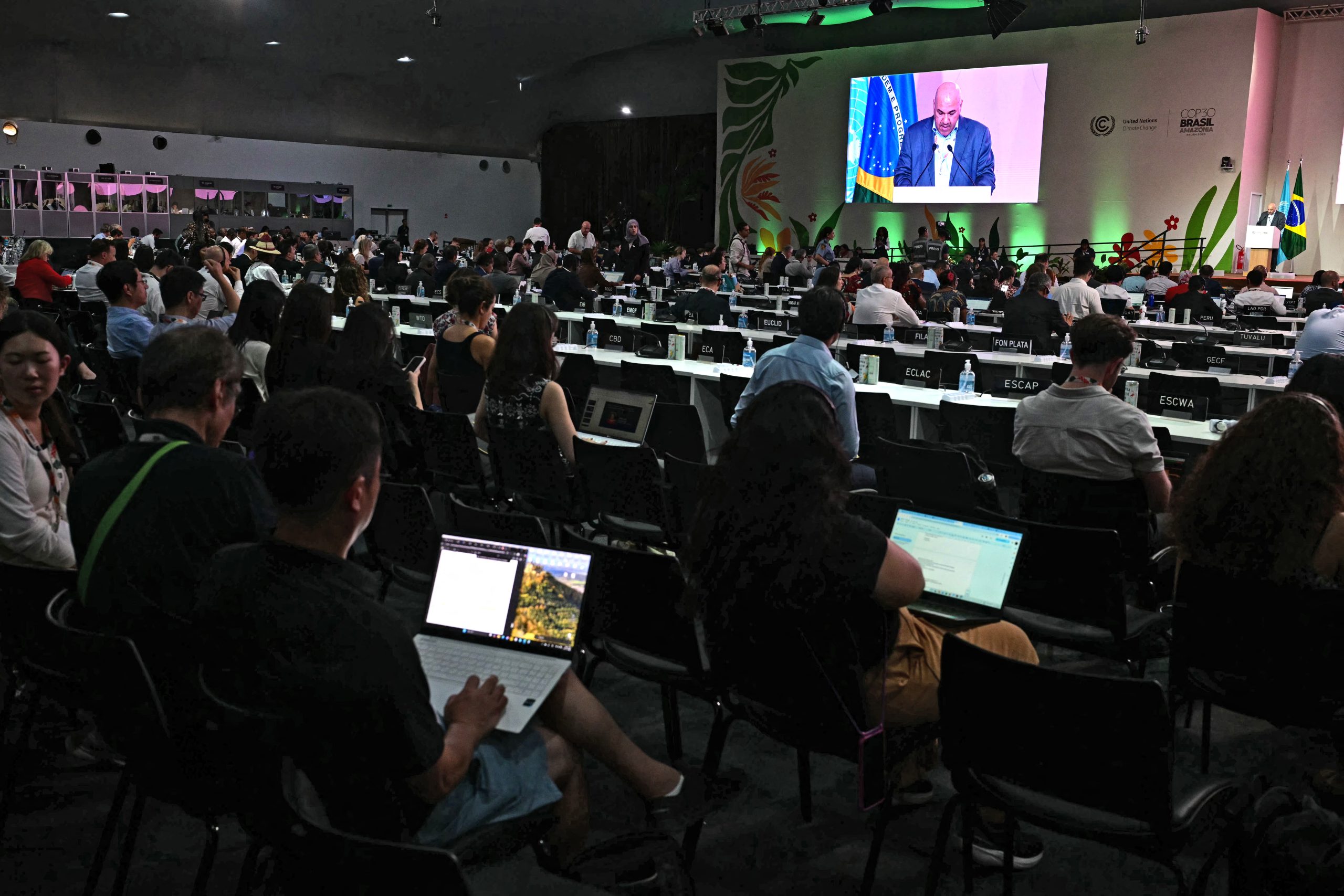
The warnings come as COP30 unfolds in Belém, a city known as the gateway to the Amazon, where fossil fuel projects continue to pressure forests, river systems, and nearby reef networks.
Joubert Marques of Instituto Internacional Arayara said that for more than 30 years, “we have been fighting in Brazil for a just energy transition and to defend the rights of communities and the protection of the Amazon.”
He added that while world leaders talk about just energy transition in the climate conference, “we have seen a massive fossil fuel expansion in the Amazon and all over [South] America. All of this expansion puts the Amazon at risk.”
The groups pointed to rising climate impacts as global temperature breaches 1.5°C, warning that climate-vulnerable countries like the Philippines could face stronger and more frequent typhoons.
Lawyer Avril De Torres, Deputy Executive Director of the Center for Energy, Ecology, and Development, said Southeast Asia houses a third of the world’s coastal and marine habitats, adding that “our very own Amazon of the Ocean, that is the Verde Island Passage.”
“But today, our waters and peoples are under siege. The world has crossed its first catastrophic climate tipping point–the widespread death of warm water coral reefs,” she said.
She emphasized that rising ocean temperatures are driving more intense and destructive typhoons, and pointed to the government’s failure to hold the developer responsible for the country’s worst marine oil spill in the Verde Island Passage (VIP).
She said this failure to reconcile conservation pledges with continued fossil fuel activity reflects a wider regional pattern.
The groups also flagged European banks for financing fossil fuel buildouts in fragile ecosystems.
The groups called on governments to respond with stronger protections. They urged world leaders to declare the Mekong Delta, the Coral Triangle, and the Verde Island Passage as “no-go zones for all extractive and destructive activities” and to commit to accelerated biodiversity recovery under the 30×30 target.