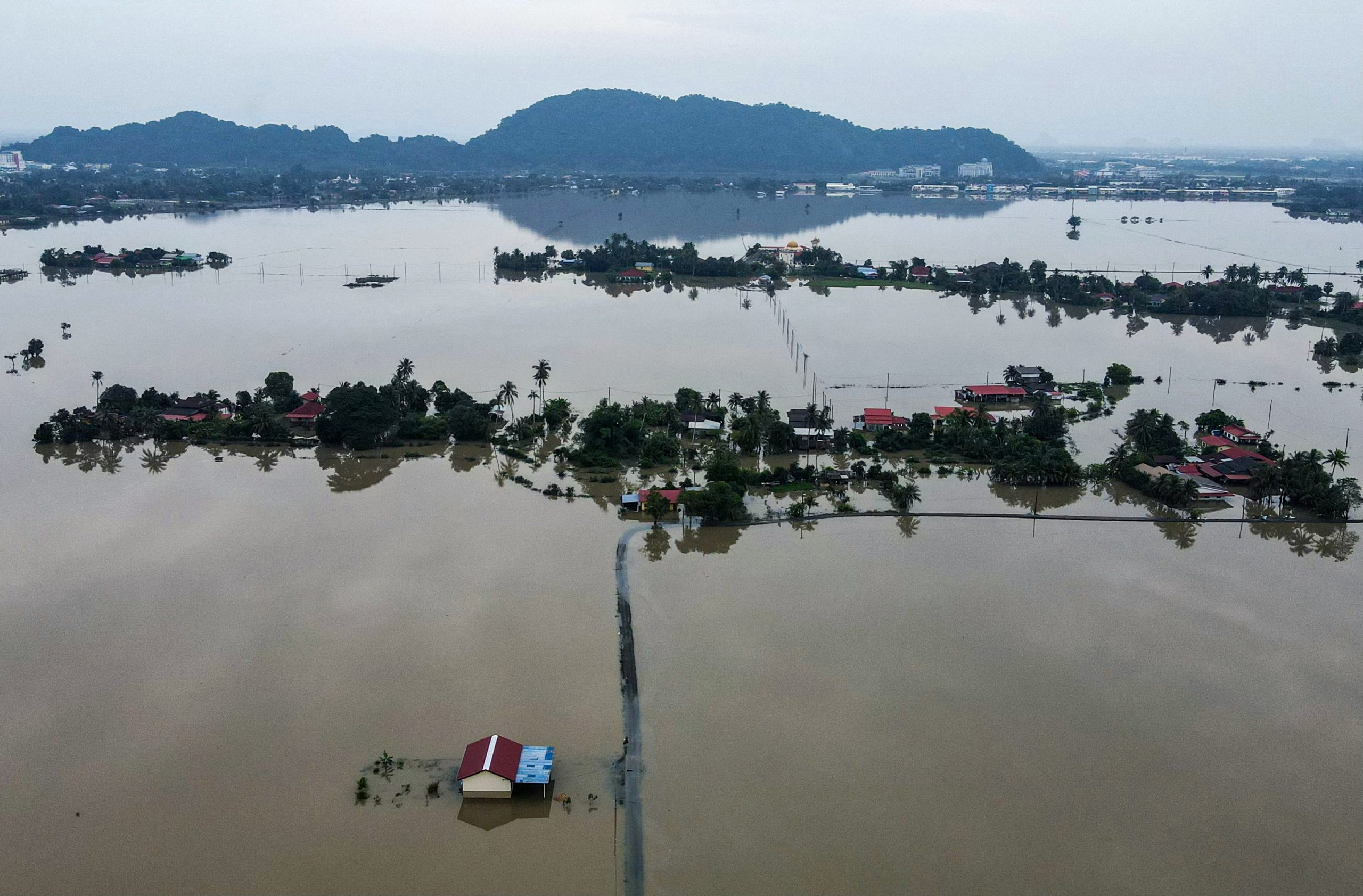
The death toll from the days-long floods and landslides sweeping across Asia has risen to more than 1,200, with rescue teams still struggling to reach isolated towns in Indonesia and Sri Lanka after some of the region’s heaviest rains in years.
The parallel weather systems, intensified by the ongoing monsoon season, battered Sumatra, Sri Lanka, southern Thailand and northern Malaysia.
Climate change is producing more extreme rain events and “turbocharging storms,” overwhelming local drainage systems and triggering deadly landslides, according to an Agence France-Presse (AFP) report.
The World Health Organization (WHO) has deployed emergency teams to the hardest-hit areas. WHO chief Tedros Adhanom Ghebreyesus said the devastation was “another reminder of how climate change is driving more frequent and more extreme weather events, with disastrous effects.”
Indonesia’s disaster agency on Tuesday raised the death toll on Sumatra to 631, with 472 people missing and one million residents displaced. Many villages remain cut off after bridges collapsed and roads disappeared under landslides.
President Prabowo Subianto visited North Sumatra on Monday, saying “the worst has passed, hopefully,” but warned that relief logistics remain difficult.
The government’s “priority now is how to immediately send the necessary aid,” he said, highlighting cut-off areas where helicopters and boats remain the only link to survivors.
Authorities have deployed three warships loaded with food and essential goods, along with two hospital ships, to reach communities stranded for days.
Sri Lanka’s Disaster Management Centre said on Tuesday that 410 people were confirmed dead and 336 missing, marking the country’s worst natural disaster since the 2004 Indian Ocean tsunami.
Cyclone Ditwah pummeled the island with sustained heavy rain, triggering massive flooding and landslides.
President Anura Kumara Dissanayake declared a state of emergency, describing the catastrophe as the “most challenging natural disaster in our history.”
Floodwaters in Colombo peaked overnight and slowly receded on Tuesday, allowing some residents to return to shops and offices. Many, however, remain stunned by the speed of the flooding.
A military helicopter sent to deliver food and evacuate residents crashed north of the capital on Sunday, killing the pilot.
Indian Prime Minister Narendra Modi phoned Dissanayake on Monday to assure him of New Delhi’s support for relief and recovery operations.
In Thailand, officials confirmed 176 deaths, making it one of the country’s deadliest flood events in a decade. Public frustration is growing, and two local officials were suspended amid criticism of the government’s disaster response.
Just across the border in Malaysia, heavy rainfall inundated Perlis state, killing two people.
The overlapping emergencies underscore the growing vulnerability of Asian communities as climate change intensifies extreme rainfall across the tropics.
Entire neighborhoods in low-lying and rural areas continue to rely on airlifts for food and water.
With hundreds of people still missing across the region, authorities warn the toll could rise even higher as search teams access more communities cut off for days by floodwaters and mudslides.