
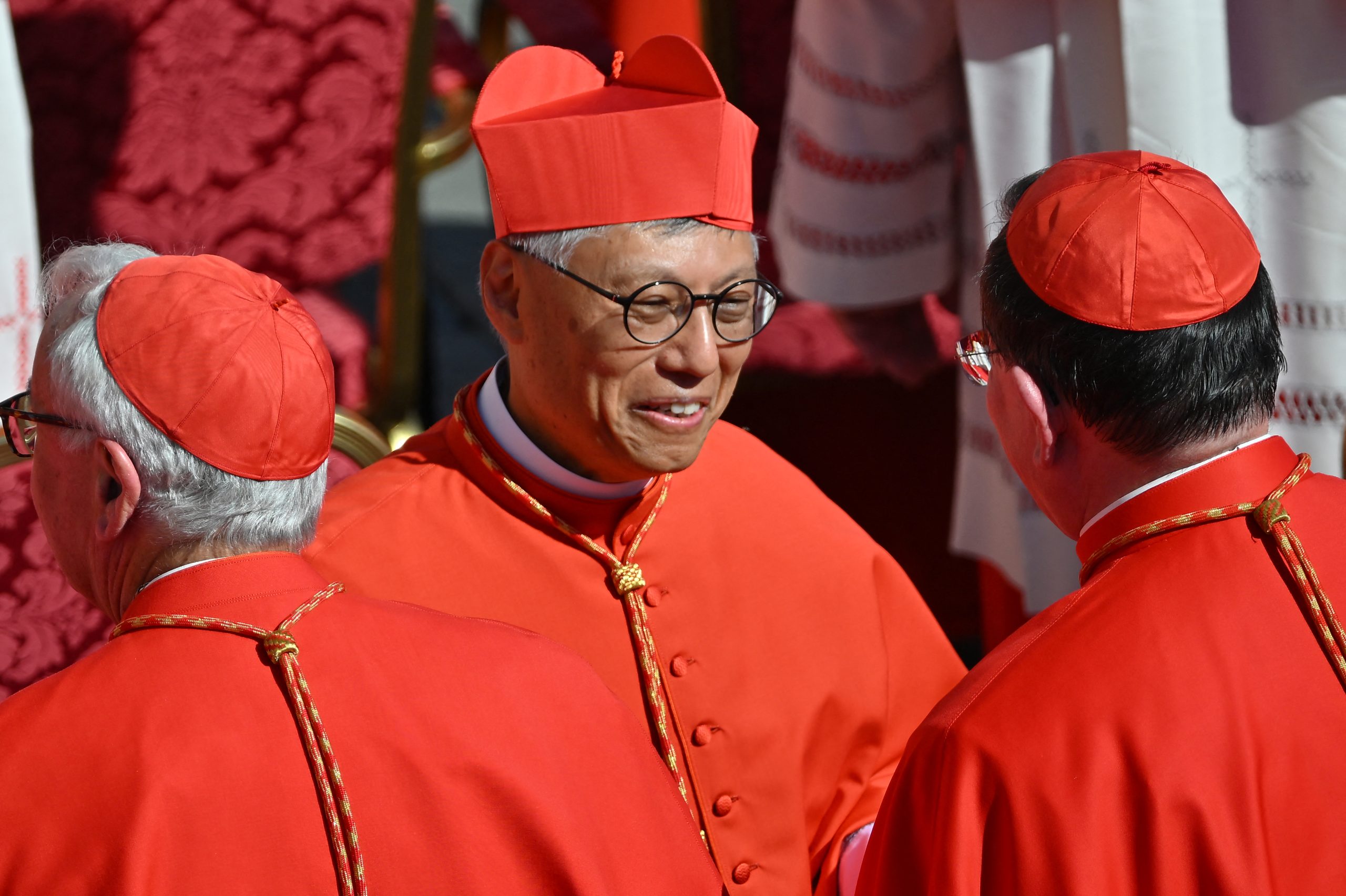
A leading Church official in Hong Kong has urged the faithful to reclaim hope, affirm human dignity, and strengthen solidarity as the city and the wider world confront tragedy, inequality, and rapid technological change.
In a Christmas message issued amid lingering grief over a deadly fire in Tai Po, Cardinal Stephen Chow acknowledged the pain many continue to carry and questioned how joy can be sustained during times of loss.
The Jesuit cardinal said Christmas speaks most powerfully in moments of suffering because it affirms that God has entered fully into the human condition.
“Christmas is here precisely to assure us that the Son of God has become one of us, sharing fully the ‘sweetness, acidity, bitterness and heat’ of our humanity,” Chow said. “For Christmas means that we have a clear way out to a radically new and promising life.”
The cardinal placed Hong Kong’s experience within a broader global context marked by violence and injustice.
“There are still war cries leading to senseless killings almost every day,” he said, warning that extremism has fueled a cycle of destruction.
He also highlighted widening economic inequality, noting that “the rich continue to get richer while those struggling become poorer in their struggles,” while Hong Kong’s local economy remains sluggish for many residents despite signs of financial recovery.
At the heart of the message was a reflection on humanity itself. Chow said the Incarnation restores the dignity of human life and offers deliverance from humanity’s persistent sense of helplessness.
He stressed that imperfection is an essential dimension of being human and warned against a cynical outlook that defines people solely by their shortcomings rather than by their capacity for goodness and growth.
Addressing the growing influence of Artificial Intelligence, the cardinal recognized its potential benefits but underscored its limits.
While AI can serve functional needs, he said it cannot replace human relationships rooted in vulnerability.
“AI cannot relate to us in that manner,” he said, stressing that genuine relationships involve the risk of being hurt. He called for education that enables young people to benefit from AI while critically understanding its ethical implications.
On education more broadly, Chow criticized approaches driven primarily by economic utility. “The essential mission of education is to teach children for self-discovery, not to be molded like the rest,” he said, urging schools to foster agency, respect for others, and a desire to build a better world.
He also encouraged support for alternative learning pathways that allow diverse talents to flourish.
The cardinal expressed concern for young people across social classes, saying both underprivileged youth and those from more affluent families struggle with low self-esteem and constant competition.
He warned that many are being forced to live within “other people’s expectations and frameworks,” leaving little room for initiative. He urged individuals who wish to give back to society to begin by listening attentively to the young.
Chow also reaffirmed Hong Kong’s identity as a city shaped by migration and cultural exchange, emphasizing that its strength lies in the creative encounter of cultures rather than in division.
He warned that discrimination against migrants would ultimately damage the social fabric of the city and pointed to the Holy Family’s own experience of displacement when they fled to Egypt as a reminder of the moral call to welcome those on the move.
The cardinal stressed that social renewal cannot rely on government policy alone. It requires “goodwill, initiatives and collaborations beyond ideological and conventional boundaries,” he said.
The prelate called on people to become “bridges among cultures” and “messengers of hope,” especially in the wake of tragedy, as Hong Kong and the world prepare for Christmas and the year ahead.