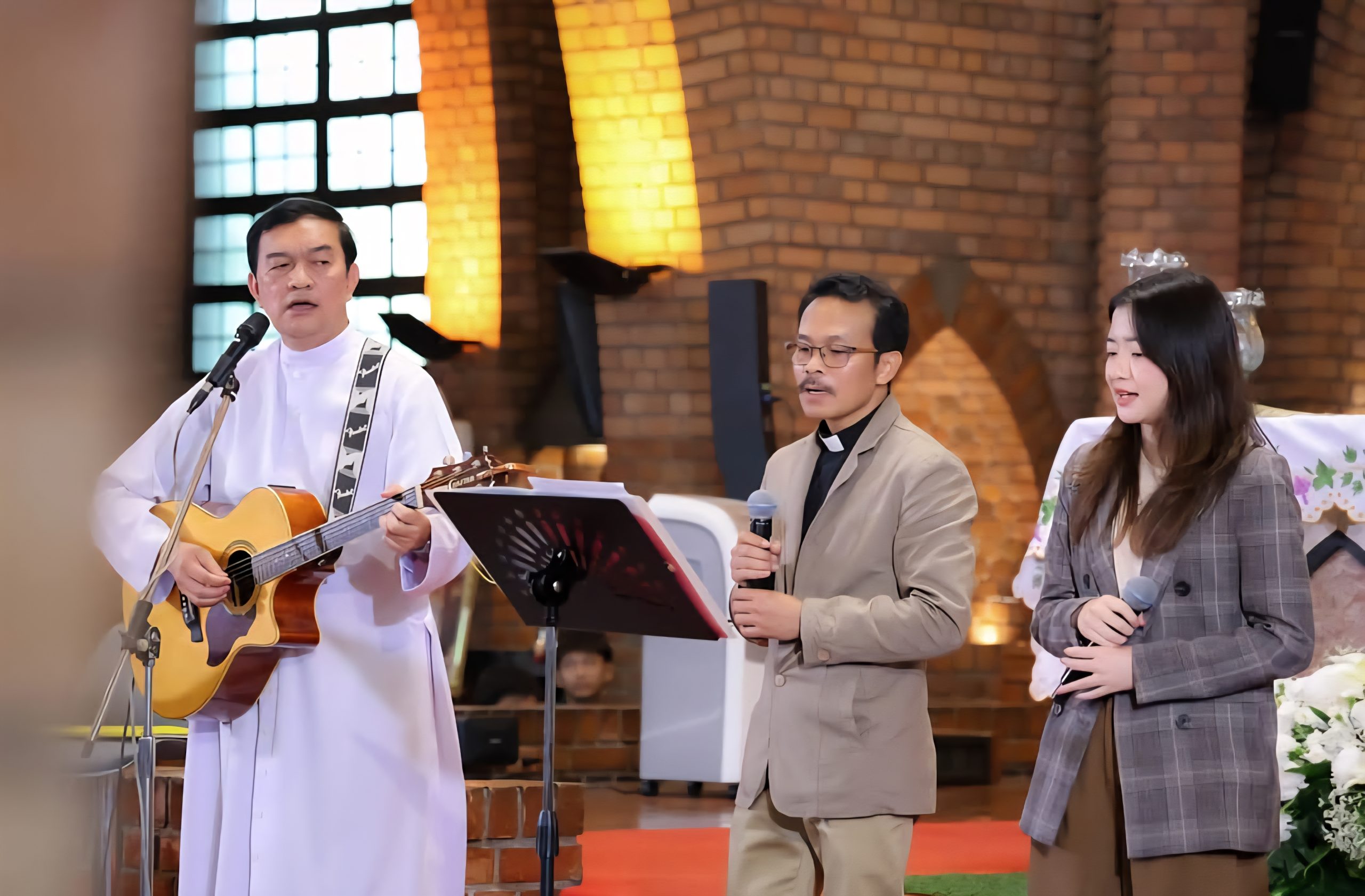
In the quiet sanctuary of St. Louis Church, the air was filled not with the weight of institutional ritual, but with the “humanistic” lens of shared stories and simple song.
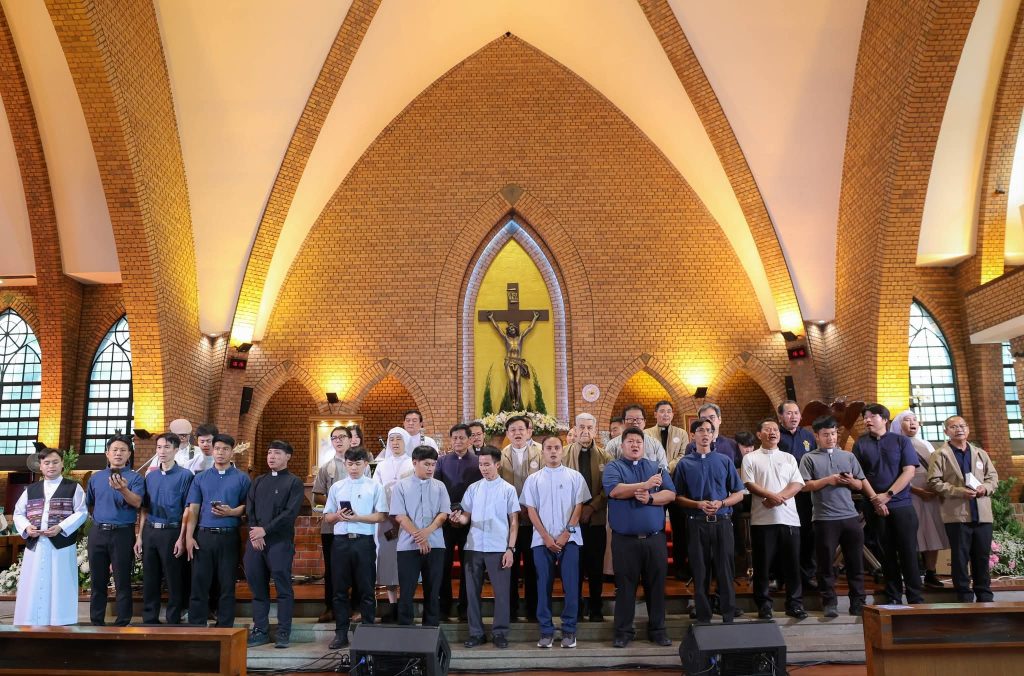
On Sunday, February 1, the Thai Missionary Society (TMS) gathered for its “Family Day,” an event that served as a spiritual prelude to Mission Sunday, weaving together decades of history with the raw, lived experiences of those sent to the margins.
The gathering was marked by a refined maturity, moving beyond mere celebration to a profound renewal of purpose.
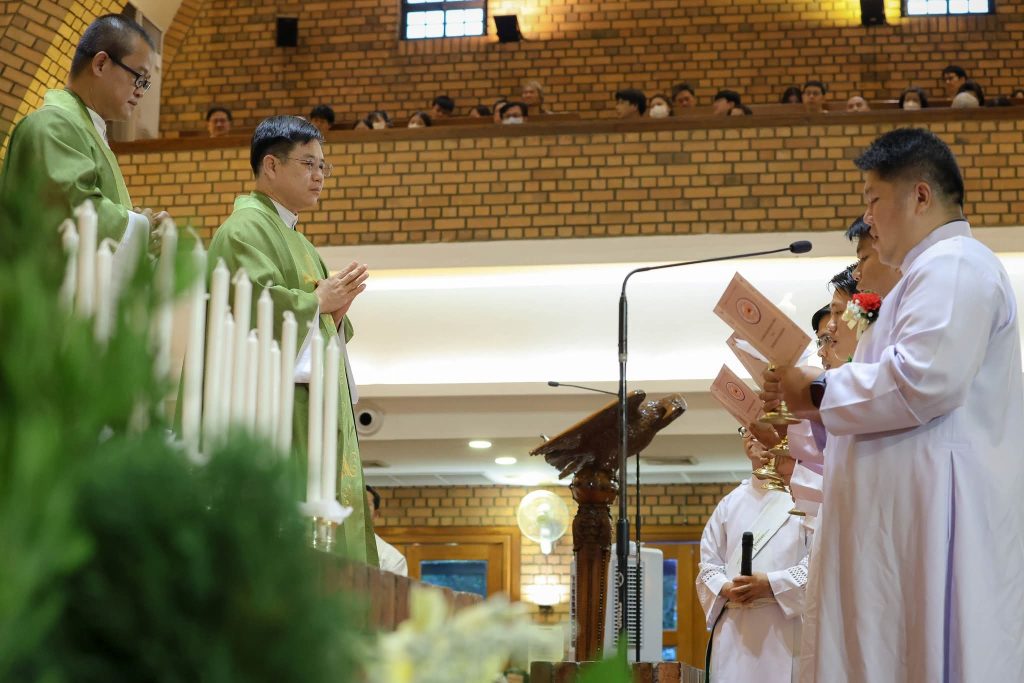
The day culminated in a Eucharistic liturgy that saw TMS members renew their lifelong
commitments, alongside the profession of first vows by a new generation of missionaries, ready to step into the unknown.
The Magisterium Anchor: A Call to Fragile Instruments
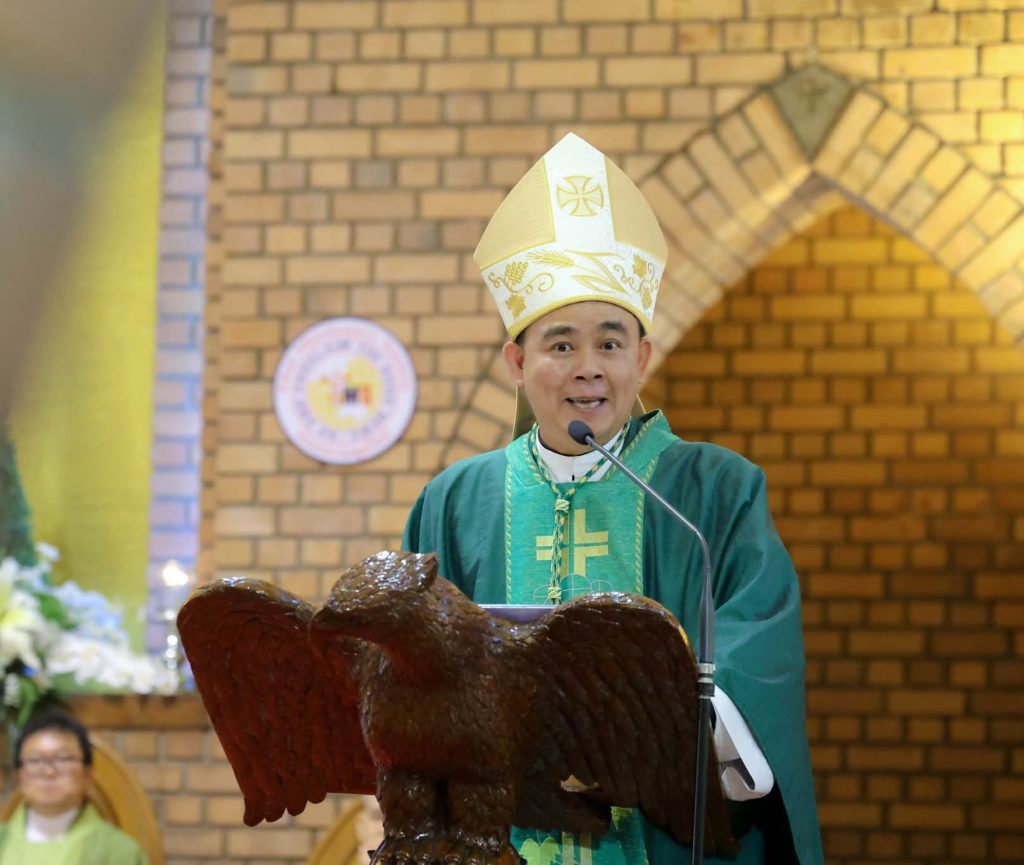
Presiding over the liturgy was Bishop Paul Trairong Multree of Surat Thani. For the
bishop, the return to the TMS family was a homecoming; he served as a leading member of the society before his episcopal appointment to the South.
His homily offered a “Magisterium anchor,” grounding the missionary vocation in the biblical
paradox of strength through weakness.
“God doesn’t call those with extraordinary potential, wise men, or leaders,” Bishop Trairong
shared with pastoral sensitivity. “He calls those who are gentle and humble—those who know they have nothing and are completely dependent on Him.”
Reflecting on the Catechism and the Holy Father’s emphasis on simplicity, the bishop reminded the faithful that missionaries are “fragile instruments.”
He shared a vulnerable moment from his own time as a missionary in Cambodia, recalling a
night when his motorcycle broke down in the rain and darkness.
“Tears welled up in my eyes,” he admitted. “I asked, ‘Why do I have to suffer like this?’ But soon I answered, ‘Because I am a missionary.’ It was my choice. Jesus didn’t promise worldly
success, but He promised that in poverty and humiliation, we will find God by our side.”
An Apostolic Family Spirit
The TMS is not a traditional religious order but an apostolic life society. It is composed of
diocesan priests who have left their original homes to live as a fraternal community.
According to Father Adriano Pelosin, superior general of the TMS, the society exists to
“disseminate the teachings of the Church through preaching, training, and building relationships with communities that do not yet know Christ.”
Drawing inspiration from Saint Paul the Apostle and Blessed Fr. Nicholas Bunkerd Kitbumrung, the Thai priest and martyr, the TMS focuses on:
• Complete dedication: Ready to accept difficulties and persecutions for the sake of
Jesus’ love and the people He loves by proclaiming the Good News, both in Thailand
and abroad.
• Fraternal community: Living together under a shared constitution focused on the
“Spirit of Service.”
• Ecological and social solidarity: Working closely with the local Church, where they
serve in pastoral care and evangelization to foster harmony and support those on the
margins.
Participation of the Laity
Bishop Trairong emphasized that the growth of the TMS is not the work of priests and sisters
alone, but the fruit of the “participation of all the faithful.” He reminded the congregation
that every Christian, by virtue of baptism, carries the responsibility of mission.
“Even if we aren’t sent to remote areas, we are part of the missionary work through our spirit, our intention, and our prayers,” he said. He encouraged the laity to see every parish activity as a “missionary act,” reflecting the “special calling” that makes every believer a child of God.
As the TMS Family Day concluded, the echoes of the choir lingered as a testament to a century of evangelization. The society remains a vital bridge between the local Church and the “peripheries” of society.
In a world often obsessed with power, the TMS stands as a reminder that the most profound
missions are those carried out in “simplicity and humility,” following the footsteps of God
who chooses the weak to shame the strong.