Half a century has passed since a collection of spiritual reflections, scribbled on scraps of old calendars in a Vietnamese prison, first reached the faithful. Today, those words, compiled into The Road of Hope, continue to guide those navigating despair toward a sense of inner peace.
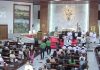
To mark the 50th anniversary of the book’s publication, a commemorative conference was held March 25 at the Lateran Palace in Rome. The setting carried symbolic weight. The Hall of the Lateran Treaties was the same site where, in 2013, the diocesan phase of Cardinal Francis Xavier Nguyễn Văn Thuận’s beatification cause concluded.
A messenger of the Gospel from prison
The gathering brought together Church leaders and faithful to reflect on a life marked by suffering and steadfast trust in God.
Cardinal Nguyễn Văn Thuận’s story reflects endurance. Appointed coadjutor archbishop of Saigon just days before the city fell in 1975, he was later detained by the communist government.
He spent 13 years in captivity, including nine in solitary confinement.
It was during this period, described as a “long tribulation,” that The Road of Hope emerged. The text was smuggled out one page at a time and continues to inspire readers worldwide.
At the opening of the conference, a message from Pope Leo XIV, conveyed by Cardinal Pietro Parolin, described the Vietnamese prelate as a “generous pastor” whose “fervent Christian witness” remains relevant today.
The weapon of love
While official commemorations took place in Rome, the cardinal’s legacy continues to resonate in Southeast Asia.
In Thailand, members of the Focolare Movement gathered to share memories of the man they already regard as a saint.
Varaporn Phongpit, a consecrated member of Focolare in Thailand of Vietnamese descent, told LiCAS News on March 28 about what she described as the cardinal’s “Magisterium of the Cell,” shaped through suffering.
Phongpit said the cardinal carried love not only as a virtue but as a “weapon” to deepen his relationship with God and others, including prison guards.
“He held fast to the words of Christ, ‘Without me, you can do nothing,’” Phongpit said. “By anchoring himself in that humility, his love became a force that conquered all. He suffered in windowless cells, under blistering heat and the glare of electric lights, yet he refused to let the darkness enter his heart.”
Choosing God alone
Phongpit said the cardinal initially struggled with the thought of leaving behind his diocese, schools and missions.
In that period, she said, he experienced an interior realization: “You have chosen God alone, not His works.”
“This light brought him a new peace,” Phongpit said. “He realized that while pastoral visits and training seminarians are important, they are not God. This surrender accompanied him for 13 years and has guided my own 50 years of consecrated life.”
“For me as a consecrated person, this insight has been a guiding light,” she added.
A smile forged in suffering
The cardinal’s connection to Thailand remained personal.
After his release and eventual exile, he often visited Bangkok. Phongpit recalled meeting him soon after his liberation.
“Instead, I found a healthy archbishop with a radiant, smiling face,” she said. “He was full of love and compassion.”
As president of the Pontifical Council for Justice and Peace, he later visited Chiang Mai, where he engaged in interreligious dialogue with Buddhist institutions.
He also celebrated a private Mass in Vietnamese for a small group of families.
“He taught us that we should no longer focus on doing something for God, but on being the presence of God,” Phongpit said.
She added that his spirituality centered on Christ’s suffering.
“He often spoke of ‘Jesus Crucified and Forsaken’ as the key to remaining united with God,” she said. “That has helped me face both small and great trials in my life.”
Enduring witness
Cardinal Nguyễn Văn Thuận died in Rome in 2002. In 2017, Pope Francis declared him Venerable, recognizing his heroic virtues.
As the Church continues to examine his cause for beatification, The Road of Hope remains a testament to faith sustained under persecution.
His life underscores a central message: freedom is not defined by the absence of chains, but by a faith that endures despite them.