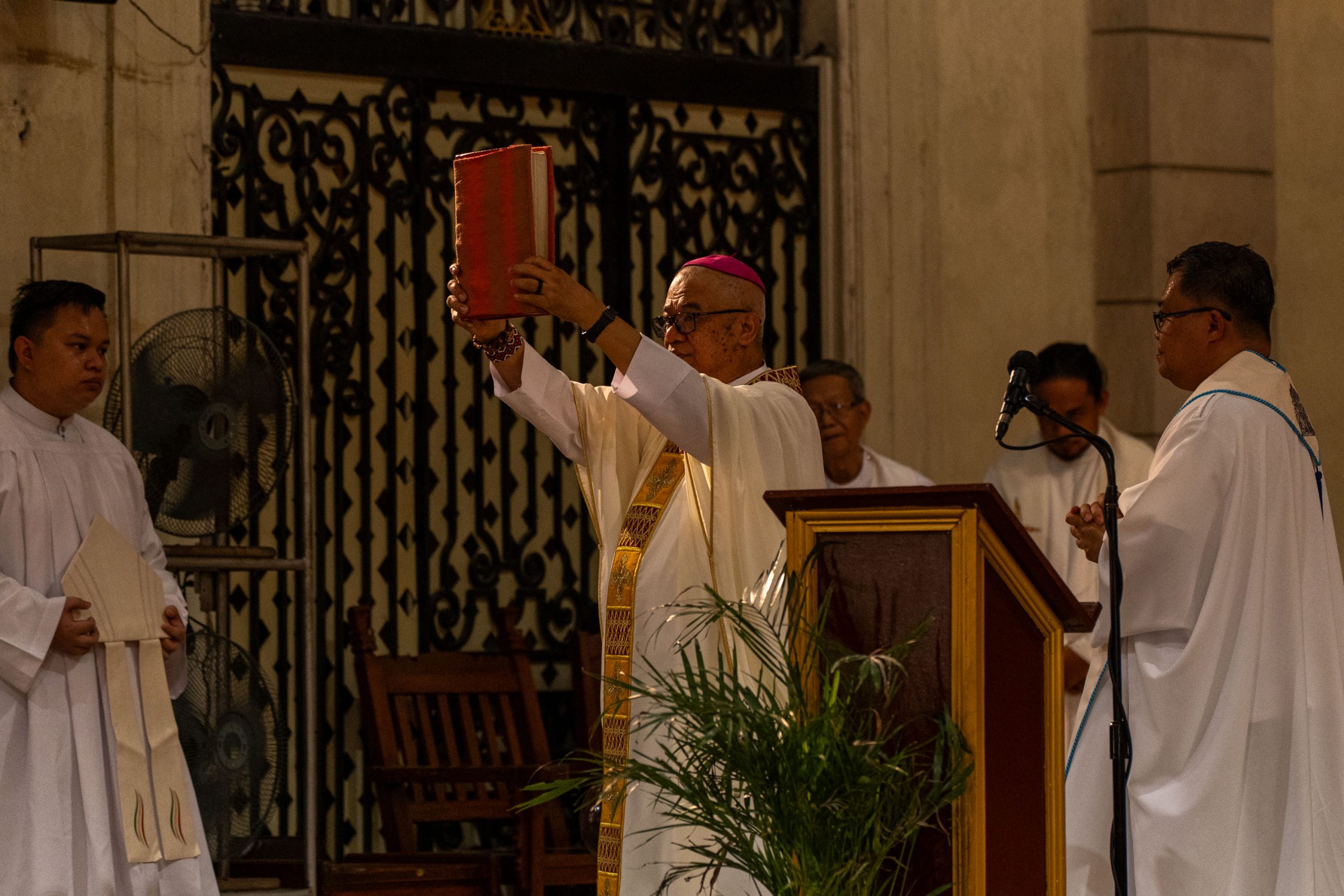
A Catholic prelate in the central Philippines has called on the Church to lead in sacrifice as the cost-of-living crisis deepens, urging clergy and institutions to adopt austerity and stand in solidarity with the poor.
In a pastoral letter, Bishop Gerardo Alminaza of San Carlos warned that rising costs and global conflicts are already affecting Filipino families, pressing the Church to respond with concrete action and accountability.
Alminaza, who heads Caritas Philippines, said these pressures are now visible “in the empty tables of our people,” as fisherfolk, drivers, and workers struggle to sustain their livelihoods.
Framing the situation as a moral test, the bishop asked, “Where is the Church in the life of the poor?”
Alminaza acknowledged a difficult reality within the institution, saying, “There is a growing distance between the Church, especially its leaders, and the poor.” He warned that this gap risks becoming a “tolerated evil” if left unaddressed.
The prelate said calls for accountability directed at governments and corporations must also be reflected internally. He stressed that “if we demand sacrifice, we must also be willing to sacrifice.”
Describing austerity as a “prophetic witness,” Alminaza urged Church leaders to adopt a simpler way of life, examine their use of resources, and redirect what can be saved toward those most affected by the crisis.
He also called for a shift beyond charity, saying the Church must move “to solidarity with the poor, not standing above them or apart from them, but standing with them.”
The pastoral letter outlined concrete steps, including setting aside Church resources for the poor, supporting farmers and fisherfolk, and engaging in public accountability on issues such as rising fuel and electricity costs.
Addressing fellow clergy, Alminaza said leadership must be visible and credible, adding, “We must lead in sacrifice. It is not enough to encourage others if we ourselves are not visibly engaged in this transformation.”
He urged parishes to adopt austerity measures and ensure that support for the poor comes not only from surplus, but from “a willingness to give even when it entails real sacrifice.”
The bishop also called on Church institutions to review spending and simplify activities, including travel, religious feasts, and celebrations, to align practice with preaching.
Warning of the consequences of inaction, Alminaza said, “If we do not change, the distance between the Church and the poor will remain. If we do not share, the gap will continue to widen.”
He said the challenge now is not only understanding the crisis, but responding to it “concretely, collectively, and with the honesty that this moment demands.”