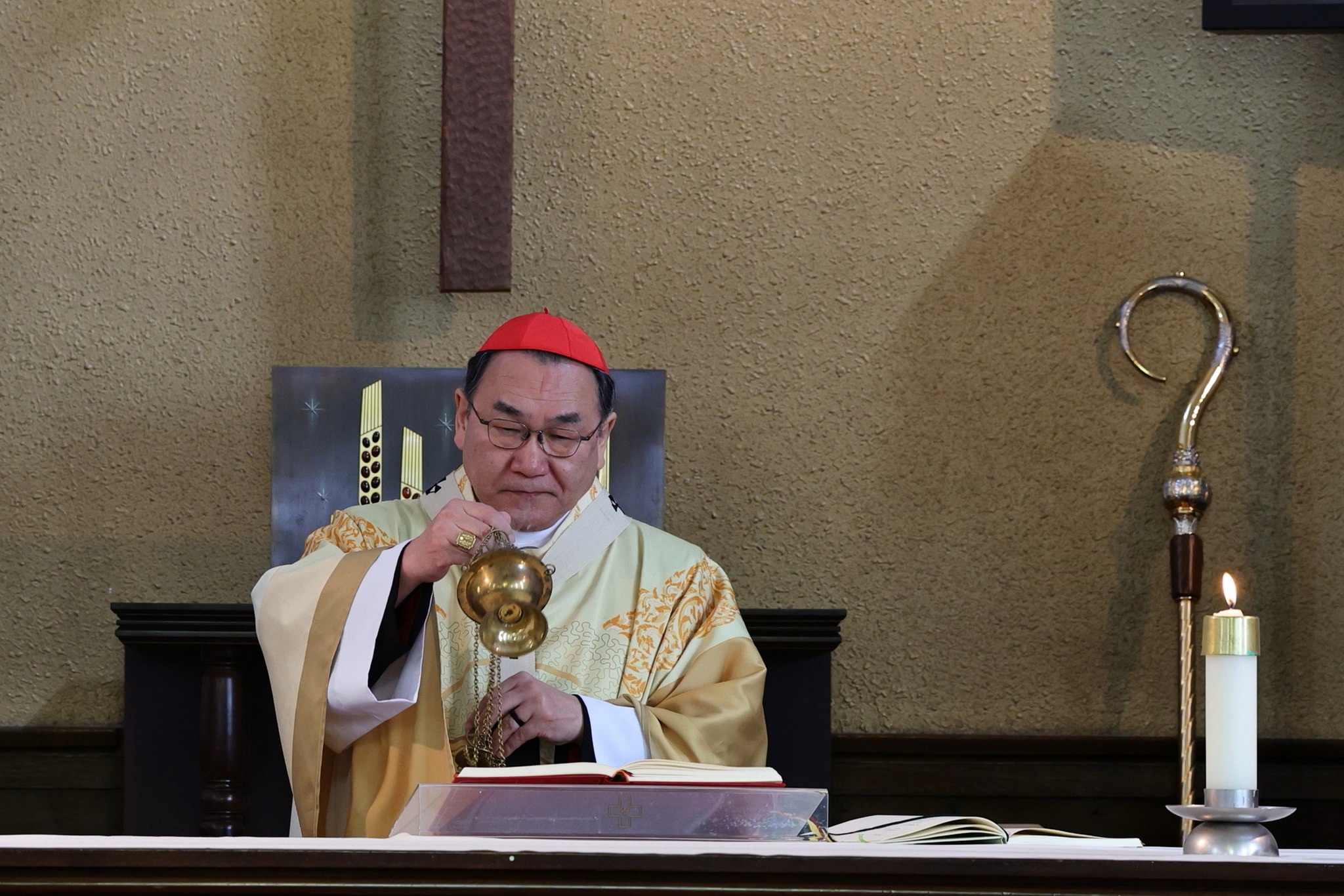
Cardinal Isao Kikuchi of Tokyo said Christians are called to make God’s mercy visible through forgiveness, reconciliation, and peace, as the Church marks Divine Mercy Sunday amid ongoing global conflict.
In a reflection dated April 12 for the Second Sunday of Easter, Kikuchi pointed to the greeting of the risen Christ to his disciples, recalling that “the first words he spoke were, ‘Peace be with you,’” a message he said remains urgent in a world marked by violence and fear.
The cardinal linked this call to the appeal of Pope Leo XIV, who has urged prayers for peace as conflicts continue, particularly in the Middle East.
Quoting the pope’s first address after his election, Kikuchi highlighted the vision of peace rooted in Christ: “This is the peace of the rising Christ: a humble, patient, weaponless peace, a peace that removes weapons. This peace comes from God.”
The prelate said such a message speaks directly to the present moment, as “our lives, a gift from God, face a crisis” amid the continued use of armed violence in different parts of the world.
Kikuchi also cited the pope’s homily at his inauguration Mass, emphasizing the Church’s role in fostering unity: “a united Church, a sign of unity and fellowship, which will be the leaven for the reconciliation of the world.”
The reflection comes as the Church observes Divine Mercy Sunday, a feast established by Pope John Paul II, which calls the faithful to trust in God’s mercy and extend it to others.
Recalling John Paul II’s final message prepared before his death in 2005, Kikuchi cited the warning that “humanity seems to succumb to and be dominated by the forces of evil, selfishness, and fear,” but is offered a path forward through Christ’s love, “a love that opens the soul to forgive, reconcile, and hope.”
Kikuchi said mercy must take concrete form in Christian life, stressing that “it is our concrete practice of love that makes God’s mercy visible.”
“Love-based forgiveness and reconciliation in our church community produce hope and nourish us into leaven, a sign of unity and fellowship,” he said.
He urged the faithful to become witnesses of peace in a fractured world, emphasizing that “the church is not a place of conflict that breeds despair.”
“In a chaotic world, we want to be witnesses, a leaven that produces peace through one another’s love,” he added.