When the cruel and vindictive King Herod ruled Judea more than 2,000 years ago, he ordered the slaughter of all boys 2 years old and younger in Bethlehem in an attempt to eliminate the baby Jesus, whom he saw as a threat to his power. Mary and Joseph fled with Jesus to Egypt, where they were welcomed and found refuge until Herod died. Only then did they return home to Nazareth.
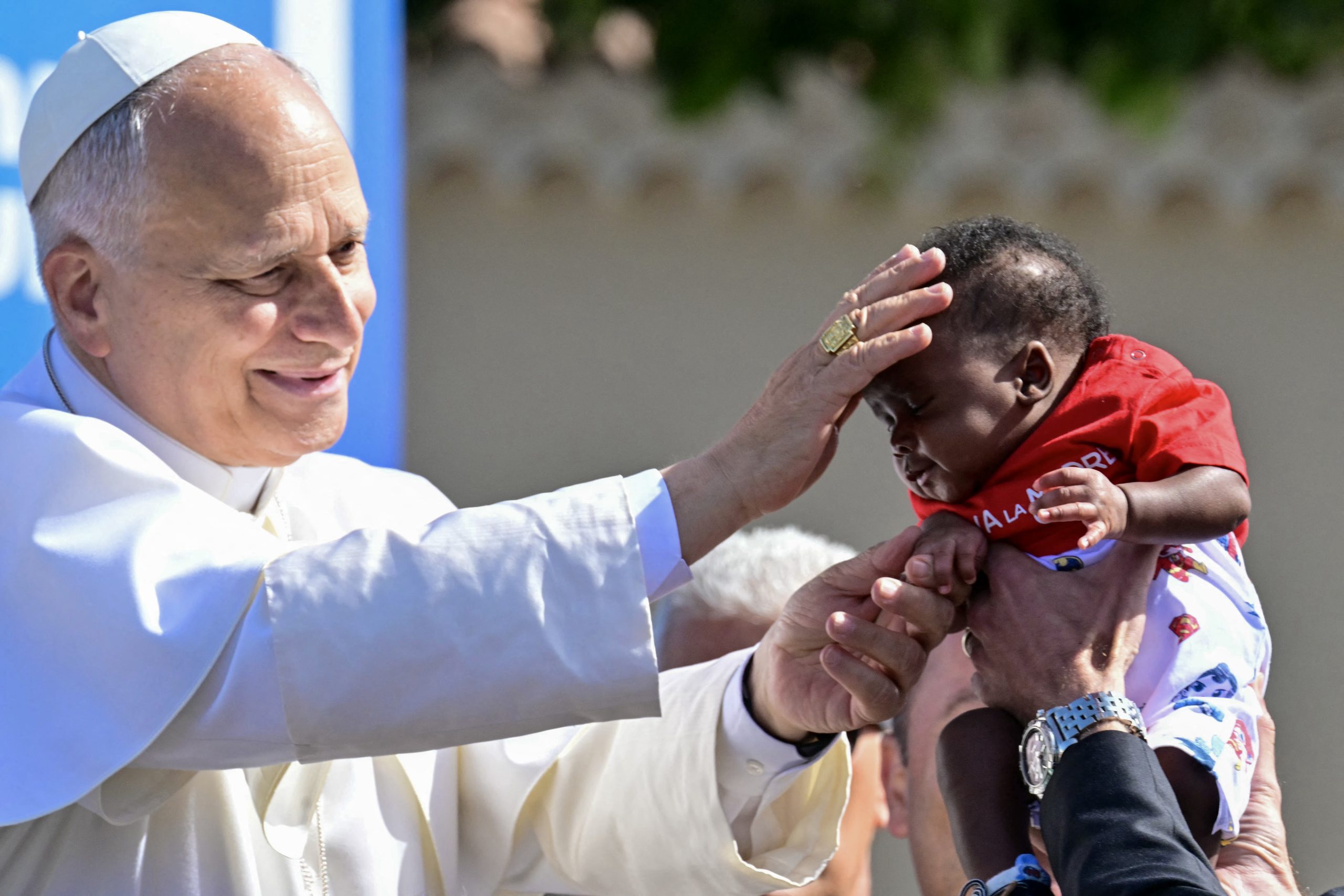
This episode in the life of Jesus of Nazareth highlights the Christian duty to respect the rights and dignity of migrants. Pope Leo XIV reinforced that message during his visit to Spain this past week. His visit came as Spain’s socialist-led government continued a policy that has sought to regularize the status of more than 500,000 undocumented migrants and asylum seekers.
Spain’s approach stands in contrast to policies adopted by several other European countries and the United States, where governments have increasingly moved to restrict migration. Across much of Europe, political sentiment has shifted to the right, with many leaders viewing irregular migration as a threat and migrants as potential criminals or unwanted outsiders. The emphasis has largely been on deterrence and border enforcement rather than support and integration.
Governments in countries such as Germany and France have tightened residency rules and reduced refugee resettlement quotas, making legal pathways more difficult. In the United Kingdom, officials have pursued plans to deport migrants to third countries willing to accept them in exchange for financial compensation. The European Union has also devoted significant funding to North African countries, including Tunisia, Egypt and Morocco, to intercept migrants before they reach European shores.
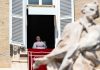
This is what Pope Leo spoke against. In an address to Spain’s parliament, which was reportedly followed by a seven-minute standing ovation, he reminded lawmakers that nations have a moral responsibility to welcome and protect migrants.
“The tragic drama of migration … challenges the conscience of nations and the ethical foundation of the international order,” he said. “Numerous men, women, and children are forced, often by dramatic circumstances, to leave their communities and abandon loved ones, their histories, and their connections.”
The pope added that the “universal principle of the equal dignity of all human beings” is violated whenever people are discriminated against “because of their national, ethnic, religious or linguistic origin, or because of their economic or social status.”
He also spoke about the growing divisions within societies, particularly in Europe, where racism and anti-migrant sentiment continue to affect people fleeing persecution, oppression and extreme poverty in search of safety and opportunity.
Anti-immigration groups and politicians in Spain have called for stricter policies and deportations. Spain, however, has generally pursued a more pragmatic and humanitarian approach. Migrants who meet legal requirements and maintain clean records are encouraged to integrate into society and participate in the economy. Through a historic royal decree, Spain launched an extraordinary regularization process between April and June 2026.
The Filipino diaspora is among the largest in the world. Approximately 15 million Filipinos live outside the Philippines. The Philippine Statistics Authority estimates that 2.19 million Filipinos work abroad as overseas Filipino workers on temporary contracts.
An estimated 200,000 to 300,000 Filipinos live in Spain. Each year, around 2,000 acquire Spanish citizenship after completing the required period of legal residency.
Integrated community
It is not surprising that Filipinos are often regarded as one of the most integrated immigrant communities in Spain. The Philippines was once a Spanish colony, and Spain introduced Catholicism to the archipelago.
The country’s national hero, Dr. José Rizal, maintained deep intellectual, personal and political ties with Spain. He traveled there in 1882 to continue his education and studied at the Universidad Central de Madrid, where he earned degrees in medicine, philosophy and literature.
His writings, particularly his novels, were viewed by colonial authorities as subversive. After returning to the Philippines, Rizal was executed by the Spanish colonial government on Dec. 30, 1896, at Bagumbayan, now Rizal Park, in Manila. His death helped ignite the Philippine Revolution against Spain.
Pope Leo challenged political leaders and broader society to judge themselves by how they treat the most vulnerable.
He said safeguarding human life from “conception to its natural end” is a fundamental responsibility of any civilized society rather than a partisan political issue.
He urged Spain to continue providing safe legal pathways and respectful integration for migrants. He also challenged the international community to address the root causes of migration, including poverty, violence and climate change, so that “no one has to leave their home due to a lack of peace.”
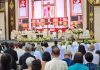
Spain is one of Europe’s most secularized societies. Only about 9 million people are considered practicing Catholics out of a population of nearly 49.7 million. Yet an estimated 1 million people attended Pope Leo’s Mass in Madrid.
The pope also spoke about the right to life in a country where abortion and euthanasia are legal and regulated by law and where such services are incorporated into the public health care system.
“All human life must be recognized and protected from conception to natural death, in every circumstance of its existence. When this certainty is obscured, the most vulnerable become the first victims, and the law loses its deepest meaning: to serve and protect every person,” he said.
“Therefore, the moral greatness of a nation is shown, above all, in its capacity to accompany, protect, and love those lives that are most fragile.”
Pope Leo also addressed the issue of clerical sexual abuse in Spain.
A landmark 2023 report by Spain’s national ombudsman, Ángel Gabilondo, used a large public survey to estimate that about 0.6 percent of Spain’s adult population — roughly 200,000 people — had suffered abuse by clergy. The estimate rose to about 400,000 when abuse involving lay personnel in Church-run schools and institutions was included.
The Spanish Church reported in June that it had identified 927 cases of clerical sexual abuse through a complaints process established in 2020. Relatively few cases have resulted in criminal convictions because many of the accused clergy have already died and because statutes of limitations have prevented legal action in numerous cases.
Pope Leo addressed the issue directly.
“Faced with this scourge, the ecclesial community is called to respond with listening, truth, justice, reparation and an ever more determined commitment to prevention and a culture of care.”
“Every wounded person must be able to find sincere listening, welcome, protection and real paths to healing.”
Those words could just as easily be directed to the clergy of the Philippines.
Note: Any original information, stories, or news articles posted on this site that are authored by the Preda Foundation and Father Shay Cullen may be shared, copied, or reproduced without further permission, in support of truth, freedom of expression, and the public’s right to know.
LiCAS News was granted permission to republish and adapt this article by Father Shay Cullen in the spirit of truth-telling and the pursuit of justice.
Irish missionary Father Shay Cullen, SSC, founded the Preda Foundation in Olongapo City in 1974 to promote human rights and the rights of children, especially victims of sexual abuse.
The views expressed in this article are those of the author and do not necessarily reflect the editorial stance of LiCAS News.