
Thailand’s southernmost Catholic community welcomed the first Lahu priest to serve in the region on June 25, marking a milestone for the Diocese of Surat Thani and its growing ministry among northern ethnic communities.
The Divine Mercy Catholic community in Betong hosted a welcoming ceremony for Father Stephen Pirun Sae-Jang, newly ordained as the 20th priest of the Diocese of Surat Thani.
Father Pirun made history as the first member of the Thai Mission Society (TMS) from the Diocese of Surat Thani and the first priest from the Lahu ethnic group to serve in southern Thailand.
Bridge Across Geographies: The Lahu Journey
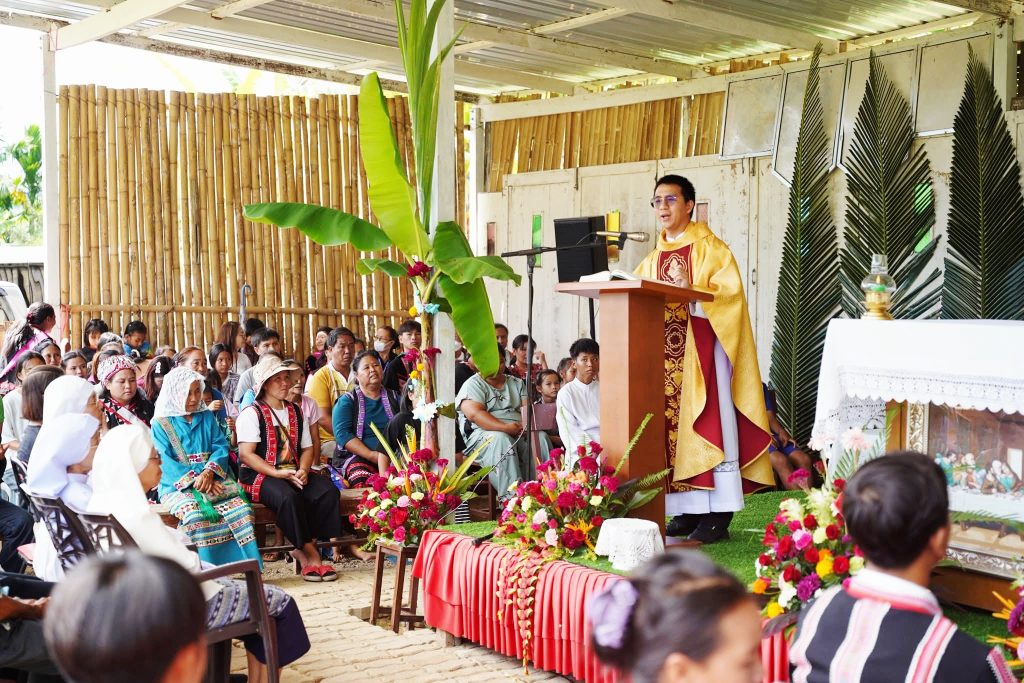
The arrival of Father Pirun carried deep significance for the local community.
Originally from the Tibetan Plateau, the Lahu people migrated through Yunnan, China, before settling in the remote mountain regions of northern Thailand. In Thai, they have traditionally been known as Muser (“hunters”).
Historically rooted in animistic beliefs, strong community cohesion, and egalitarian social structures, a branch of the Lahu population migrated thousands of kilometers south to Betong District decades ago in search of fertile agricultural land.
Despite their geographical separation from the main Lahu communities in the north, the Betong Lahu have maintained a strong cultural identity while gradually integrating into the Catholic community of Thailand’s deep south.
Ritual of Faith and Culture
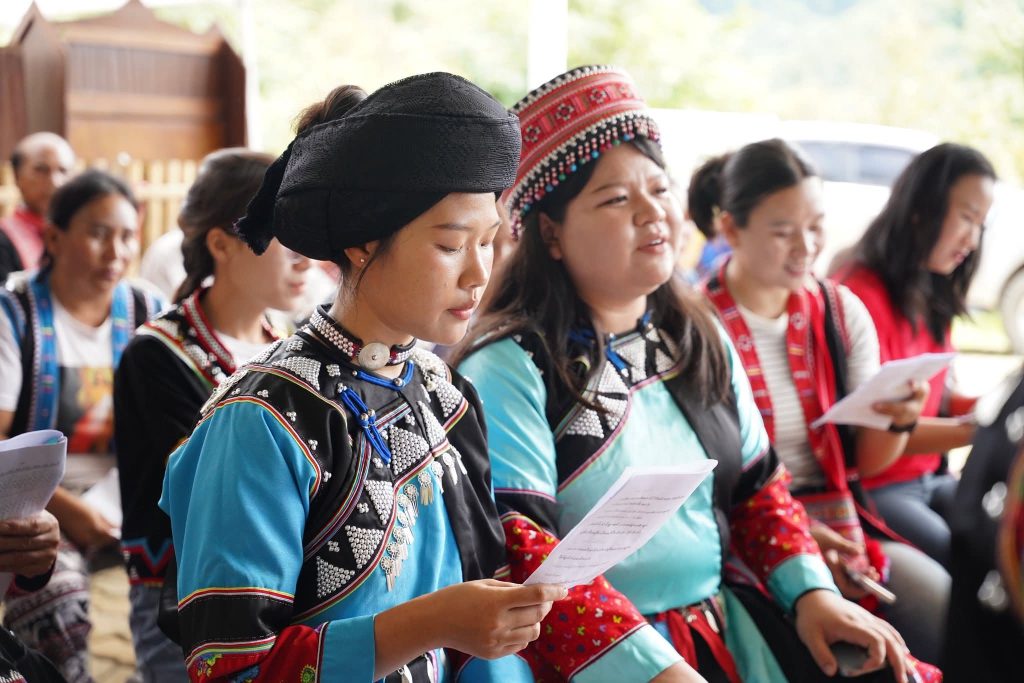
The celebration in Ban Bo Nam Ron Subdistrict was marked by traditional pageantry. Members of the Lahu community, dressed in vibrant traditional attire, led a ceremonial procession featuring the Chakhu Dance performed to the traditional Poi Tiway rhythm—a sacred dance that invokes blessings and expresses communal gratitude.
Following the cultural welcome, Father Pirun presided over the Eucharistic liturgy, which included the solemn veneration of the relics of the eight Blessed Thai Martyrs.
Several senior clergy traveled to witness the historic occasion, including Father Amornkit Promphakdee, vicar general of the Diocese of Surat Thani; Father Prem Khundon, parish priest of St. Peter’s Church in Betong; and Father Natee Theeranuvat of Nakhon Si Thammarat.
“Your arrival is not a coincidence, but a part of God’s plan,” said Nahwa Saeli, representative of the Divine Mercy Community, in her congratulatory address.
Quoting the Gospel of John, “And he has appointed you to go and bear fruit, and your fruit will remain” (John 15:16), she added, “The community is ready to be a family, to encourage and support your ministry with prayers always, even as you face challenges in the future.”
The Divine Mercy Sanctuary: A Hillside Refuge
The Catholic Church’s engagement with the Lahu in Yala Province is anchored by the Divine Mercy Sanctuary Project, a pastoral initiative of the Diocese of Surat Thani to accompany northern ethnic communities who have settled in southern Thailand.
- Sanctuary Estate: The diocese has allocated a 50-acre site nestled in the verdant hills. Purchased to serve as a permanent chapel, sanctuary, and community center, it provides a spiritual home and pastoral anchor for northern ethnic communities who have migrated south, including the Lahu, Hmong, Akha, Kachin, and Shan.
- Current Infrastructure: While plans are underway to develop a hillside shrine for retreats and theological formation, the site is already home to a prominent monument of the Divine Mercy.
- Pilgrimage and Integration: Under the pastoral care of St. Peter’s Church in central Betong, the sanctuary has become a destination for cross-border pilgrims. Catholic groups from neighboring Malaysia regularly travel to Betong for Sunday Mass before making pilgrimages to the hillside sanctuary.