UN investigators are tracing military units and command structures behind escalating airstrikes on civilians in Myanmar, including attacks on schools, hospitals, homes and displacement camps, as they build evidence for future prosecutions.
The Independent Investigative Mechanism for Myanmar, or IIMM, said attacks intensified in the run-up to elections completed in January and have continued since.
In its annual report, published Tuesday and covering July 2025 to June 2026, the mechanism said investigators had identified some of the military units responsible for strikes and were examining how orders for the attacks were issued.
“One of the areas that we’re concentrating on is, because of the suffering that’s happening in Myanmar, are the airstrikes [against communities] that are occurring…We’re looking at the command structure and how the orders would be given for such airstrikes,” IIMM head Nicholas Koumjian said.
Investigators traced strikes on homes, schools, medical facilities, religious buildings and camps for displaced people.
“In particular there are many airstrikes targeting, hitting schools. Children are often the victims of these airstrikes and also hospitals. So our team is collecting that evidence of where it has occurred, the kind of munitions that are used,” Koumjian said.
The report also found that the military’s growing use of motorized power gliders and drones has made attacks harder for civilians to detect, reducing the time available to flee or seek shelter.
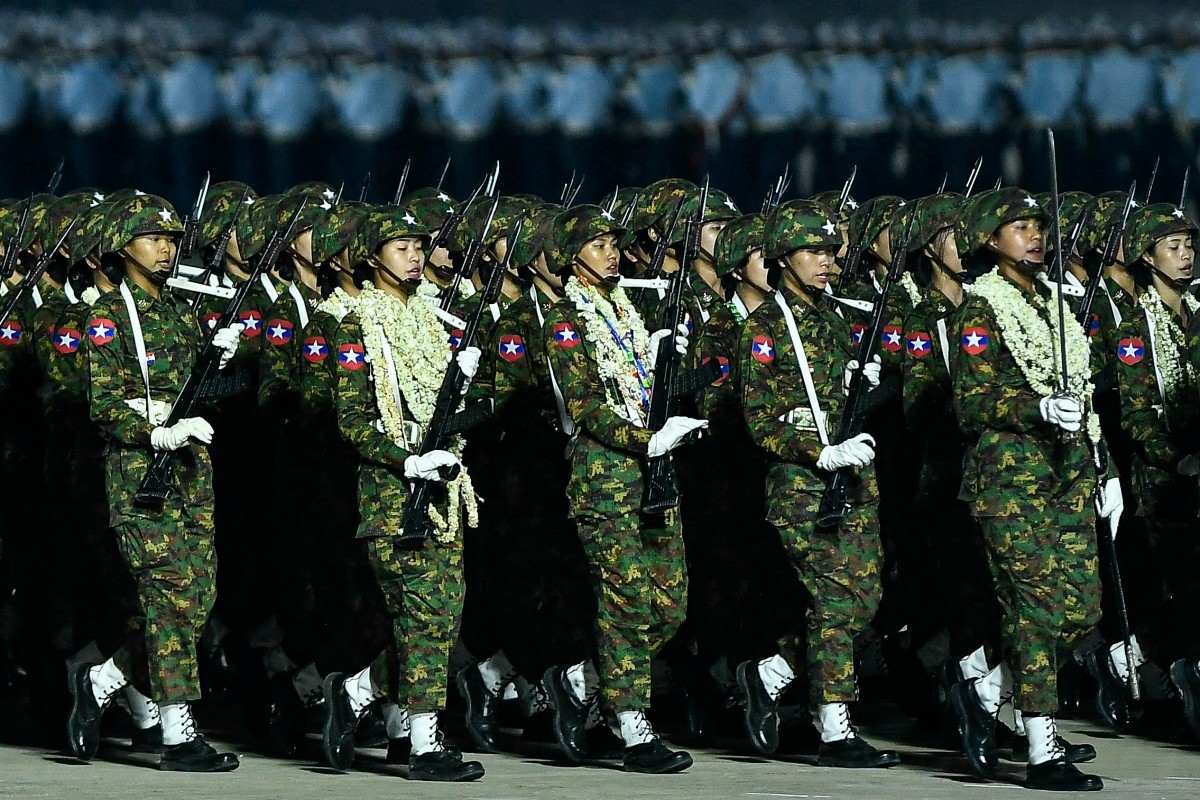
Myanmar has been engulfed in conflict since the military seized power in February 2021, overthrowing the civilian government and arresting leaders including President Win Myint and State Counsellor Aung San Suu Kyi.
The coup triggered nationwide protests and armed resistance movements that now control large swathes of the country.
“Behind every piece of evidence we collect are people whose lives have been devastated by these crimes,” Koumjian said.
“Communities across Myanmar are not only living under the constant threat of violence but are also coping with the profound and lasting impact of what they have endured.”
The IIMM also documented widespread torture and sexual violence in military-run detention facilities.
Some cases were linked to a 2025 law criminalizing criticism of the elections. People have been jailed for up to 20 years or face the death penalty under the law for acts as minor as posting critical comments online, according to the report.
While most of the evidence concerns the military and allied militias, the mechanism said it is also investigating abuses by armed groups opposed to the military.
The findings draw on more than 1,600 sources, including more than 750 witness accounts, as well as photographs, video, forensic evidence and satellite imagery.
The U.N. Human Rights Council established the IIMM in 2018 to collect and preserve evidence of the gravest crimes committed in Myanmar since 2011 for use in future prosecutions.
The mechanism does not prosecute cases itself but shares evidence with courts and authorities pursuing accountability, including the International Criminal Court and courts handling cases related to crimes against the Rohingya.