The Philippine Catholic Church’s commission on Indigenous Peoples has warned that the transition toward cleaner energy must not come at the cost of ancestral lands, community rights, and the environment.
In its statement for Indigenous Peoples Sunday 2026, the Episcopal Commission on Indigenous Peoples of the Catholic Bishops’ Conference of the Philippines raised concern over the growing demand for critical minerals used in the energy transition.
“The growing demand for critical minerals must not become another justification for displacement, environmental destruction, or violations of Indigenous Peoples’ rights. A greener future cannot be built upon injustice. Genuine FPIC, ecological protection, and meaningful community participation are indispensable,” the commission said.
The commission issued the statement during the national celebration of Indigenous Peoples Sunday on Oct. 11 in Sitio Bacao, Palayan City, Nueva Ecija, together with Indigenous Peoples Apostolates and the Diocese of Cabanatuan.
The celebration carried the theme, “Journeying with Indigenous Peoples: Honoring God’s Creation and the Rights of Nature.”
The commission said development projects, particularly extractive industries and large-scale infrastructure, must not undermine ancestral domains, watersheds, forests, livelihoods and community well-being.
“Development projects, particularly extractive industries and large-scale infrastructure, must never sacrifice ancestral domains, watersheds, forests, livelihoods, and community well-being. Indigenous Peoples must be respected as rights-holders and genuine partners in decisions affecting their lives,” it said.
The statement also linked Indigenous rights with the climate crisis, saying Indigenous communities often bear disproportionate burdens from ecological degradation and extreme weather.
“Indigenous communities often bear disproportionate burdens from ecological degradation, extreme weather, flooding, and drought. Energy development must respect ecological limits, protect vulnerable communities, and safeguard the well-being of future generations,” the commission said.
It identified four urgent and interconnected challenges: protecting Indigenous communities and threatened ecosystems, confronting fossil fuel expansion and the climate crisis, ensuring a just energy transition, and promoting integrity and accountability in environmental governance.
The commission said corruption, weak enforcement of environmental laws, inadequate consultation, and misuse of public resources undermine ecological protection and human dignity.
“Responsible stewardship demands transparency, accountability, and moral courage in public service,” it said.
The commission also warned that Indigenous communities across the Philippines continue to face threats to ancestral domains, displacement, environmental degradation, loss of livelihoods, discrimination, and threats to cultural identity and self-determination.
“Concerns persist over the inadequate implementation of existing protections, particularly Free, Prior and Informed Consent (FPIC). Their struggles remind us that the cry of Indigenous Peoples and the cry of the earth cannot be separated,” it said.
The commission called on government and public institutions to protect ancestral domains, uphold Indigenous Peoples’ rights, ensure genuine FPIC, enforce environmental safeguards, and exercise transparency and accountability in development and environmental governance.
It also urged civil society and people of goodwill to reject discrimination, support community-led initiatives, and work for ecological justice and the common good.
The choice of Bacao for the national celebration highlighted the experience of Ayta families displaced by the 1991 eruption of Mount Pinatubo and later resettled in Nueva Ecija.
The commission said the community rebuilt its life with Church accompaniment and took part in reforestation, communal gardens, and livelihood initiatives.
“Their story is a testimony of resilience and hope. It reminds us that Indigenous Peoples are not merely beneficiaries of assistance but partners, bearers of cultural wisdom, and active agents in shaping their future,” it said.
The national celebration also gave space to members of the Bacao Ayta community to share their situations, aspirations, and pastoral concerns.
“Their voices invite us not merely to speak for them, but to listen, learn, and journey with them,” the commission said.
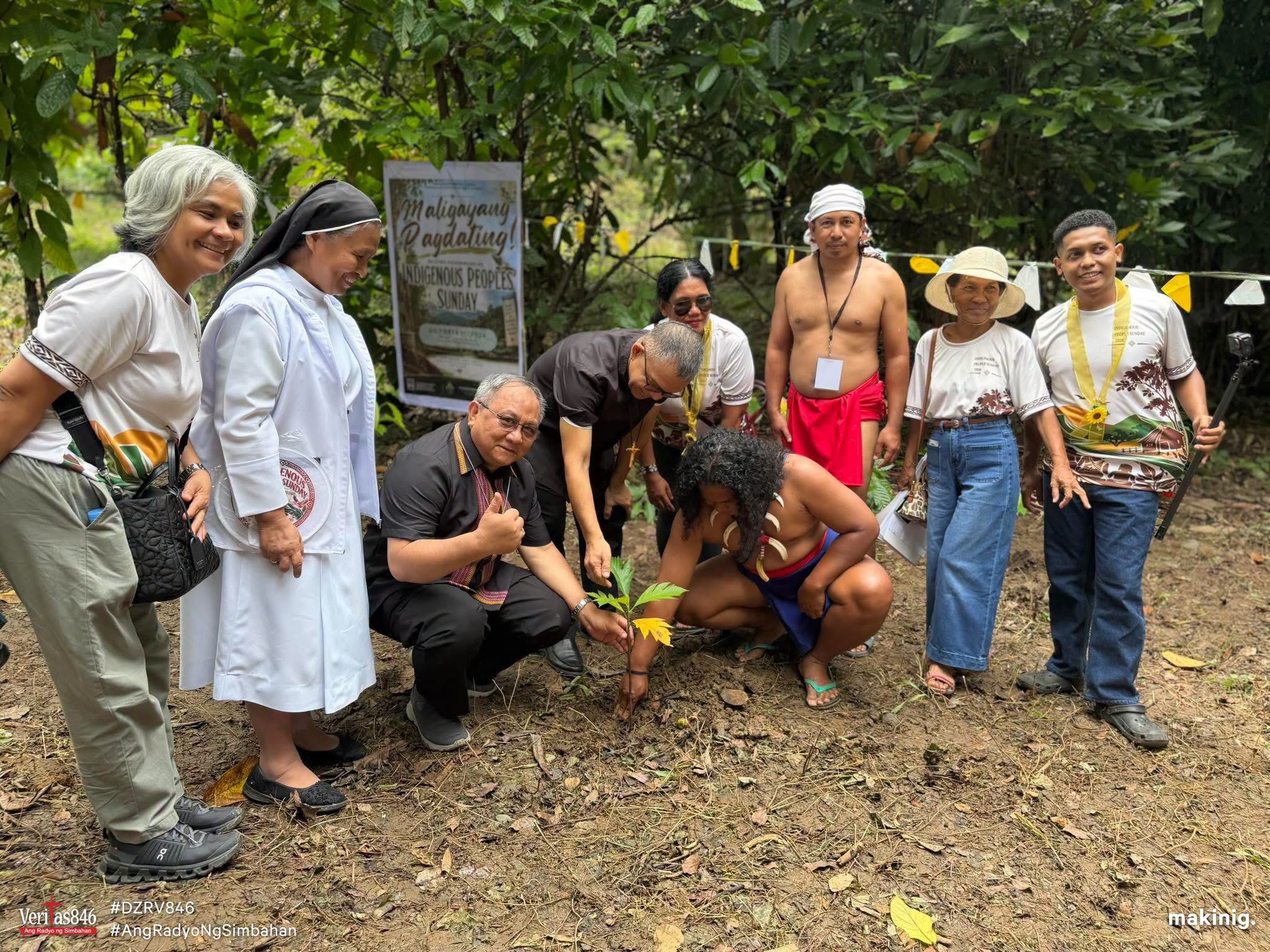
The celebration concluded with the planting of Indigenous and endemic trees near the Bacao Mission as a sign of solidarity and care for creation.
“Yet our commitment must not end with this symbolic gesture or with the celebration of a single Sunday. It must continue through sustained accompaniment and concrete action,” the commission said.
The statement was signed by Bishop Moises M. Cuevas of Calapan, chairperson of the Episcopal Commission on Indigenous Peoples, and Bishop Prudencio P. Andaya Jr. of Cabanatuan.