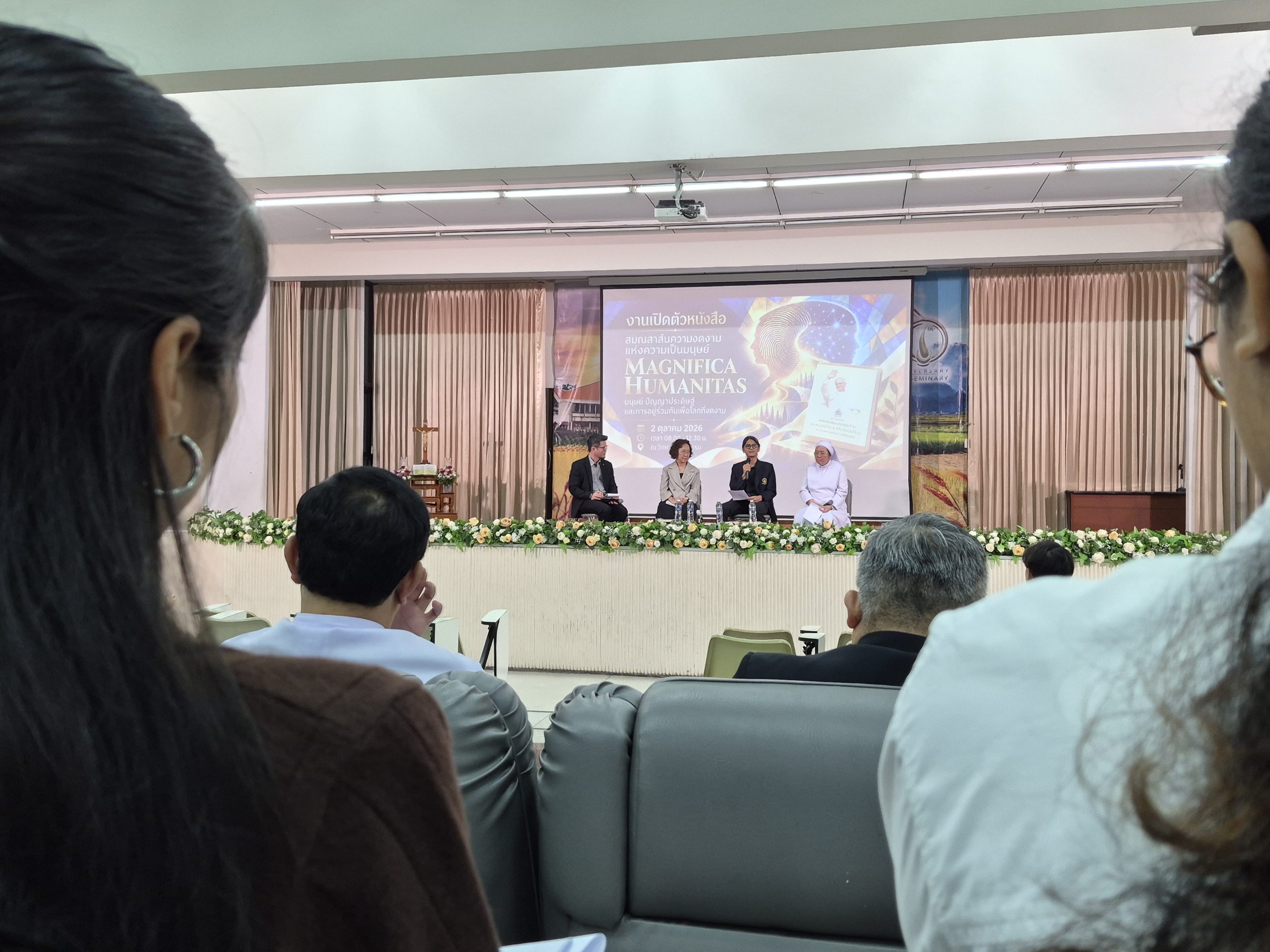
Catholic scholars, educators and Church leaders in Thailand examined Pope Leo XIV’s first encyclical, Magnifica Humanitas, during a nationwide discussion on artificial intelligence, technology and human dignity.
Catholic Social Communication Thailand and Saengtham College, which serves as the National Major Seminary, convened the four-hour forum on Oct. 2. The event was broadcast live from Samphran on the western outskirts of Bangkok.
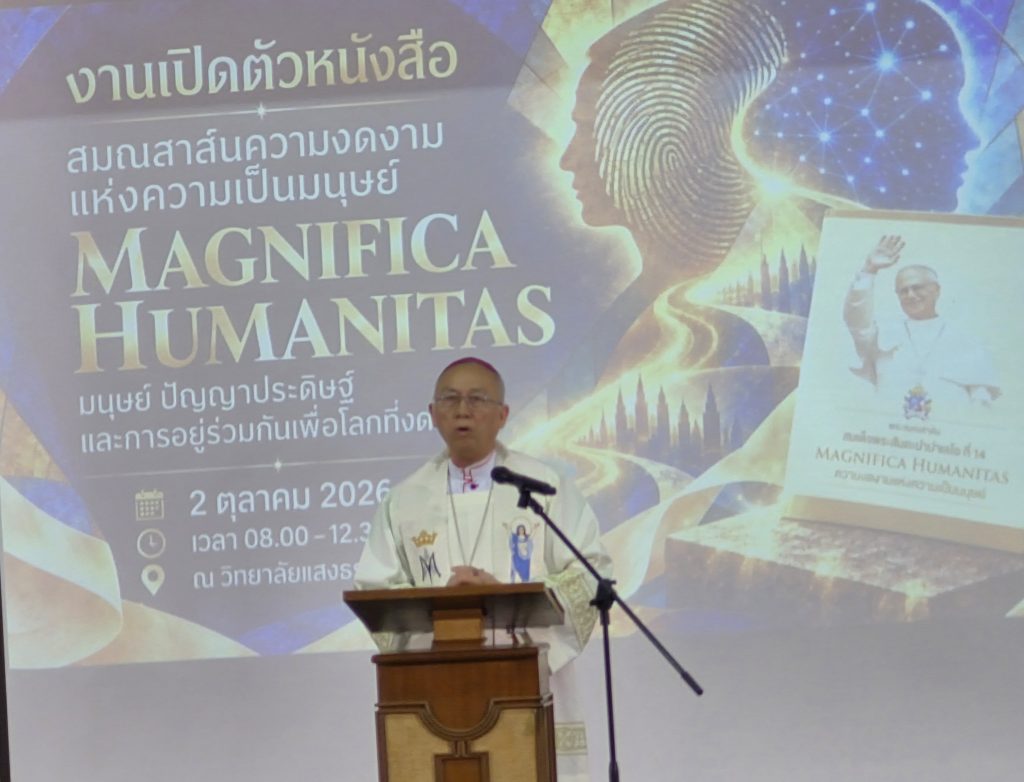
Archbishop Francis Xavier Vira Arpondratana of Bangkok led the gathering, which brought together scholars, youth representatives, women leaders and educators.
“Technology must serve humans, and not the other way round. How can AI make us more human, and not less human?” the archbishop said.
The discussion examined how Magnifica Humanitas approaches artificial intelligence and technological development in relation to the dignity of the human person.
Participants discussed the opportunities presented by artificial intelligence as well as concerns over its effects on education, labor, human relationships and the capacity for reflection.
Sister Marie Louise Pornruekngam, SPC, who translated the encyclical into Thai from the French edition, discussed the linguistic choices involved in rendering the document for Thai readers.
“The Latin title, Magnifica Humanitas, carries a meaning close to ‘the magnificent humanity,’ however, I opted for the phrase ‘the beauty of being human’ in Thai to emphasize the value of the individual rather than humanity as a whole,” she said.
Sister Marie Louise said she used generative artificial intelligence tools to help accelerate the translation process, completing the theological text in one month.
Her experience also led her to caution against relying too heavily on the technology.
She said artificial intelligence systems can truncate or summarize texts, requiring careful human oversight to preserve theological and intellectual integrity. She also raised concerns that excessive dependence on automation could weaken people’s capacity for deep and contemplative thought.
Sister Marie Louise also pointed to the implications of artificial intelligence for assessing students and employees. While the technology can rapidly evaluate performance, she said people who learn at a different pace should not be discarded but given appropriate support and opportunities to develop.
Associate Professor Rattigorn Chongvisal, an academic specializing in industrial and organizational psychology, highlighted the encyclical’s interdisciplinary approach, which draws on history, theology, science, sociology and psychology.
“The encyclical does not merely identify problems but also proposes solutions at the individual, organizational, and Church levels,” Rattigorn said. “Reading the document allowed me to truly experience the value of human dignity, serving as an inspiration for my work in psychology and leadership development.”
She also discussed the document’s use of the biblical account of the Tower of Babel as a warning about the pursuit of power and technological advancement without sufficient attention to their consequences.
Rattigorn urged educators and organizational leaders to go beyond teaching technical skills and to place greater emphasis on inner values, holistic analysis of problems and spiritual depth.
The forum explored how the principles presented in Magnifica Humanitas could guide Catholics as artificial intelligence increasingly affects education, work and human relationships.
Participants emphasized that technological development should be assessed not only by efficiency or capability but also by its impact on human dignity and the integral development of the person.