The arrest of a US Marine on suspicion of killing a Japanese woman has renewed anger over the US military presence in Okinawa, where residents have long protested crimes involving American personnel and limits on Japan’s jurisdiction over service members.
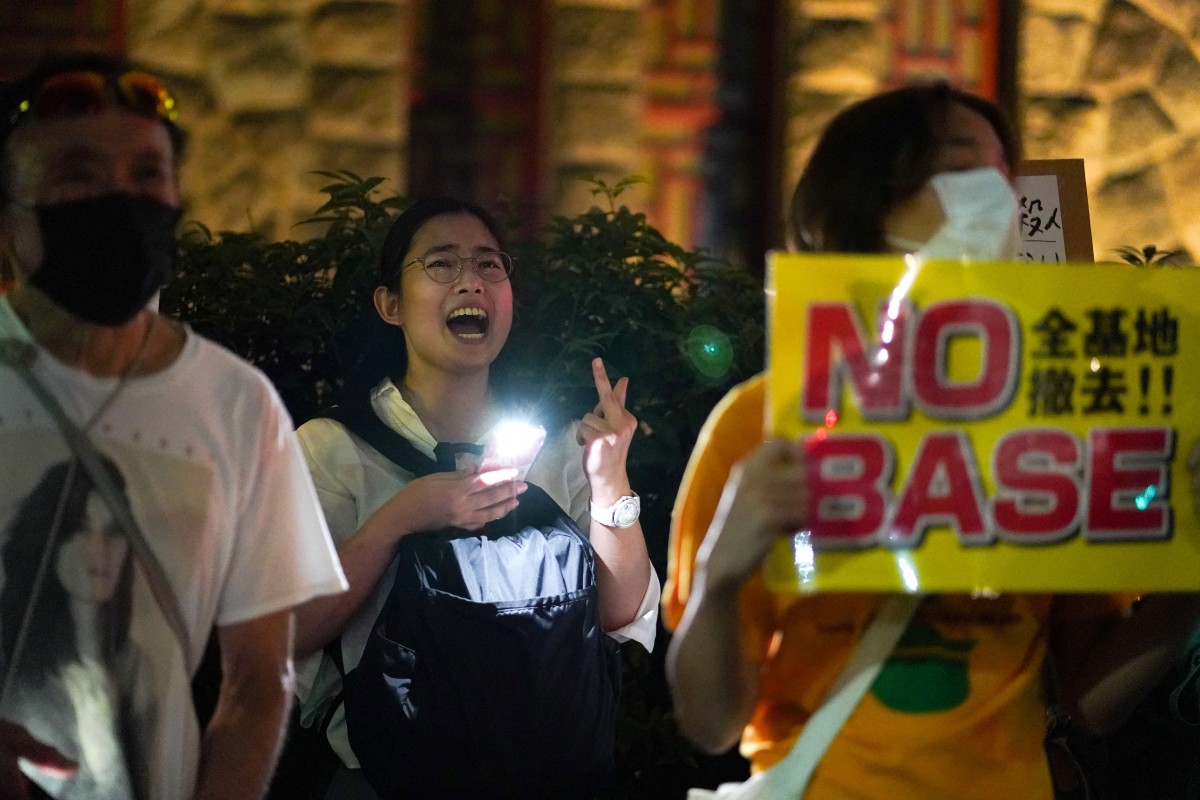
About 100 protesters gathered outside the US Embassy in Tokyo on Tuesday after police arrested a 20-year-old Marine stationed in Okinawa on suspicion of killing a 39-year-old woman at a hotel in Naha and stealing her wallet.
The case has fueled public outrage and revived criticism of the concentration of US military facilities in Okinawa, which hosts about 70 percent of such facilities in Japan, according to Agence France-Presse.
Protest organizer Sorane Sakihama, a 24-year-old Okinawa native, said the heavy concentration of bases placed residents at greater risk.
“With a far higher proportion of bases in Okinawa than in any other part of Japan, locals are exposed to the highest risk of harm at the hands of US soldiers in the country,” Sakihama told the crowd.
She said the prospect of raising children under such conditions “feels utterly unjust,” adding, “It fills me with nothing but anger and sadness.”
Protesters carried placards reading “no more American soldiers’ violence” and “Okinawa is not your amusement park!” and chanted, “We don’t need US bases in Okinawa.”
Crimes involving US military personnel, including rape, assault, hit-and-run incidents and drunk-driving accidents, have repeatedly triggered protests in Okinawa.
Under a 1960 agreement, Japan does not have primary jurisdiction over crimes committed by US military personnel while on duty.
For crimes committed while off duty, suspects who remain on US military bases are not handed over to Japanese authorities until they are indicted.
Kyodo News reported that in the latest case, a Japanese police officer detained the Marine while he was walking alone in Naha’s entertainment district.
Prime Minister Sanae Takaichi called the killing a “heinous crime” and urged US authorities to ensure “full cooperation with the investigation” and “strict discipline among US military personnel.”
The case has also renewed attention on Okinawa’s political leadership and the long-running dispute over the burden of hosting US military facilities.
Protester Naoko Fujihata, 67, said she had long been frustrated by what she saw as Tokyo’s reluctance to respond strongly to crimes committed by US military personnel.
Fujihata said she wanted the foreign troops to leave and would be “keeping a close eye” on Okinawa’s new governor, Genta Koja.
Koja, 42, has accepted a government plan to keep the US Marine Corps’ Futenma air base on Okinawa’s main island while moving it to a less populated area.
Kyodo and other Japanese media reported that Koja planned to discuss reducing the burden of US bases in Okinawa with Takaichi when they meet Wednesday.
Crimes committed by US personnel have long been a source of friction between Japan and the United States.
Last year, a Japanese court sentenced a US Marine to seven years in prison for choking and attempting to rape a woman.
In 2017, a US military base worker was sentenced to life in prison for the rape and murder of a woman in Okinawa.