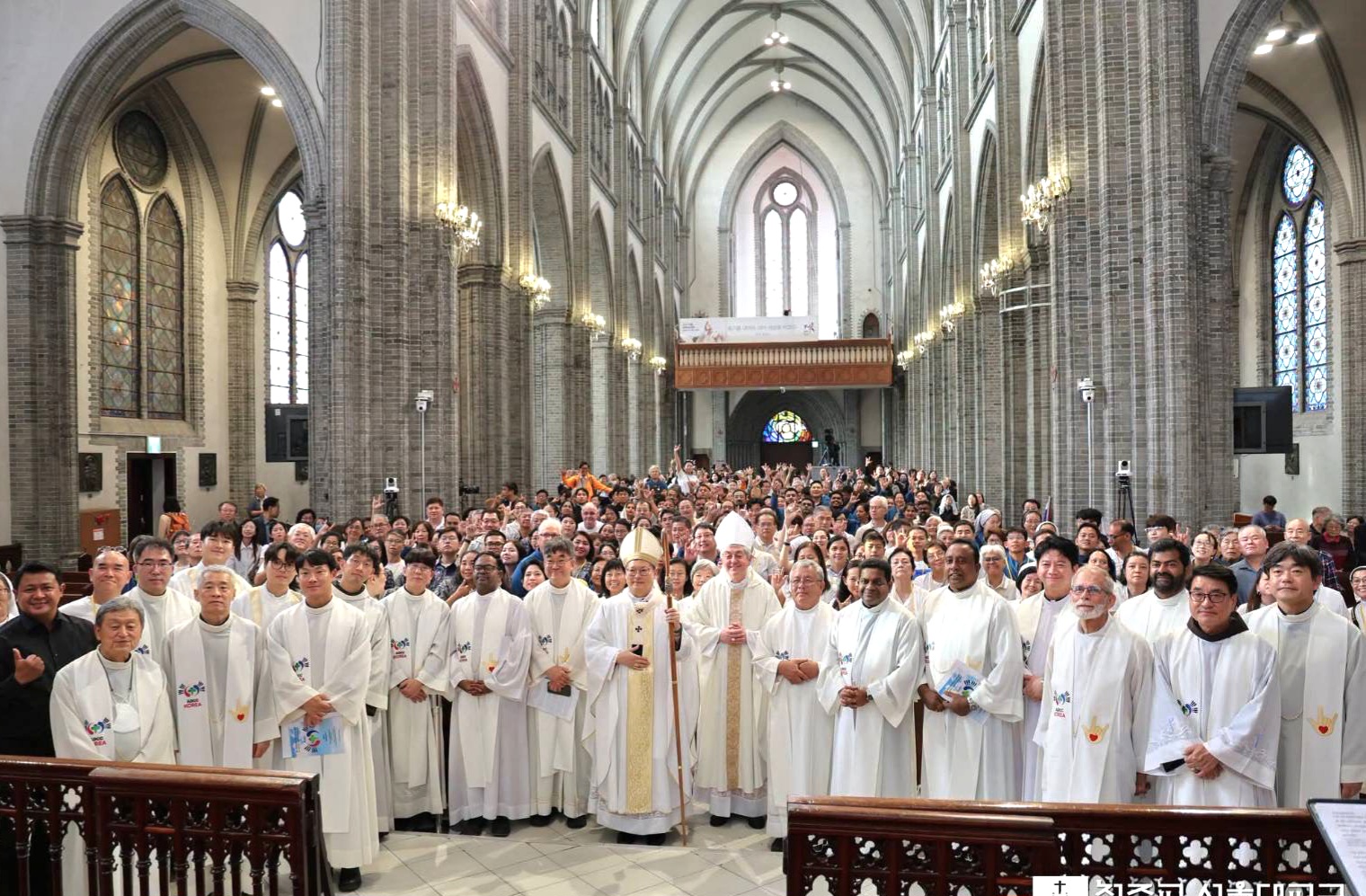
When the sacred words of the Lord’s Prayer echoed through Myeongdong Cathedral in Seoul during the opening liturgy of the 4th Asia Deaf Catholic Conference (ADCC), they were conveyed not through spoken voices, but through the graceful, rhythmic movement of hands.
Members of the Thai delegation lifted their hands in Thai Sign Language, articulating a silent yet profoundly moving prayer that set the tone for a historic gathering of Asian faithful.
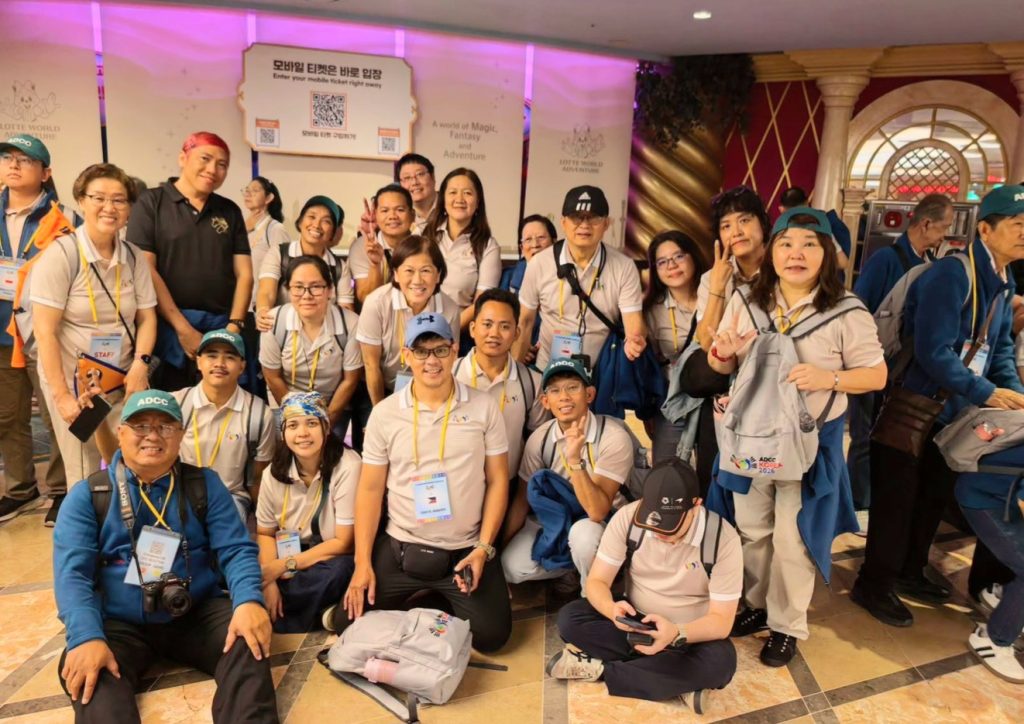
Gathering under the theme “God saw that it was good” (Genesis 1:10), the conference, held from Oct. 15 to 21, brought together 232 participants from 21 nations, including deaf believers, clergy, religious sisters, and lay leaders, to celebrate their shared identity, address pastoral challenges and advocate for full accessibility within the sacramental life of the Church.
Presiding over the Mass, Archbishop Peter Chung Soon-taick of Seoul reflected on the divine dignity inherent in every human person.
“God sees everyone exactly as they are,” Archbishop Chung declared in his homily, acknowledging the yearning of deaf brothers and sisters to participate in the Church on an equal footing, free from barriers to liturgical unity.
He emphasized that the vast tapestry of sign languages — from International Sign to regional dialects — reflects God’s magnificent design: “The Holy Spirit unites us, while showing respect for every language.”
Concelebrating the liturgy were Archbishop Giovanni Gaspari, apostolic nuncio to Korea and Mongolia; Fr. Park Min-seo, Asia’s first deaf Catholic priest; and Fr. Joseph Thermadom, India’s first deaf priest ordained in 2024, among other priests.
Addressing the assembly, Archbishop Gaspari affirmed the spiritual beauty of sign language.
“The Thai delegates remind us of that prayer, when it wells up from the heart and is expressed through the movements of one’s hands, reaches heaven just as surely as prayer voiced in spoken words,” he observed.
Central to the vision articulated during the conference is a fundamental shift in how the Church views disability.
Fr. Peter Bhuravaj Searaariya, national coordinator for Deaf Pastoral Care under the Catholic Bishops’ Conference of Thailand (CBCT) and director of the Deaf Ministry for the Diocese of Chanthaburi, emphasized that deaf individuals are called to be active missionary disciples rather than mere beneficiaries of assistance.
“Jesus said, ‘Ephphatha! Be opened!’ He wants our churches to be open to Deaf people,” Fr. Peter shared, underscoring that sign language and Deaf culture must coexist to create true “Deaf space” within the ecclesial community.
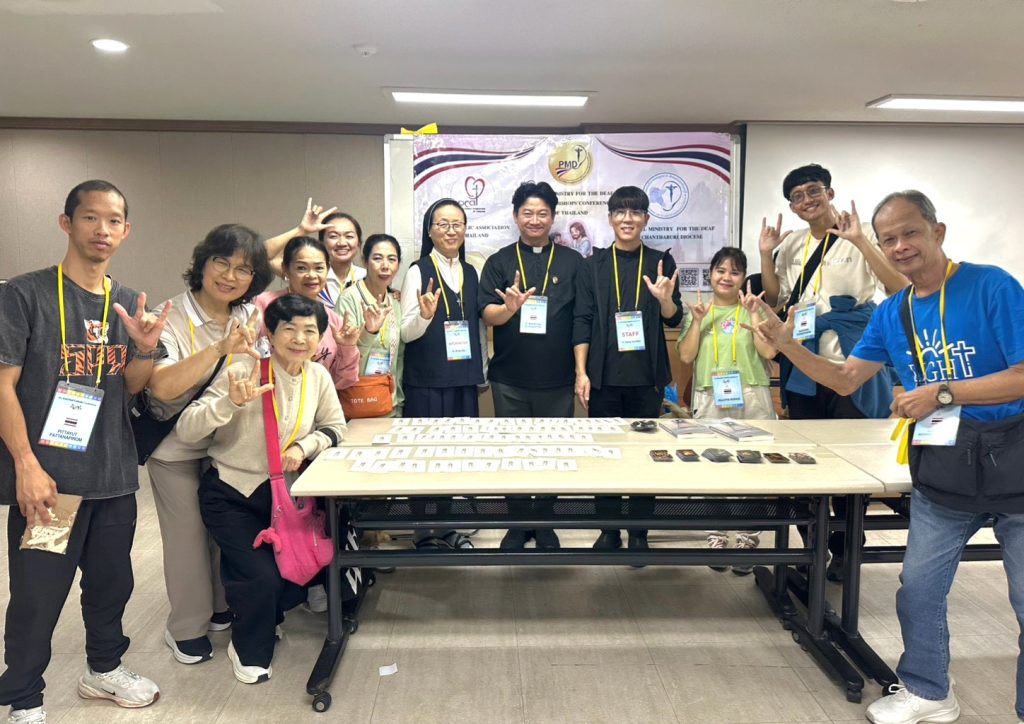
His ultimate pastoral vision remains resolute: “That we all can hear… even those who have no voice.”
As Thailand’s only Catholic priest fluent in Thai Sign Language, Fr. Peter leads pioneering initiatives, including the translation of the Bible and the Order of the Mass into Thai Sign Language, as well as Thai Sign Language awareness modules for seminarians at Fatima Minor Seminary in Thailand’s northeast.
His ministry exemplifies how visual language enables deaf Catholics to fully enter into the mystery of the Eucharist. He led 21 Thai deaf delegates to the ADCC Korea 2026.
The host city offered tangible inspiration for delegates: Seoul’s Ephphatha Catholic Church, Asia’s only parish dedicated exclusively to deaf Catholics, which stands as a historic milestone for disability-inclusive ministry across the continent.
Fr. Peter Bhuravaj told LiCAS News, “Throughout the workshops, country reports, and lectures, delegates candidly discussed the persistent realities facing their local communities. Participants pointed to critical shortages of qualified sign language interpreters, a scarcity of signing clergy, inaccessible educational systems, and systemic marginalization.”
Despite these hurdles, delegates expressed deep pride in their deaf identity and their capacity to lead when given the opportunity.
He added, “In the eyes of many attending nations, Thailand’s structured and systematic approach — encompassing team development, formation strategies, and multi-diocesan networking — was highlighted as a promising framework for the region.”
Looking toward the future of pastoral care across Asia, the Thai delegation — representing the CBCT Department for Pastoral Care of the Deaf and the Catholic Deaf Association of Thailand — proposed five strategic pillars for regional evangelization:
Liturgical adaptation through teams of interpreters to celebrate Mass in local sign languages; building collaborative pastoral bridges across continents; preserving the unique history of deaf evangelization in each Asian country; establishing a central Asian formation institute for deaf leaders, clergy and missionaries; and launching the “Ephphatha: Voice of Faith to Asia 2028–2033” initiative to organize an Asian pilgrimage of the relics of St. Francis de Sales, patron saint of the deaf.
In gestures of prayer, sacred silence and the visual beauty of the sacraments, the Seoul conference stands as a powerful reminder that the Gospel transcends human speech and the Church in Asia continues to open its doors wider, ensuring that every heart encounters the living Christ.