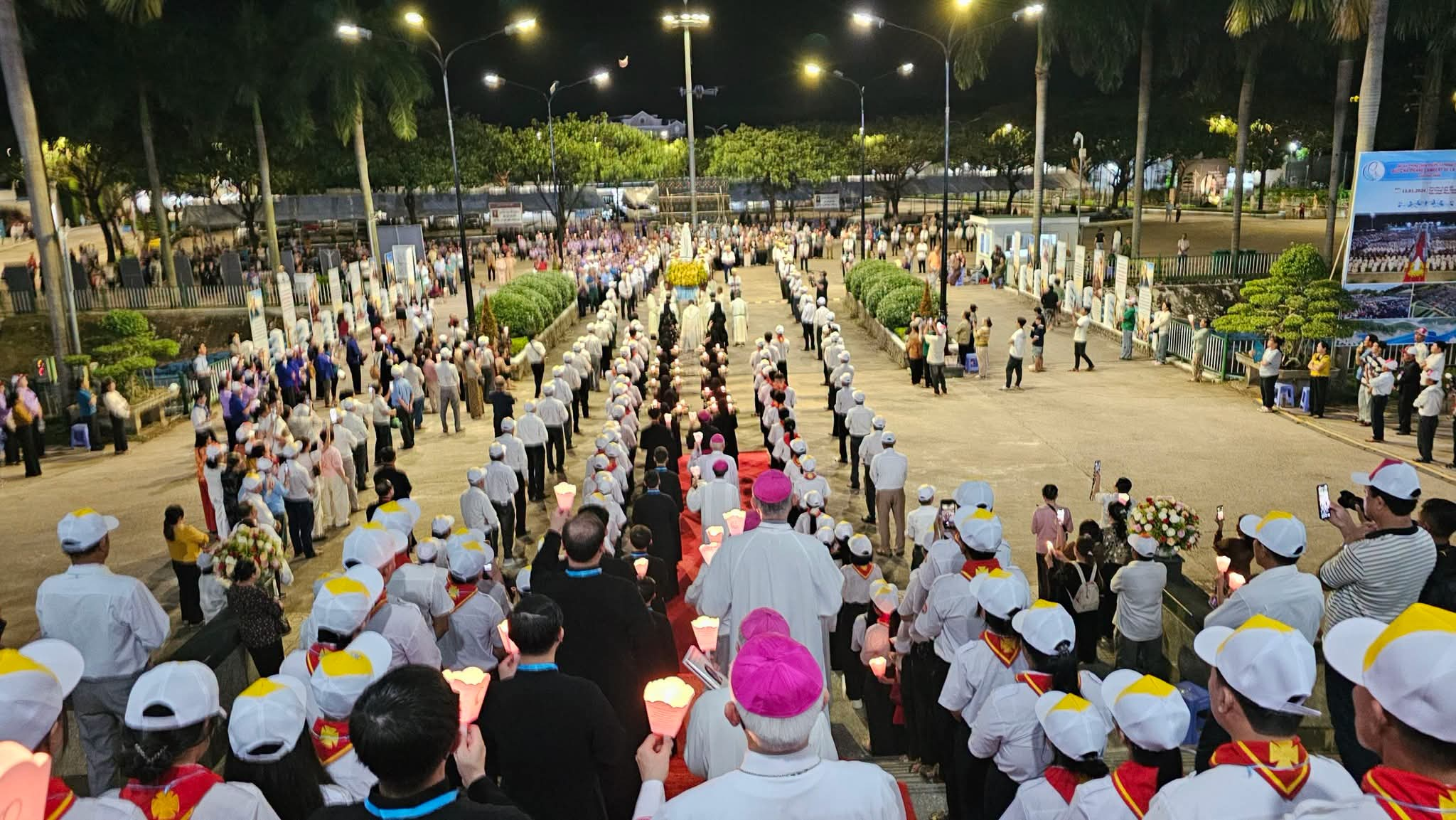
Nearly 40,000 faithful from across Vietnam and Thailand gathered last week at the Tà Pao Marian Center in southern Vietnam to mark the formal closing of the diocesan inquiry into the beatification and canonization of Servant of God Bishop Pierre Lambert de la Motte (1624–1679).
Hosted by the Catholic Bishops’ Conference of Vietnam (CBCV) in Bình Thuận province, roughly 180 kilometers east of Ho Chi Minh City, the milestone celebration honored the 17th-century French missionary whose vision anchored the growth of local clergy and consecrated life across Southeast Asia.
Preceded by a Marian procession, Eucharistic adoration and a two-hour historical drama performed by religious sisters and novices, the closing liturgy brought together bishops, priests, consecrated religious and lay pilgrims.
Addressing the assembly before the Thanksgiving Mass on November 12, 2026, Archbishop Joseph Nguyễn Năng of Ho Chi Minh City, president of the CBCV, emphasized that the gathering was first and foremost an act of gratitude for God’s providence.
“More than three centuries ago, Bishop Pierre Lambert de la Motte came to the distant lands of Asia, carrying in his heart a profound missionary concern: how the Gospel could take deep root among the peoples of these lands,” said Archbishop Nguyễn Năng.
While the local historical and theological commissions have now concluded their examination of Bishop Lambert’s life, writings and practice of heroic virtue, submitting their findings to the Vatican’s Dicastery for the Causes of Saints, Archbishop Nguyễn Năng urged the faithful to keep his missionary spirit alive.
He invited prayers for the Lovers of the Holy Cross, priestly formation and the local Churches bound together by Bishop Lambert’s legacy.
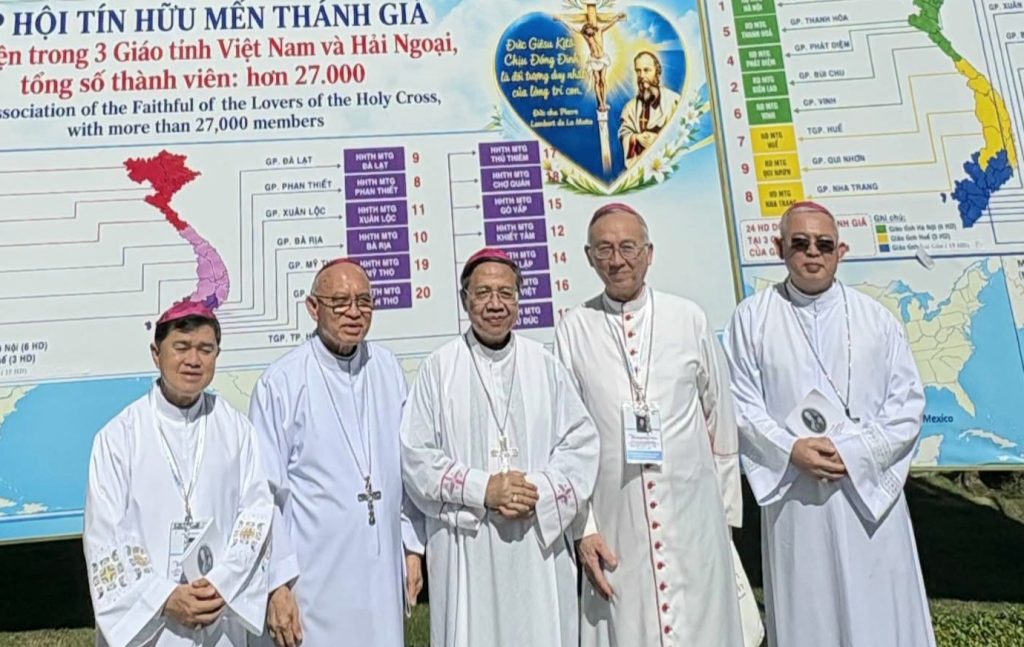
From Ayutthaya to Vietnam: Roots of the Local Church
Born in France and ordained in 1655, Pierre Lambert de la Motte co-founded the Paris Foreign Missions Society (MEP) in 1658 alongside François Pallu to cultivate local Asian clergy.
Blocked from Portuguese colonial shipping routes, Lambert undertook an arduous two-year overland journey across Syria, Persia and India, arriving in Ayutthaya, the capital of Siam, modern-day Thailand, in 1662.
Severe anti-Christian persecutions prevented him from residing permanently in his assigned territory of Cochinchina (southern Vietnam).
Under the protection of King Narai of Siam, Lambert established his missionary headquarters in the ancient capital of Ayutthaya, co-presiding over the 1664 Synod of Ayutthaya, founding the Seminary of Saint Joseph to train local priests and opening the city’s first hospital in 1669.
Between 1669 and 1676, he made three clandestine pastoral journeys into Vietnam, ordaining the first Vietnamese priests.
In 1670, during a mission to northern Vietnam, he founded the Lovers of the Holy Cross, Asia’s first Indigenous Catholic women’s religious congregation.
Structured as autonomous diocesan communities dedicated to prayer and active service in education and health care, the congregation expanded to Ayutthaya by 1672 and today numbers over 6,000 sisters across 30 congregations worldwide.
Bishop Lambert died in Ayutthaya in 1679 at age 55 and was buried at St. Joseph’s Church.
Recognizing his foundational role in Vietnamese Church history, the Holy See later transferred canonical jurisdiction for his beatification cause from Bangkok to the Diocese of Phan Thiết.
Thai Delegation Bridges Centuries of History
The celebration drew a major delegation from Thailand, underscoring the deep historical ties between the two neighboring Churches.
Led by Archbishop Francis Xavier Vira Arpondratana of Bangkok, president of the Catholic Bishops’ Conference of Thailand (CBCT), the group included Archbishop Anthony Veeradet Chaiseri of Thare-Nongseng, Bishop Philip Adisak Phorn-Ngam of Chanthaburi, Bishop Silvio Siripong Charatsri of Ratchaburi, clergy, Mother Clara Kanchana Singhsa, superior general of the Congregation of the Sacred Heart of Jesus of Bangkok, and sisters of the Lovers of the Holy Cross from Chanthaburi, Ubon Ratchathani and Thare-Nongseng.
Speaking to LiCAS News, Archbishop Francis Xavier Vira reflected on how waves of historical persecution in Vietnam shaped the Thai Church, as Vietnamese Catholic refugees settled in Ayutthaya, Bangkok, Chanthaburi and Ban Thare, integrating into Thai society while preserving their vibrant faith.
“Having participated in the holy ceremony and heard about the Church in Vietnam has led me to want to study more deeply and in more detail the history of the MEP in Siam and now Thailand,” Archbishop Vira said. “The blood of the Vietnamese martyrs has indeed led to even more conversions.”
Mother Clara Kanchana echoed that sense of spiritual renewal, noting the unity and devotion she witnessed among the tens of thousands of attendees.
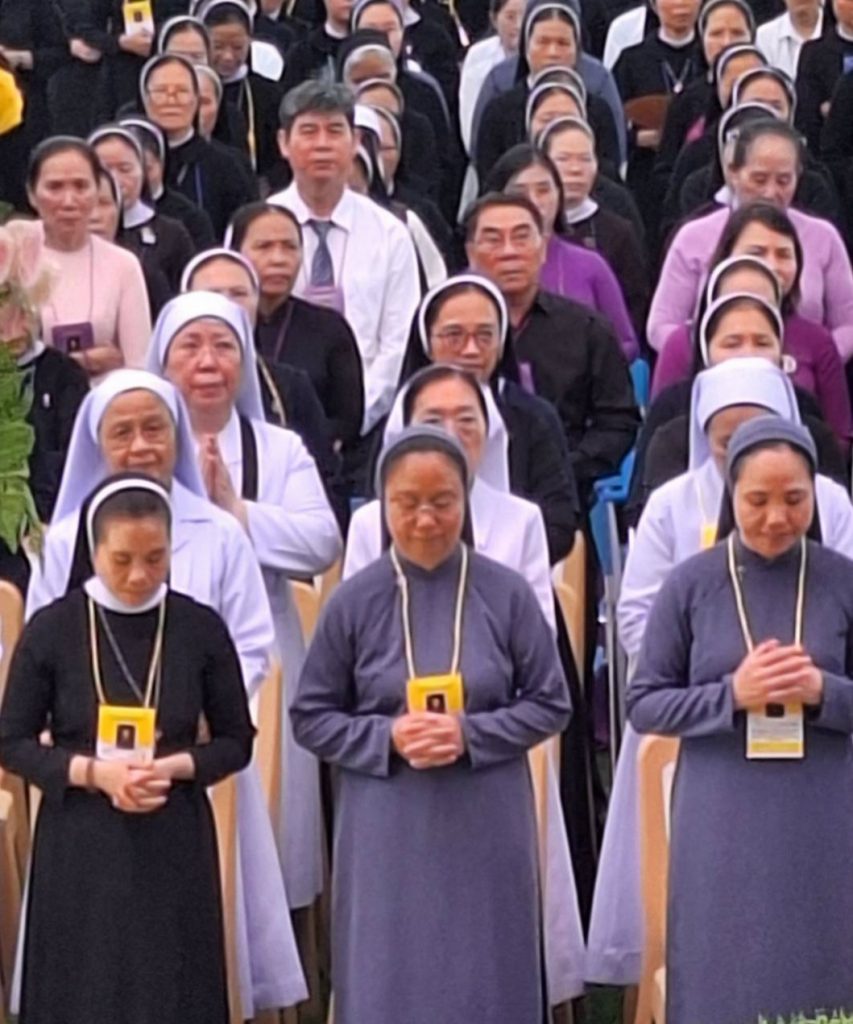
“It is a joy to be among those with such strong faith—people who are deeply committed to expressing their beliefs, love, and gratitude, and who serve as a living testament to the power of working together and moving forward as one,” Mother Clara told LiCAS News. “Every time I visit Vietnam, I find myself inspired by the dedication shown toward the faith and the proclamation of the Good News.”
Following the closing liturgy, after which the Thai pilgrims climbed more than 300 stone steps to pray before the mountain shrine of Our Lady of Tà Pao, Archbishop Veeradet led his group on an extended spiritual journey across southern Vietnam.
In Vũng Tàu, the delegation visited a thriving Cistercian monastery home to more than 160 members, meeting with Father Nhung, a pioneer of the order’s mission in Thailand’s Archdiocese of Thare-Nongseng.
The pilgrims also visited the Diocese of Xuân Lộc, stopping at St. Joseph’s Major Seminary, which serves one of Vietnam’s most vibrant Catholic communities of 1.1 million faithful, and the Shrine of Our Lady of Núi Cúi.
There, beneath a 50-meter-tall monument overlooking the valley, the group joined thousands of devotees ascending the 365 steps of the Stations of the Cross.
As Bishop Lambert’s cause advances to Rome, the pilgrimage reaffirmed a living bond forged more than three centuries ago, walking in the footsteps of a missionary whose faith continues to unite the Churches of Vietnam and Thailand.