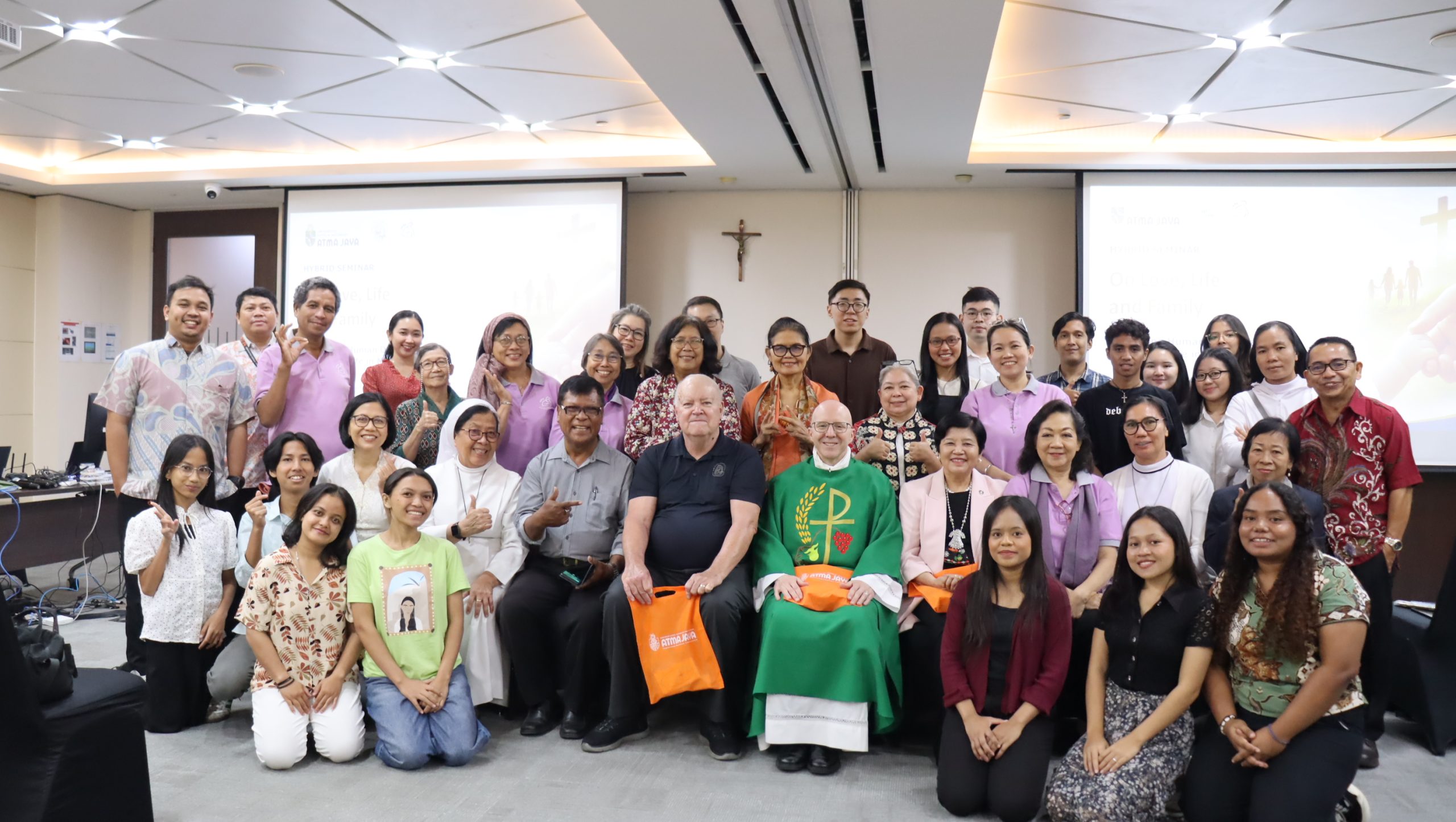
As technological advances reshape society, Catholic educators, clergy, health care professionals, and family advocates gathered in Jakarta to examine the ethical challenges facing human life and dignity.
The Congress on Faith, Life, and Family was organized by the Forum for the Protection of Life (FKPK) in collaboration with Human Life International (HLI) at Atma Jaya Catholic University of Indonesia on November 14 and 15, 2026.
Under the theme “Rediscovering the Gifts of Faith, Life and Family,” the congress explored contemporary issues, including transhumanism, mental health, sexuality, marriage, gender ideology, and end-of-life care.
Supported by Atma Jaya’s campus ministry and Domus Cordis, the event featured three HLI speakers: Father Shenan J. Boquet, president; Ligaya A. Acosta, regional director for Asia and Oceania; and Brian Clowes, director of research and education.
Technology and the Future of Human Dignity
One of the congress’s central concerns was transhumanism, a movement promoting the use of technology to enhance human capabilities and potentially extend human life.
In his presentation, “Transhumanism: The Future History of the Culture of Death,” Clowes addressed the ethical implications of technological interventions in human life.
Advances in artificial intelligence, genetic engineering, and biomedical science have opened new possibilities while raising moral and ethical questions about the limits of technological interventions and the distinction between healing and altering human nature.
Discussions at the congress emphasized the need for scientific progress to be guided by ethical responsibility and respect for the inherent dignity of every person.
Strengthening Families and Protecting Life
The congress also examined the role of families in nurturing faith, love, and respect for life.
In his presentation, “The Domestic Church: How Catholic Families Can Heal the World,” Father Boquet explored the Catholic understanding of the family as a domestic church and its role in building a compassionate society.
A joint session, “Knowing Truth: Defending and Serving Conjugal Love,” examined the responsibilities of parents, society, and the Church, with presentations by Acosta, Clowes, and Boquet, respectively.
Mental health was another focus of the congress. In “Shining a Light in the Dark: Breaking the Silence Around Suicide,” Acosta addressed the stigma surrounding suicide and emphasized the importance of compassionate support and open dialogue.
Other sessions explored the protection of human life, sexuality, gender ideology, and end-of-life care from Catholic ethical perspectives.
Building a Culture of Life
In his concluding presentation, “Building a Culture of Life and a Civilization of Love,” Father Boquet emphasized the importance of translating religious principles concerning respect for human life into everyday action.
The congress highlighted the shared responsibility of families, educators, health care professionals, and faith communities in protecting vulnerable individuals.
The gathering brought together young people, families, health care professionals, clergy, religious communities, and pastoral workers.
Participating organizations included the Family Commission of the Indonesian Bishops’ Conference (KWI), Atma Jaya Catholic University, Saint Carolus Hospital, Catholic Women of the Republic of Indonesia (WKRI), Indonesian Catholic Students Association (KMKI), and the Association of Catholic Hospitals in Indonesia (PERDHAKI).
Several commissions of the Archdiocese of Jakarta also participated, alongside Domus Cordis, Marriage Encounter, and Couples for Christ.
The two-day gathering concluded with a celebration of the Eucharist. The program also included a related seminar at Saint Carolus Hospital in Jakarta.
Through the initiative, FKPK and HLI sought to strengthen collaboration among Catholic communities, educational institutions, health care organizations, and family support networks.
The congress underscored the responsibility of society to ensure that technological progress serves human dignity, protects life, and contributes to building what Catholic teaching calls a civilization of love.