
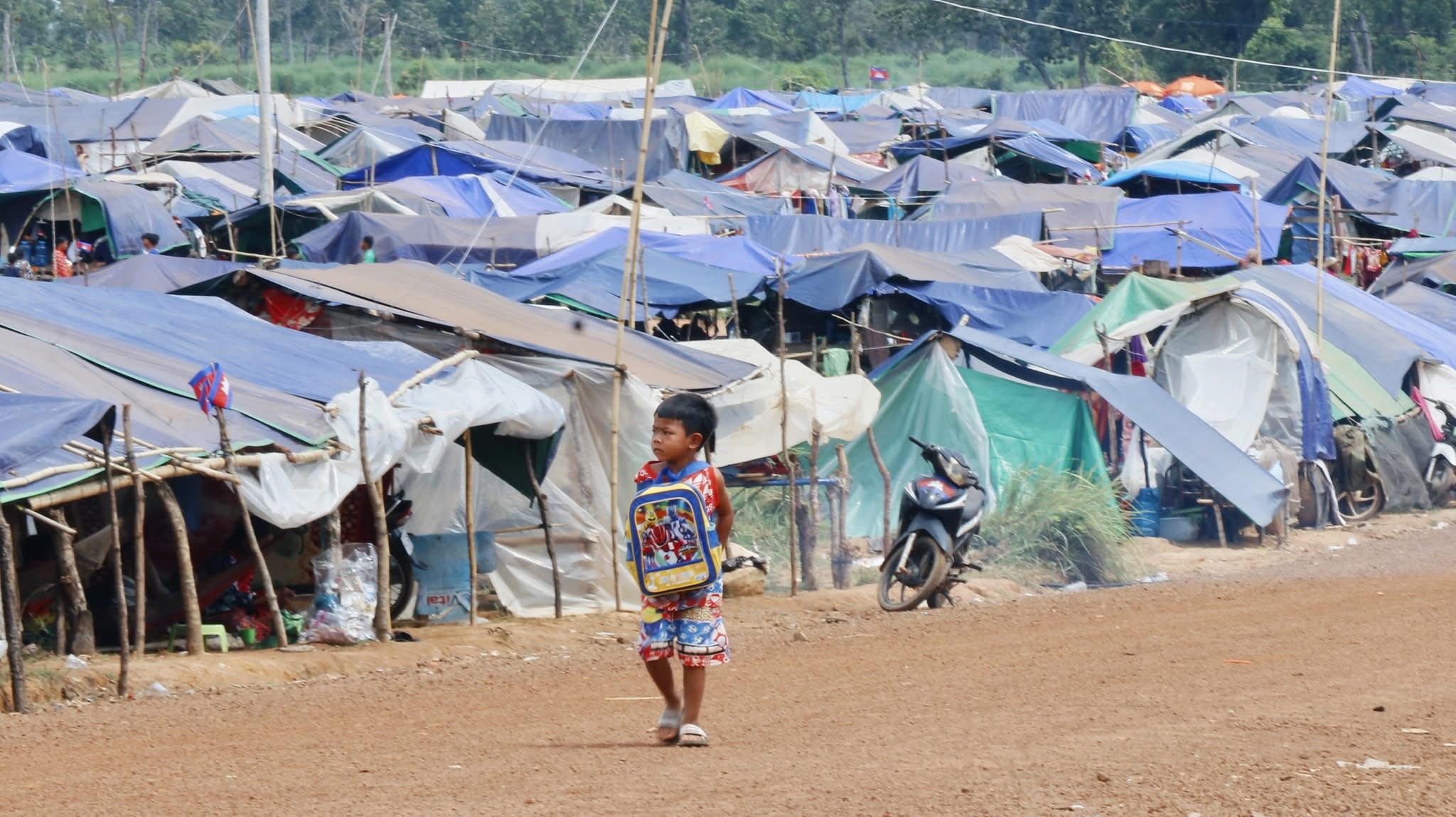
Caritas Cambodia, in partnership with provincial authorities and local leaders, has rolled out a wide-ranging relief effort to aid thousands uprooted by the border conflict with Thailand.
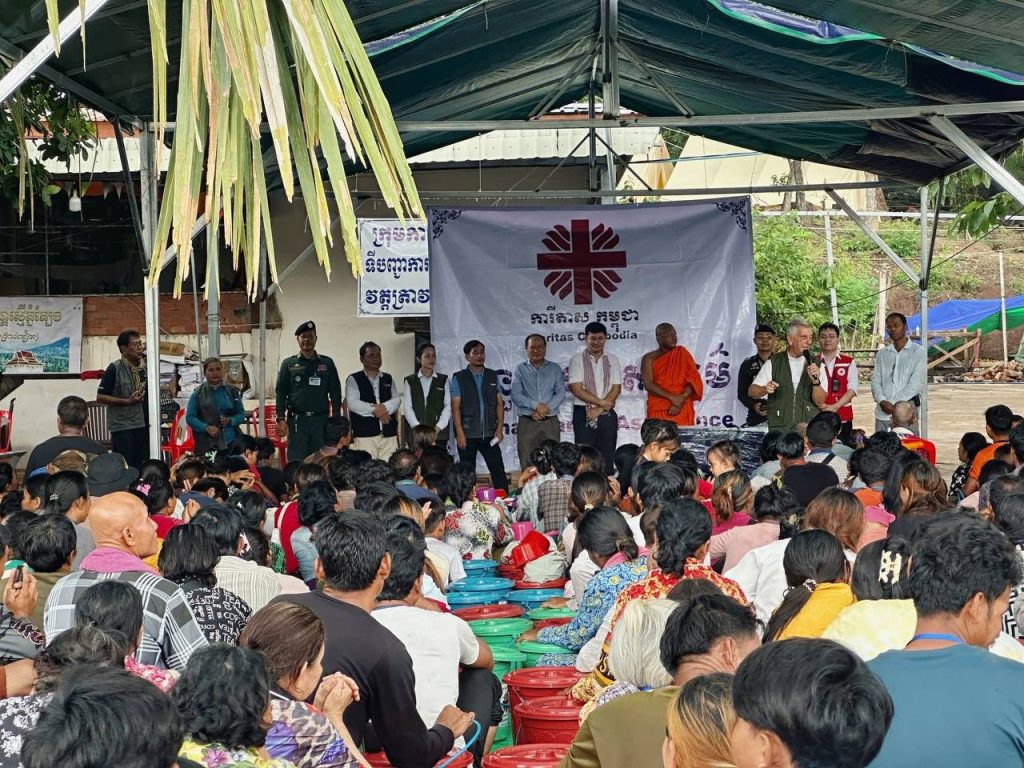
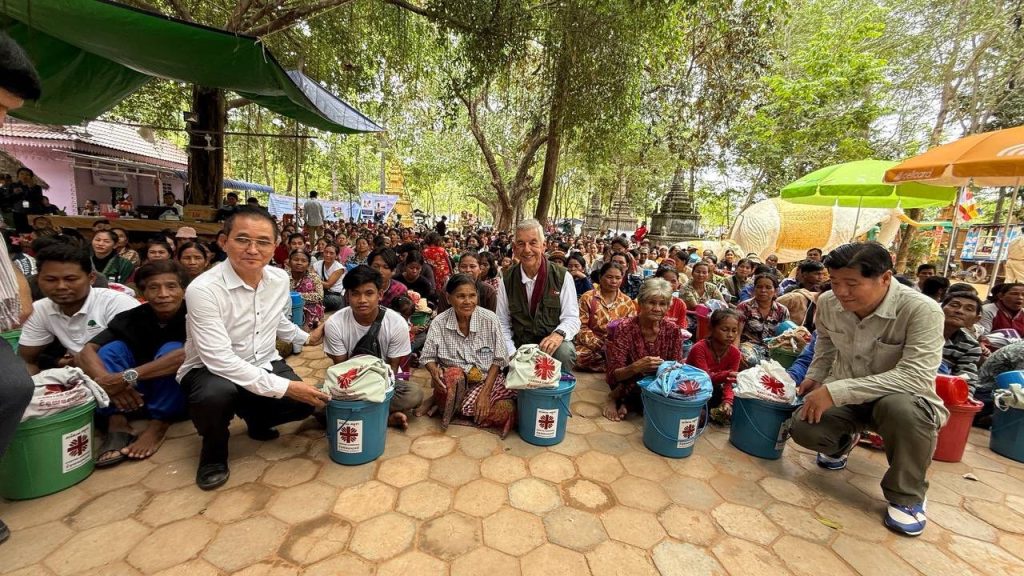
On August 25–26, ceremonies were held in Preah Vihear, Siem Reap, and Oddar Meanchey provinces – areas within the Apostolic Prefecture of Battambang – to mark the distribution of clean water and hygiene materials for 6,194 refugee families.
Caritas also handed over facilities for clean water, sanitation, and temporary shelters to 10 refugee camps established in the region.
The events were attended by senior Church and civic leaders, including Apostolic Prefect of Battambang, Msgr. Enrique Figaredo Alvargonzález, S.J., who chairs the Caritas Cambodia board and serves as president of the Lao-Cambodia Catholic Bishops’ Conference, alongside Mr. Kim Ratana, Executive Director of Caritas Cambodia.
The initiative forms part of Caritas Cambodia’s project “Response to Disaster Caused by the Clashes at the Cambodia-Thai Border,” which will run from August through October 2025.
The project focuses on temporary shelter, safe water supply, and sanitation, while also creating child-friendly spaces such as classrooms and libraries within camps.
Special attention will be given to mental health counseling and referrals, responding to widespread trauma among displaced families.
Historical role of Caritas in Cambodia
Caritas Cambodia has a long history of relief work on behalf of the Catholic community. Established originally in 1970 as the Catholic Church’s Aid Commission for victims of war, the group became a member of Caritas Internationalis in 1973.
Its mission was abruptly halted in April 1975 when the Khmer Rouge seized power, banning religious activities and shutting down Caritas. During the years of terror that followed, Tuol Sleng Prison in Phnom Penh and the notorious Killing Fields claimed the lives of more than a million Cambodians.
Caritas was able to resume operations only once religious freedom was restored in April 1990.
Diplomatic engagement
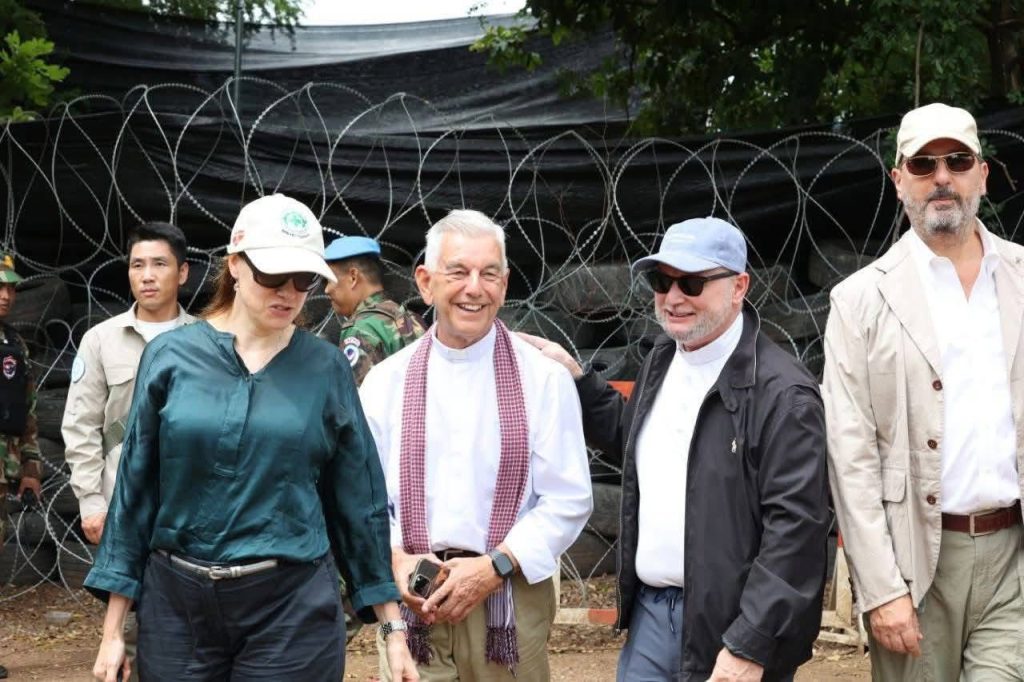
Just days before the relief ceremonies, Cambodian Deputy Prime Minister and Foreign Minister Prak Sokhonn led a delegation of diplomats, UN agencies, and NGOs to the border provinces.
The visit included Archbishop Peter B. Wells, Apostolic Nuncio to Thailand and Cambodia, who later described the situation as “a grave humanitarian concern.”
Speaking with LiCAS News on August 27, Archbishop Wells praised Caritas Cambodia, saying, “There are few organizations which have done more to assist those affected by this conflict than Caritas.”
“It is doing a remarkable job, with very limited resources, to provide aid to the displaced and needy. So much so that they were included in many parts of the official briefing and visitation exercises hosted by the government,” the prelate added.
The nuncio’s meeting with Caritas leadership in Siem Reap on August 23 was also attended by Italian Ambassador Paolo Dionisi.
Caritas briefed the delegation on pressing needs, including psychological support for trauma victims, urgent educational programs for children out of school, and food security concerns that could worsen toward year’s end.
Refugee crisis worsened by misinformation
The humanitarian response follows violent clashes along the Thai-Cambodian border in late July 2025, which left casualties on both sides and uprooted tens of thousands.
The conflict, triggered by disputes over undemarcated colonial-era borders and inflamed by nationalistic rhetoric, escalated after Cambodian and Thai soldiers were killed in May and June and a series of landmine incidents in July.
Though a ceasefire was announced on July 28 after talks in Kuala Lumpur, the fallout has been severe. Cambodian authorities estimate that as many as 780,000 Cambodian migrant workers left Thailand in the wake of the conflict and viral rumors from misinformation campaigns, including one that they would lose their citizenship and properties in Cambodia if they did not return. However, upon their return, many cannot find jobs or housing.
“Those coming in do not have housing, nor do they have jobs at this time. There is a worry that they will be needing major assistance at the year’s end. It is my ardent hope that we will soon return to normalcy so that we can more easily care for those needing our assistance on both sides of the border,” said Archbishop Wells.
Looking ahead
Caritas Cambodia, with support from local authorities, the Catholic Church, and international partners, has pledged to continue addressing the urgent humanitarian needs of displaced families while preparing for longer-term challenges such as reintegration, education, and livelihoods.
For Cambodia’s Catholic community – small but deeply committed – the crisis has once again become a test of faith, resilience, and service in the face of suffering.









