
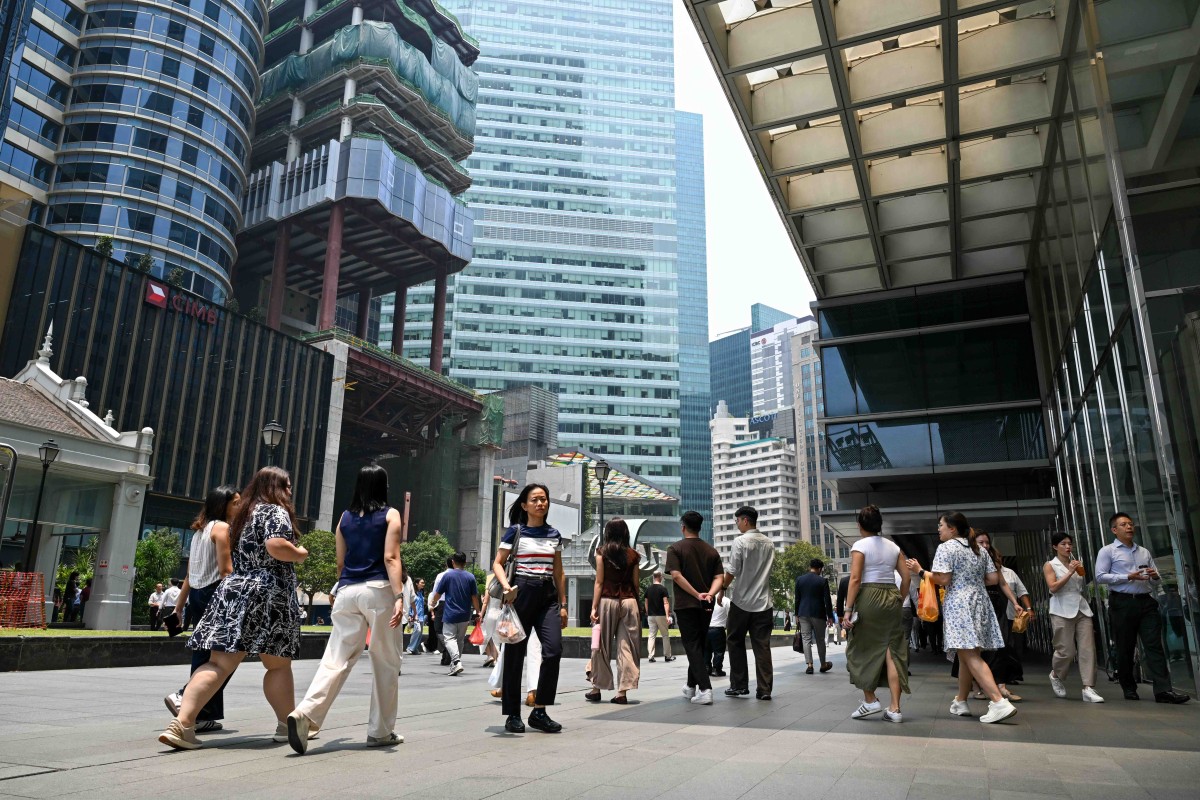
The culture of overwork in Singapore is not merely economic. It is, to a significant degree, existential. The island’s founding mythology is built on the premise that Singapore has no natural resources except its people, and that those people must out-work, out-think, and out-perform the rest of the region to survive. This narrative — while containing genuine historical truth — has calcified into a social pressure that bears down on every generation of Singaporeans from primary school onwards. The kiasu mindset, the fear of falling behind, the terror of the ‘C’ grade in life: these are not just cultural quirks. They are structural forces that shape how people spend every hour of their week, including Sunday morning.
There is an irony embedded in this culture that the Church might do well to name directly: Singapore is one of the most materially successful societies in human history, and yet many of its residents describe a pervasive sense of exhaustion, anxiety, and meaninglessness. The relentless pursuit of economic security and social status has not, for many Singaporeans, produced the flourishing it promised. This is not a new observation — it echoes, in very concrete terms, what Christ said about the impossibility of serving two masters. But the Church has not always been effective at naming this cultural reality and offering a genuinely compelling alternative.
Not all of Singapore’s workers are professionals with discretion over their hours. A substantial portion of the Catholic community — including many from the Filipino, Indonesian, and South Asian communities — works in hospitality, retail, healthcare, logistics, and domestic services. These workers often have no say in whether they work on Sundays. Shift patterns are set by employers. Retail malls in Singapore are open seven days a week, and the tourism and hospitality sector never truly closes. For a nurse working a 12-hour Sunday shift at a public hospital, or a retail worker whose roster has her in a Jurong East shopping mall at 10 a.m., Mass attendance is not a simple act of will. It is a structural impossibility on many Sundays.
The Church in Singapore is aware of this reality. Many parishes offer Saturday evening Mass (the anticipated Mass) precisely to provide an alternative for those who cannot attend on Sunday morning. Some parishes offer early Sunday Masses as well. But even with these alternatives, the logistical challenge of fitting Mass into a life shaped by shift work and variable rosters is genuine and ongoing.
Beyond structural impossibility lies something harder to address: the creeping slide of intention. The first missed Sunday was regretted. The second felt slightly less urgent. By the third or fourth, the habit had begun to dissolve, and with it, the gravitational pull that had made Mass attendance a default rather than a decision.
This is not laziness, though it is sometimes described that way. It is the natural behaviour of a habit that has not been anchored deeply enough in identity or understanding to survive disruption. For Catholics whose faith practice was primarily habitual rather than deeply reflective — who attended Mass because they always had, because their parents expected it, because it was what Catholic families in Singapore do — the disruption of COVID or a change in life circumstances exposed how thin the roots were.
The antidote to this is not guilt. Guilt may drive a person back to Mass once or twice, but it does not sustain a life of faith. The antidote is encounter — a renewed, personal, living encounter with the Person who is at the centre of the Mass. Without that, the pews will continue to empty, regardless of how often we repeat that Sunday Mass attendance is a precept of the Church.
There is a dimension of Singapore’s busyness problem that deserves specific attention: the experience of the sandwich generation. In Singapore’s rapidly ageing population, a growing number of adults in their 40s and 50s find themselves caught between the demands of raising children and the demands of caring for elderly parents. This double caregiving burden — exhausting under any circumstances — is particularly acute in Singapore’s high-cost, high-pressure urban environment.
For these Catholics, Sunday morning is not simply a matter of choosing between leisure and Mass. It is a matter of navigating a complex web of family obligations that genuinely do not yield to the simple application of willpower. The parent of a teenager with weekend examination revision, who also has an elderly mother with early dementia requiring supervision, and who also works six days a week: this person is not choosing against God. They are managing an impossible situation as best they can.
There is, after all, a profoundly Catholic vision of family life that speaks directly to these pressures. The Catholic understanding of the family as the domestic church, of the care of the elderly as a sacred responsibility, of the crucible of family life as the primary school of virtue — this vision is genuinely counter-cultural in a society that often treats elderly parents as problems to be efficiently managed and family demands as obstacles to professional performance. Preaching this vision with conviction, and backing it up with concrete pastoral support, could be one of the most effective forms of evangelisation available to Singapore’s parishes.
Benedict Tang is a Singapore-based Catholic writer and a convert to the faith. He holds a Diploma in Theology from the Catholic Theological Institute of Singapore, writes as a freelance contributor for various international and regional Catholic media, and works in digital marketing.









