
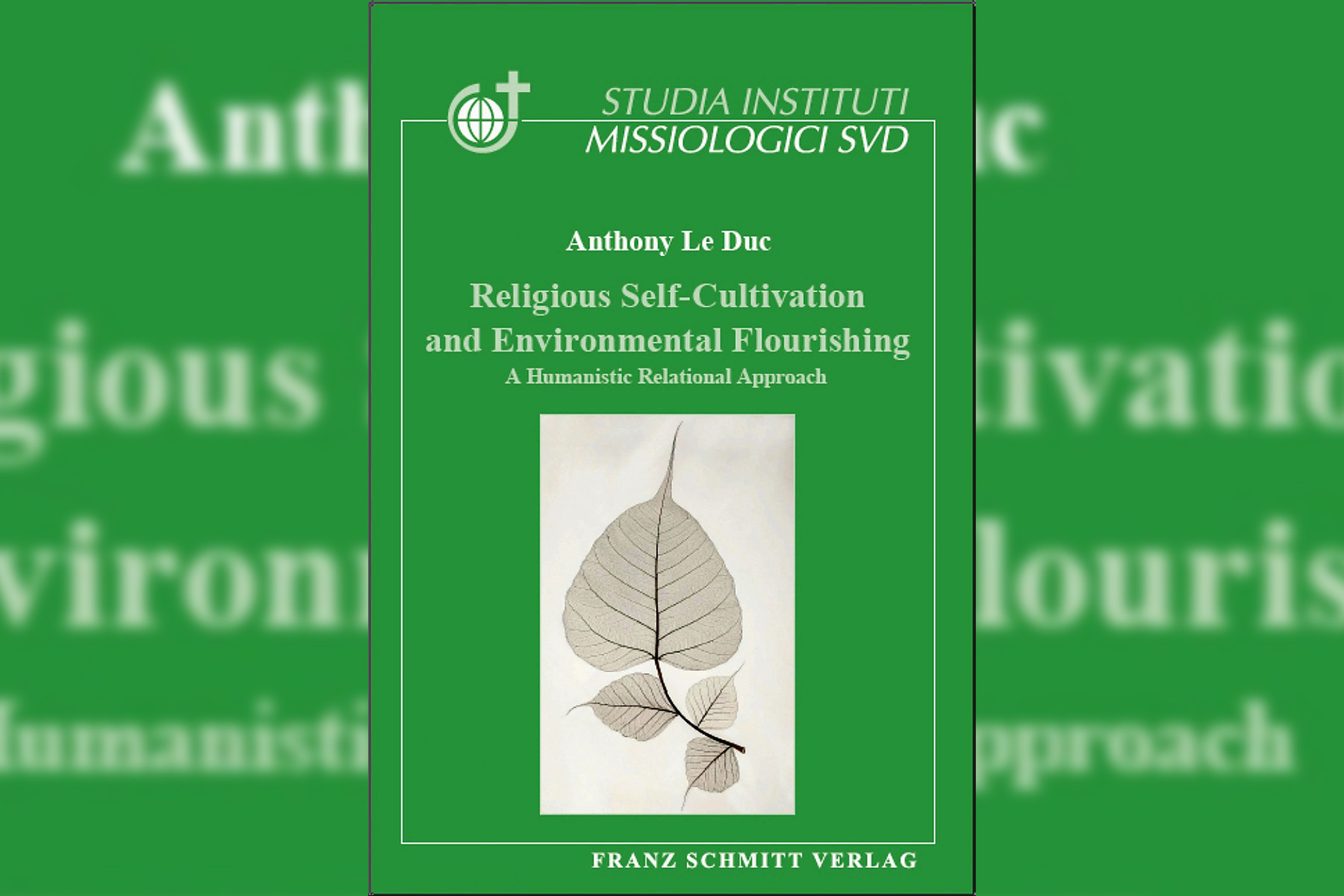
A Catholic scholar based in Bangkok has released a new book arguing that lasting solutions to the global climate crisis require deep spiritual transformation alongside policy action.
Fr. Dr. Anthony Le Duc, SVD, executive director of the Asian Research Center for Religion and Social Communication (ARC) at St. John’s University in Bangkok, has released his latest work, Religious Self-Cultivation and Environmental Flourishing: A Humanistic Relational Approach (2024).
The e-book arrives at a critical moment for the Church in Asia, echoing the call for “ecological conversion” articulated by Pope Francis in his encyclicals Laudato Si’ and Laudate Deum.
The Interior Root of Ecology
Fr. Anthony’s research argues that the degradation of the “common home” stems from a deeper spiritual crisis. He introduces the concept of “religious self-cultivation,” described as a process of spiritual formation that transcends religious boundaries, as a foundation for environmental flourishing.
For Catholic readers, the approach aligns with the Church’s theology of stewardship and virtue ethics. Fr. Anthony maintains that confronting the “roots of sin,” including greed, indifference, and distorted anthropocentrism, can help individuals adopt a relational model in which humanity acts as a caregiver rather than a dominator of nature.
An Asian Perspective on a Global Crisis
Writing from Bangkok, Fr. Anthony offers an Asian perspective on global ecological challenges. The e-book positions itself as a platform for interreligious dialogue, integrating Catholic social teaching with insights drawn from Buddhism, Confucianism, and Islam.
“This is not merely a theoretical exercise,” a review of the work notes. “It is a prophetic call for a transformation of consciousness. To save the planet, we must first cultivate the interior life.”
A Resource for the Faithful
The book is being cited as a resource for clergy, lay leaders, and environmental advocates. It invites readers to approach environmental concern not primarily as a political agenda, but as a moral responsibility rooted in the Imago Dei, the belief that humanity bears the image of God.
By emphasizing “humanistic relationality,” Fr. Anthony underscores that humanity’s relationship with the Creator cannot be separated from its relationship with Creation.
The e-book concludes with a message of hope, suggesting that disciplined spiritual practice and renewed commitment to religious virtues can help foster a world in which both human life and the environment can flourish.
Fr. Dr. Anthony Le Duc, SVD, continues to lead the Asian Research Center at St. John’s University, where his work focuses on the intersection of faith, communication, and social responsibility.